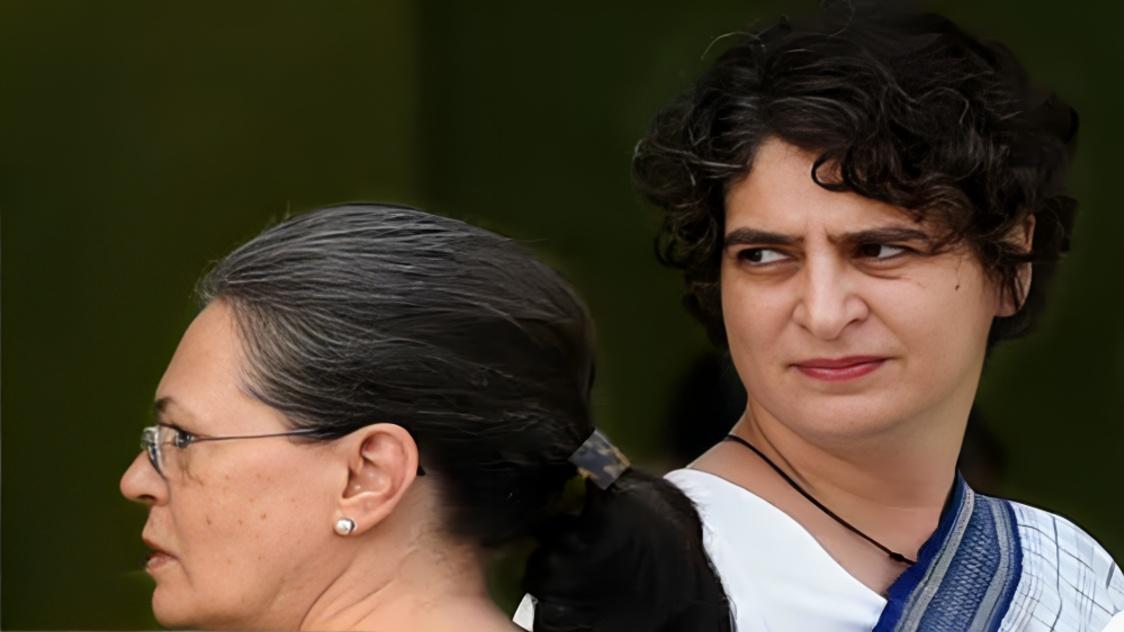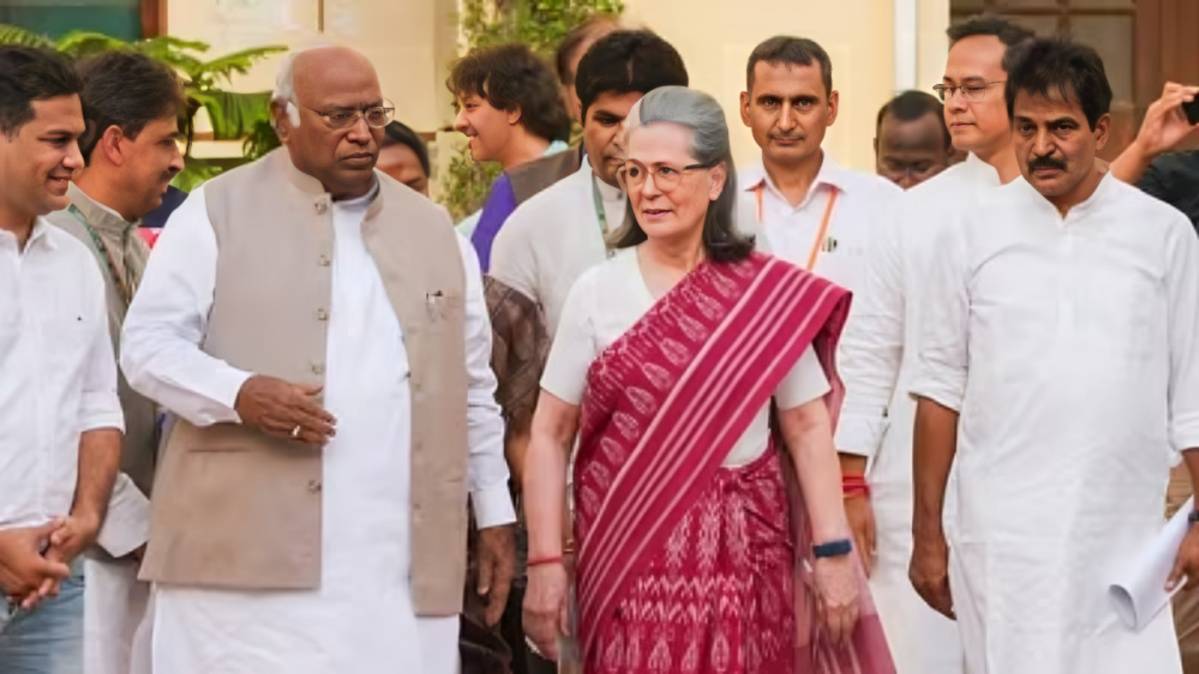
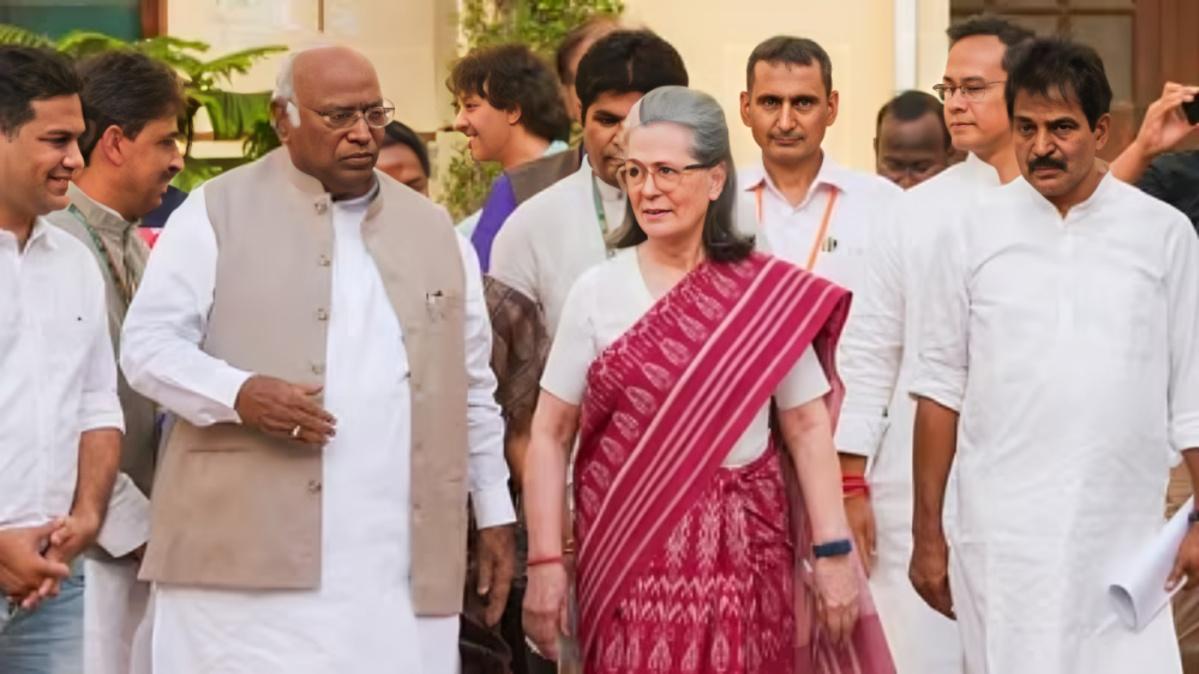
Congress Parliamentary Party chairperson Sonia Gandhi has criticised the Narendra Modi-led government in her newly released memoir, Belonging: A Journey of Love, stating that the political situation in India has changed and that the present regime will not remain in power indefinitely. She has also expressed confidence in the younger generation's commitment to justice, equality and democratic values.
In the 526-page memoir, which was released on November 10, 2026, Sonia Gandhi reflects on her personal life, political journey and experiences in Indian public life. She discusses her childhood in Italy, her meeting with former Prime Minister Rajiv Gandhi in Cambridge, his assassination and her eventual entry into politics. The book also examines her views on India's political environment, the condition of democracy and the role of opposition parties.
Sonia Gandhi Says Political Ground Has Shifted
In the memoir, Sonia Gandhi says that although the government continues to project confidence in its popularity and political strength, she believes the situation on the ground has changed.
She argues that certain actions taken by the government indicate a sense of insecurity. According to her, people are becoming increasingly willing to question the ruling establishment and speak about issues affecting their daily lives.
Gandhi also refers to concerns over rising prices, unemployment and corruption. She says these issues have contributed to growing public dissatisfaction and that citizens are becoming less hesitant to express their opinions.
Her remarks are a direct criticism of the BJP-led government. However, these statements represent her political assessment and should not be treated as an established conclusion about the government's future.
Concerns Over Democracy and Electoral Processes
Sonia Gandhi has raised concerns about the functioning of democratic institutions and the electoral process in India. Referring to recent state elections, she alleges that developments involving electoral rolls point towards possible large-scale manipulation. She connects these concerns with the opposition's allegations of vote theft, commonly described as "vote chori".
She has also criticised the government's approach to important issues discussed in Parliament. According to Gandhi, several subjects that deserve detailed parliamentary attention have not received adequate discussion.
Among the issues she mentions are China's presence in areas along India's border, legislation that she believes affects federal principles, minority rights and the privacy of citizens. She argues that these matters are important to the country's democratic structure and national integrity.
Gandhi further expresses concern about what she describes as increasing authoritarian tendencies. In her view, governments facing public resistance may respond with greater restrictions rather than addressing the concerns being raised.
These are her observations and allegations in the memoir. The government has not been shown in the supplied report responding to these specific remarks.
Confidence in the Younger Generation
A major theme in Gandhi's memoir is her belief that young Indians will play an important role in protecting the country's democratic values.
She writes that the younger generation wants a fairer society and an end to injustice and oppressive systems. She believes that this desire for change will eventually lead to greater public participation and efforts to restore social harmony.
Gandhi says India's young men and women have a responsibility to safeguard the freedoms achieved through the country's democratic journey. She also expresses confidence that future generations will protect the country's diversity and constitutional values.
Her argument is based on the belief that India's democratic foundations are strong enough to withstand political pressure. She draws attention to the country's history, particularly the freedom struggle and the establishment of universal adult voting rights after independence.
Comparison With India's Freedom Struggle
In explaining her confidence in democracy, Sonia Gandhi refers to the end of British colonial rule. She recalls that the British Empire once appeared powerful and difficult to challenge, yet India's independence movement eventually brought colonial rule to an end.
She also highlights the establishment of democracy in independent India despite widespread poverty and low literacy levels at the time.
According to Gandhi, granting every adult the right to vote was a significant democratic decision in a society marked by deep social and economic inequalities. She believes this democratic foundation cannot easily be dismantled and will continue to protect the country in the long term.
She also argues that India's cultural, linguistic and religious diversity cannot be permanently replaced by a single uniform identity. In the memoir, she criticises what she describes as the RSS's long-term political vision of imposing one religion and one language on the country's diverse population. She believes such efforts will face resistance because of India's pluralistic character.
Sonia Gandhi Highlights the INDIA Alliance's Role
The memoir also discusses the 2024 Lok Sabha elections and the role played by the opposition INDIA alliance in challenging the BJP.
Sonia Gandhi recalls that the opposition parties set aside several differences to contest the election together. She says the response to the INDIA alliance's campaign affected the BJP's confidence and challenged the perception that the ruling party was politically invincible.
According to her account, the opposition's performance demonstrated that the BJP could be challenged through a united political effort.
The 2024 Lok Sabha election results provide the background to her assessment. The BJP won 240 seats, falling short of the 272 seats required for a simple majority in the Lok Sabha. The BJP-led National Democratic Alliance secured 293 seats, while parties in the INDIA alliance won a combined 235 seats.
The BJP subsequently formed the government with support from its National Democratic Alliance partners. Sonia Gandhi describes the result as an important moment for the opposition because it showed that the ruling party had not secured a majority on its own.
She also recalls the celebrations at the Congress party office after the election results. Although the Congress did not win the election, its improved performance and the opposition's combined strength were seen by party leaders as a significant political development.
Criticism of the Modi Government and the Future of Opposition Politics
Sonia Gandhi argues that the 2024 election results weakened the perception of the BJP's electoral dominance. She believes the INDIA alliance demonstrated that opposition parties could work together despite differences in their political positions.
She describes the election outcome as an important step, while acknowledging that it was only part of a larger political struggle. Her comments underline the importance she places on parliamentary opposition and cooperation among parties that oppose the ruling establishment.
The memoir also raises questions about the long-term consequences of political polarisation and the treatment of democratic institutions. Gandhi believes that attempts to control public opinion and divide communities will face resistance from India's diverse society.
Her comments are likely to remain part of the political discussion surrounding the book, particularly because they address the current government, the opposition's electoral strategy and the future of democratic institutions.
A Personal Memoir With Strong Political Observations
Belonging: A Journey of Love combines Sonia Gandhi's personal experiences with her reflections on India's political history and contemporary challenges. Alongside accounts of her family life and political journey, the book presents her views on democracy, social harmony, electoral politics and the responsibilities of future generations.
Her statement that the political ground has shifted under the Modi government has drawn attention because it directly challenges the ruling party's claim to continued political strength. Her confidence in the younger generation and the INDIA alliance also highlights the role she believes citizens and opposition parties can play in shaping the country's future.
The memoir offers Sonia Gandhi's perspective on the political developments she has witnessed. Its assessments of the government, electoral processes and democratic institutions remain her views and political arguments, rather than independent findings.