Tilak Varma Reacts to India A's 48-Run Defeat Against Pakistan A Despite Century in Rising Stars Asia Cup 2026
Doha, November 23, 2026
India A captain Tilak Varma has expressed disappointment over the lack of batting support after his century failed to prevent a 48-run defeat against Pakistan A in the ACC Men's Asia Cup Rising Stars 2026.
The highly anticipated Group B encounter took place at the West End Park International Cricket Stadium in Doha on Sunday, November 22.
Pakistan A posted a challenging total of 313 runs before dismissing India A for 265 in 49.1 overs.
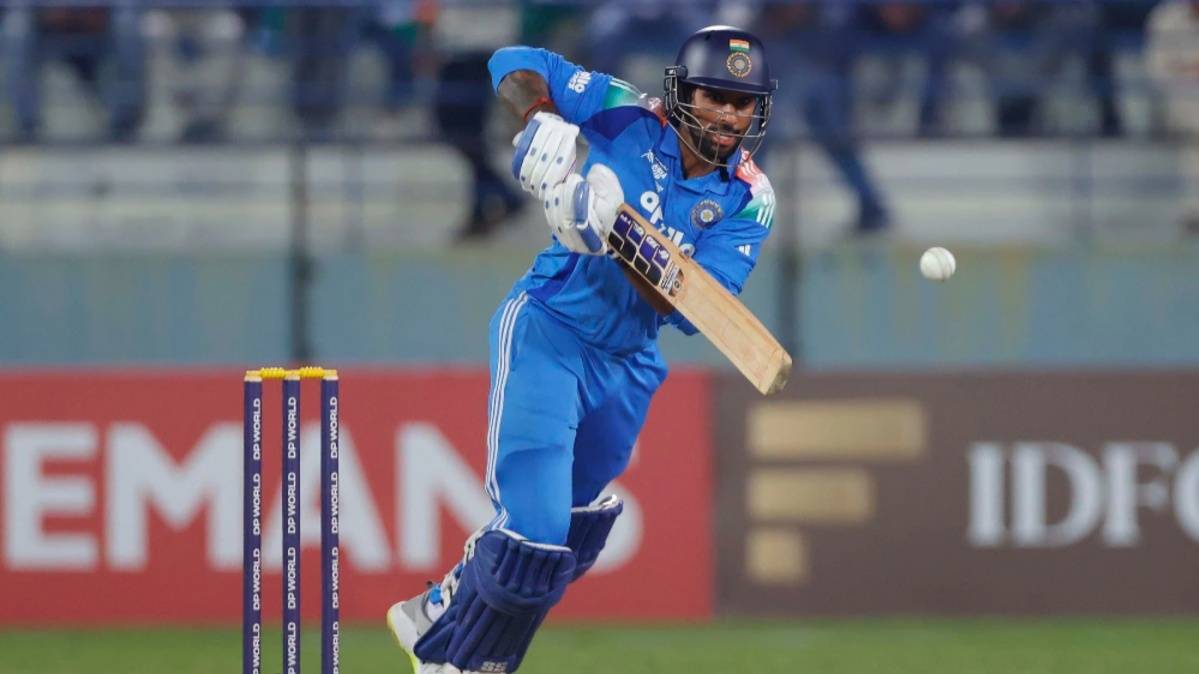
Tilak scored 100 off 149 deliveries, but his determined innings was not enough to secure victory.
Following the match, the Indian captain suggested that stronger partnerships during the middle and final stages of the innings could have helped his team complete the chase.
His remarks attracted attention, particularly because his own scoring rate became a subject of criticism among cricket experts.
Former India batting coach Sanjay Bangar questioned whether Tilak's cautious approach had increased pressure on the other batters.
Tilak Varma Expresses Disappointment After India A Defeat
Tilak Varma was disappointed after India A failed to chase Pakistan A's target of 314 runs.
The Indian captain believed his team had opportunities to win the contest but lost crucial wickets during important stages of the innings.
Although he scored a century, Tilak made it clear that individual achievements were less important than the team's result.
He explained that his intention was to remain at the crease and guide India A towards the target.
However, the loss of wickets at the other end made the task increasingly difficult.
Tilak felt that another meaningful partnership could have changed the outcome.
His comments reflected frustration over the unsuccessful chase rather than a direct personal attack on any individual teammate.
India A Lose by 48 Runs Against Pakistan A
Pakistan A produced a competitive batting performance after taking the field in the Group B encounter.
The team scored 313 runs, setting India A a target of 314.
India A began the chase with several talented batters but struggled to build consistent partnerships.
Abhishek Sharma provided an aggressive start with 70 runs off 42 deliveries.
However, wickets continued to fall at regular intervals.
India A eventually slipped to 129 for six, placing considerable pressure on the remaining batters.
Tilak Varma and Shahbaz Ahmed then produced an important partnership to revive the chase.
Despite their efforts, Pakistan A maintained control during the closing stages and secured a 48-run victory.
Tilak Varma Scores Century Off 149 Balls
Tilak Varma played a lengthy innings while attempting to keep India A in contention.
The left-handed batter scored 100 runs from 149 deliveries.
His innings included periods of cautious batting as Pakistan A's bowlers maintained pressure.
Tilak initially struggled to score freely against the new ball.
He gradually accumulated runs and attempted to build partnerships with the other batters.
However, the required scoring rate continued to increase as India A lost wickets.
Although he eventually reached three figures, the century came during an unsuccessful run chase.
His strike rate of approximately 67.11 became an important talking point following the defeat.
The innings demonstrated his ability to remain at the crease under pressure, but questions were raised about whether a more aggressive approach was needed.
Abhishek Sharma Provides Aggressive Start
Abhishek Sharma was one of India A's most effective batters during the chase.
He scored 70 runs from just 42 deliveries, providing much-needed momentum.
His attacking innings helped India A maintain a competitive scoring rate during the early overs.
Abhishek played several aggressive strokes and attempted to put pressure on Pakistan A's bowling attack.
However, his dismissal proved to be an important turning point.
Following his departure, India A struggled to maintain the momentum.
The middle order failed to build the partnerships required to support the chase.
Pakistan A capitalised on the situation by taking wickets at regular intervals.
The dismissal left Tilak with the responsibility of rebuilding the innings.
India A Middle Order Struggles Under Pressure
India A's batting difficulties became more serious after the early wickets.
Several middle-order batters failed to make substantial contributions.
Kumar Kushagra scored two runs, while Rinku Singh managed six.
Suryansh Shedge contributed three runs.
The repeated dismissals prevented India A from establishing a stable partnership.
At 129 for six, the team faced a difficult task against Pakistan A's disciplined bowling attack.
Tilak Varma remained at the crease, but he needed support from the remaining batters.
The situation required India A to balance wicket preservation with an increasing required run rate.
Pakistan A's bowlers took advantage of the pressure and continued creating opportunities.
Shahbaz Ahmed and Tilak Varma Build Important Partnership
Shahbaz Ahmed joined Tilak Varma when India A were struggling at 129 for six.
The pair produced a 112-run partnership for the seventh wicket.
Shahbaz played an attacking innings and scored 56 runs.
His contribution helped India A recover from a difficult position and briefly raised hopes of completing the chase.
Tilak continued to occupy the crease while Shahbaz looked for scoring opportunities.
Their partnership reduced the pressure created by the earlier batting collapse.
However, India A still required a substantial number of runs.
The partnership ended when Shahbaz was dismissed at a crucial stage.
His departure allowed Pakistan A to regain control of the contest.
Tilak Varma Says Additional Support Could Have Changed Result
Following the defeat, Tilak explained that Shahbaz Ahmed's dismissal had affected India's chances.
He praised the partnership and suggested that another couple of overs together could have helped India A finish the chase.
The captain also acknowledged Abhishek Sharma's contribution during the early stages.
Tilak believed the team had lost too many wickets when it needed to build partnerships.
He maintained that his primary objective was to take the match into the final overs and secure victory.
His remarks were widely discussed because they appeared to place considerable emphasis on the lack of support from other batters.
However, Tilak also recognised the contribution made by his teammates and the disciplined bowling displayed by Pakistan A.
Sanjay Bangar Questions Tilak Varma's Slow Start
Former India batting coach Sanjay Bangar criticised Tilak Varma's cautious approach during the chase.
Bangar pointed out that Tilak scored only three runs from his first 25 deliveries.
He questioned how such a slow start could influence the approach of the batter at the opposite end.
According to Bangar's analysis, a low scoring rate can increase pressure on a batting partner to take additional risks.
Those risks can create wicket-taking opportunities for the opposition.
Bangar suggested that Tilak may have intended to accelerate later in the innings.
However, he questioned whether the early lack of scoring momentum had already made the chase more difficult.
His observations added another perspective to the discussion about India's defeat.
Was Tilak Varma's Batting Approach Too Defensive?
Tilak's century became one of the most debated aspects of the match.
Scoring 100 runs in a challenging chase demonstrated his ability to occupy the crease.
However, India A needed to maintain a relatively high scoring rate to reach the target of 314.
Tilak's slow start meant that the required rate continued to increase.
At the same time, India A's repeated loss of wickets made aggressive batting more difficult.
The captain was attempting to protect his wicket while keeping the chase alive.
This created a challenging situation in which he needed both stability and quick runs.
Bangar's criticism focused on the effect of Tilak's scoring rate on the rest of the batting lineup.
The contrasting viewpoints highlighted the difficulty of managing a run chase when wickets fall regularly.
Pakistan A Bowlers Maintain Pressure
Pakistan A's bowling attack played an important role in the victory.
The fast bowlers made effective use of the early movement available from the pitch.
They maintained disciplined lines and lengths, making scoring difficult for several Indian batters.
Ali Raza and Hasan Nawaz were among the important contributors with the ball.
Both bowlers claimed three wickets during the innings.
Their efforts prevented India A from developing consistent momentum.
Pakistan A also managed to break important partnerships at crucial moments.
The dismissal of Shahbaz Ahmed was particularly significant because it ended India's most productive recovery partnership.
The bowling performance helped Pakistan A defend a challenging total.
Hasan Nawaz Leads Pakistan A Batting
Earlier in the match, Pakistan A built its total through contributions from several batters.
Hasan Nawaz led the scoring with 79 runs.
Maaz Sadaqat contributed 59, while Farhan Yousaf added 56.
Their performances helped Pakistan A reach 313 runs.
The batting lineup maintained pressure on India's bowlers and ensured that the team posted a competitive total.
Pakistan A's ability to build partnerships was an important difference between the two sides.
While India A relied heavily on a few individual contributions, Pakistan A received support from several players.
The combined batting and bowling performances ultimately secured the victory.
India A's Bowling Performance
India A's bowlers managed to dismiss Pakistan A but could not prevent the opposition from reaching 313.
Harshit Rana, Prince Yadav, Suryansh Shedge and Vipraj Nigam claimed two wickets each.
The bowling attack faced difficulties during Pakistan A's aggressive opening stages.
However, India A recovered and took wickets to prevent the opposition from posting an even larger total.
Despite that recovery, the target remained challenging.
The bowlers had provided India A with an opportunity to compete, but the batting lineup could not complete the chase.
The defeat highlighted the importance of consistent performances across both innings.
Captain Tilak Varma Takes Responsibility
Tilak also discussed the responsibilities associated with captaining India A.
He explained that leadership involves handling difficult situations and accepting pressure.
The left-handed batter said he enjoys taking responsibility when the team needs him.
His innings reflected an attempt to remain at the crease and guide the chase.
However, he acknowledged that the result was disappointing.
For Tilak, winning the match was more important than reaching an individual milestone.
His comments demonstrated that he did not regard the century as a successful achievement in isolation.
The defeat provided an opportunity for the captain and his teammates to assess their batting approach.
What Went Wrong for India A?
Several factors contributed to India A's defeat.
The team conceded 313 runs, leaving its batters with a demanding target.
Although Abhishek Sharma played aggressively, the middle order failed to maintain the momentum.
The loss of wickets reduced India's ability to build sustained partnerships.
Tilak Varma occupied the crease but struggled to score quickly during the early stages.
The required run rate continued to rise.
Shahbaz Ahmed's partnership with Tilak revived the innings, but his dismissal created another setback.
Pakistan A's bowlers also performed effectively during crucial moments.
The combination of these factors prevented India A from completing the chase.
Rising Stars Asia Cup 2026 Group B Contest
The match formed part of the ACC Men's Asia Cup Rising Stars 2026.
The tournament provides an opportunity for emerging players and developing teams to compete in an international environment.
India A and Pakistan A entered the Group B encounter with considerable attention surrounding their rivalry.
The contest featured competitive performances from both sides.
Pakistan A's victory strengthened its position in the tournament.
For India A, the defeat highlighted areas requiring improvement.
The team will need stronger partnerships and better management of the required scoring rate in future matches.
What Can India A Learn From the Defeat?
The match offered several important lessons for India A's batting lineup.
Successful run chases often require a combination of aggressive scoring and stable partnerships.
Abhishek Sharma demonstrated the value of attacking batting during the early overs.
Tilak Varma showed determination by remaining at the crease for a lengthy period.
Shahbaz Ahmed provided valuable support through an important seventh-wicket partnership.
However, the team could not combine these contributions into a successful chase.
India A will need to improve its ability to maintain momentum after losing wickets.
The batting lineup must also avoid allowing the required run rate to become unmanageable.
Better communication and partnerships could help the team perform more consistently.
Final Summary
India A suffered a 48-run defeat against Pakistan A in the Rising Stars Asia Cup 2026 despite a century from captain Tilak Varma.
Chasing 314, India A were dismissed for 265 in 49.1 overs.
Tilak scored 100 off 149 deliveries, while Abhishek Sharma contributed 70 and Shahbaz Ahmed made 56.
Following the match, Tilak expressed disappointment over the lack of partnerships and suggested that additional batting support could have helped India A win.
Former India batting coach Sanjay Bangar questioned the captain's slow start and its possible impact on other batters.
Pakistan A's disciplined bowling and timely wickets proved decisive.
The defeat leaves India A with important lessons about maintaining scoring momentum, building partnerships and handling pressure during challenging run chases.