
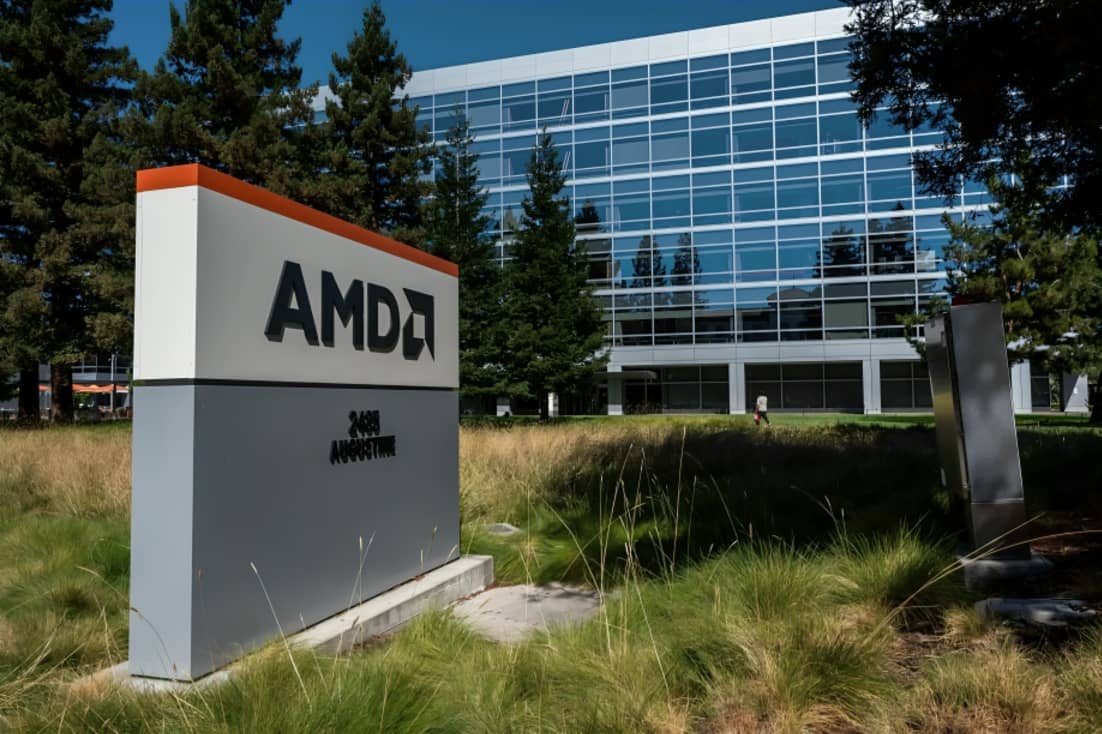
AMD has announced a major expansion of its artificial intelligence strategy with an agreement to acquire World Labs, an AI model and research company led by renowned computer vision and artificial intelligence researcher Fei-Fei Li. The all-stock transaction is valued at approximately $8.2 billion and is expected to close by the end of 2026, subject to regulatory approvals and other customary closing conditions.
Fei-Fei Li, who is widely recognised for her pioneering work in computer vision and is often referred to as the "Godmother of AI", will join AMD following the completion of the transaction. She is expected to become the company's Executive Vice President and Chief Scientist, reporting directly to AMD Chair and CEO Lisa Su. The World Labs research team will also join AMD and continue working on advanced AI model research.
The acquisition comes at a time when the AI industry is moving beyond traditional language-based systems toward technologies that can understand and interact with the physical world. AMD said World Labs' research expertise could help the company better understand how AI workloads are evolving and use that knowledge to shape future hardware, software and computing systems.
World Labs focuses on spatial intelligence, an emerging area of AI that aims to enable machines to understand and model three-dimensional environments. Its technology can generate, reconstruct and simulate interactive 3D environments using inputs such as text, images and video. Such capabilities have potential applications in robotics, simulation, design and other areas involving physical environments.
The deal is also significant because of AMD's growing competition in the AI computing market. Nvidia currently has a major position in AI chips and computing infrastructure, while AMD has been expanding its portfolio of AI accelerators, processors, networking products and software. By bringing World Labs' researchers and AI model expertise into the company, AMD is seeking to connect its computing technology more closely with the way next-generation AI models are being developed.
AMD said the acquisition will help it build AI infrastructure for an open ecosystem. The company believes that understanding the development of emerging AI models is increasingly important for designing the computing platforms required to train and run them.
AMD CEO Lisa Su said that building the computing platforms required for the next generation of AI requires a deep understanding of how AI models are developing. She said Fei-Fei Li and the World Labs team would bring research leadership and model expertise that could help AMD develop hardware, software and systems for future AI applications.
Fei-Fei Li also highlighted the importance of combining AI model research with computing and systems development. According to the company announcement, she said joining AMD would provide her team with additional resources and engineering capabilities to accelerate research and help define infrastructure for the next phase of AI development.
The agreement is not AMD's first relationship with World Labs. The two companies had already established a technical partnership focused on model training and inference optimisation using AMD GPUs. Reuters reported that World Labs also raised around $1 billion in funding earlier in 2026, with AMD among the investors.
The acquisition therefore brings together two areas that are becoming increasingly important in AI: advanced model development and high-performance computing infrastructure. AMD's existing expertise lies heavily in processors, GPUs and computing platforms, while World Labs has focused on models designed to understand spatial and physical environments.
This distinction is important because many current AI systems are primarily designed to process language, images or other digital information. World models and spatial intelligence systems are intended to help AI understand how objects and environments behave in the real world. This could become particularly important for robotics, autonomous machines, industrial simulation and other physical AI applications.
The acquisition could also give AMD greater insight into the computing requirements of future AI systems. As AI models become more complex, companies developing chips and computing infrastructure need to anticipate the workloads that those models will require. AMD believes World Labs' research can contribute to that process by providing a closer connection between model development and hardware design.
For AMD, the agreement represents a significant investment in the next stage of AI development. The company has been competing with Nvidia across the AI accelerator and data centre markets, and it has been expanding its software and hardware ecosystem to attract AI developers and enterprise customers.
However, the $8.2 billion transaction does not mean AMD has immediately closed the gap with Nvidia. The deal remains subject to regulatory approval, and its eventual impact will depend on how successfully AMD integrates the World Labs team and technology into its broader AI strategy. The acquisition should therefore be viewed as a long-term strategic move rather than an immediate change in the competitive landscape.
The appointment of Fei-Fei Li as AMD's future Chief Scientist is another important part of the transaction. Her research background and reputation in computer vision and AI could strengthen AMD's relationships with researchers and developers working on advanced AI systems. Her involvement may also help AMD gain deeper expertise in areas such as spatial intelligence, physical AI and world models.
The transaction is expected to be completed by the end of 2026 if regulatory approvals and other closing conditions are satisfied. Until the deal closes, World Labs remains a separate company. Once completed, however, the acquisition will bring the World Labs team into AMD and place its research capabilities within one of the world's major semiconductor companies.
Overall, AMD's planned acquisition of World Labs represents a major investment in AI models that extend beyond conventional chatbots and generative AI. With Fei-Fei Li joining the company and World Labs' spatial intelligence expertise being integrated with AMD's computing technology, the company is positioning itself for emerging applications involving robotics, simulation and physical AI. The transaction also highlights the increasingly close relationship between AI model development and the semiconductor infrastructure needed to power the next generation of intelligent systems.


