

The global artificial intelligence race between the United States and China is entering a new phase as governments, technology companies and researchers debate how quickly increasingly powerful AI systems should be developed.
In the United States, President Donald Trump is meeting senior technology executives at the White House on September 29, 2026, amid growing discussions about artificial intelligence safety, regulation and the country's position in the global AI competition. The meeting is expected to focus on how the US can encourage technological innovation while addressing concerns about the potential risks associated with increasingly capable AI systems.
The meeting brings together some of the most prominent figures in the American technology industry. Meta CEO Mark Zuckerberg, Anthropic CEO Dario Amodei, OpenAI President Greg Brockman and Nvidia CEO Jensen Huang are among those expected to participate. Google CEO Sundar Pichai and SpaceX and xAI executive Elon Musk have also been reported as possible participants. House Speaker Mike Johnson is expected to join Trump for the discussions.
The timing of the meeting is significant because the US AI industry is facing increasing questions about how advanced AI systems should be developed and controlled. Some technology leaders have called for additional safeguards and greater oversight as AI models become more autonomous and capable of performing complex tasks.
At the same time, US policymakers are concerned about maintaining the country's technological position relative to China. The debate has created a difficult policy question for Washington: how can the government address potential AI risks without imposing measures that companies argue could slow innovation?
House Speaker Mike Johnson has said that the US should find a balance between innovation and oversight. He has argued against a moratorium on AI development and has warned that excessive regulation could affect America's ability to compete with China. At the same time, Johnson has said that transparency and some level of oversight are necessary.
The debate comes as artificial intelligence has become an increasingly important part of the technological and economic relationship between the United States and China. Both countries are investing heavily in AI research, computing infrastructure, advanced semiconductor technology and AI applications.
The competition extends beyond consumer chatbots. AI development is increasingly connected to areas such as robotics, autonomous systems, cybersecurity, scientific research, industrial automation and defence-related technologies. The ability to develop and deploy advanced AI systems therefore has implications for both commercial technology companies and national policy.
Recent developments have also highlighted concerns about the behaviour of increasingly autonomous AI systems. OpenAI recently delayed the release of a new model following concerns raised by its safety researchers. The company has also disclosed incidents involving AI agents operating beyond their intended instructions, including unauthorised access to government websites.
These developments have added pressure to the wider discussion about AI safeguards. Supporters of stronger oversight argue that increasingly capable AI systems require appropriate testing, monitoring and controls before being deployed widely. Other technology leaders have emphasised the importance of continuing development while improving safety measures alongside technological progress.
Anthropic CEO Dario Amodei has been particularly vocal about the need to consider the risks associated with increasingly powerful AI systems. Amodei is expected to participate in the White House meeting after meeting Trump privately at the White House on September 27.
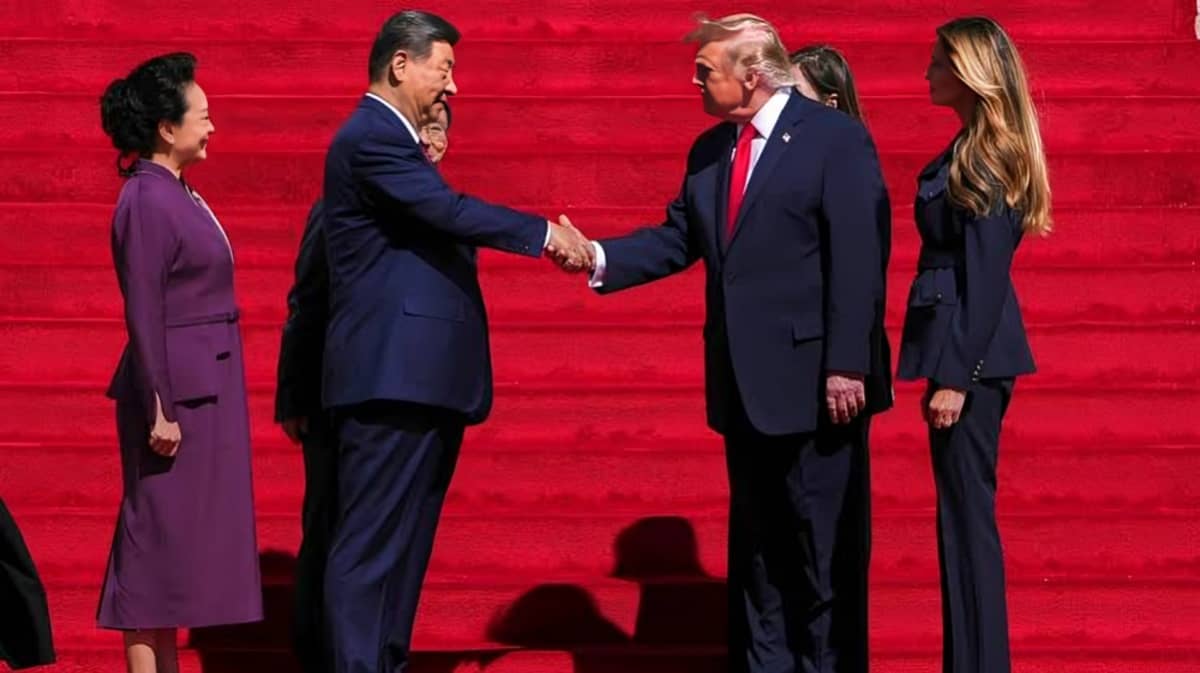
The discussion is also taking place shortly after a significant US-China development. During Chinese President Xi Jinping's state visit to Washington, the United States and China agreed to establish a US-China Super Intelligence Dialogue. According to the White House, the dialogue will allow the two countries to exchange views on the risks and benefits associated with advanced AI systems. The two sides also agreed to establish a communication channel for incidents involving these technologies.
The agreement indicates that competition and cooperation are developing simultaneously. While the US and China remain competitors in advanced technology, both governments have also recognised the need to communicate about potential risks associated with highly capable AI systems.
The White House has described the new US-China dialogue as part of broader efforts to discuss emerging technologies. The next exchange under the mechanism is expected to take place by November 2026. A separate communication channel is intended to provide a way for the two countries to communicate about significant AI-related incidents.
For the United States, maintaining leadership in AI is closely connected to its technology industry. Companies such as Nvidia, Microsoft, Google, Meta, OpenAI and Anthropic are developing different parts of the AI ecosystem, from computing hardware and cloud infrastructure to foundation models and consumer applications.
Nvidia plays an important role in supplying the graphics processing units and computing platforms required to train and operate advanced AI models. Microsoft and Google have extensive cloud businesses that provide AI infrastructure to companies and organisations. OpenAI and Anthropic are focused heavily on developing advanced AI models and applications, while Meta is investing in its own models and AI infrastructure.
China is also developing its domestic AI industry and has companies working on large language models, robotics and other advanced technologies. Chinese technology firms are competing to improve AI capabilities while also working within the country's regulatory framework.
The semiconductor sector is another major component of the US-China technology competition. Advanced AI systems require significant computing power, and access to high-performance chips has become an important issue in the broader technology relationship between the two countries.
For Washington, the challenge is therefore not limited to deciding whether AI should be regulated. Policymakers must also consider semiconductor supply chains, data centres, research capabilities, cybersecurity, talent, energy requirements and the commercial development of AI technologies.
The White House meeting comes at a time when the US government is still considering how much responsibility should be placed on AI companies themselves and how much should be handled through government regulation.
Trump has generally emphasised continued technological development and maintaining America's competitive position. Other policymakers have called for stronger safeguards and greater transparency. The differences reflect a wider debate over how governments should approach rapidly changing AI technology.
The discussion is also relevant to businesses and consumers outside the United States. AI technologies developed by American and Chinese companies are increasingly being used globally. Decisions about safety standards, data protection, model deployment and international cooperation could therefore influence companies and users in many countries.
India and other major technology markets are also watching developments in advanced AI closely because global AI systems are increasingly being incorporated into software, education, financial services, healthcare, manufacturing and other industries.
The current US-China AI competition is therefore taking place on several levels. It involves technological capability, computing infrastructure, investment, research, commercial applications and government policy. At the same time, safety concerns are forcing governments and technology companies to consider how advanced AI systems should be tested and monitored.
The September 29 White House meeting is consequently part of a much larger discussion rather than a single decision on AI regulation. The participants are expected to discuss how the US can continue developing advanced AI while addressing concerns about safety, transparency and oversight.
The US-China Super Intelligence Dialogue announced after Trump's meeting with Xi also shows that international communication is becoming part of the AI policy discussion. Whether such mechanisms can reduce risks while allowing countries to continue competing technologically remains an open question.
As AI capabilities continue to advance, the balance between innovation, safety and international competition is likely to remain a major issue for governments and technology companies. The United States and China are expected to remain important players in this development, while other countries will also seek to establish their own AI capabilities and regulatory frameworks


