
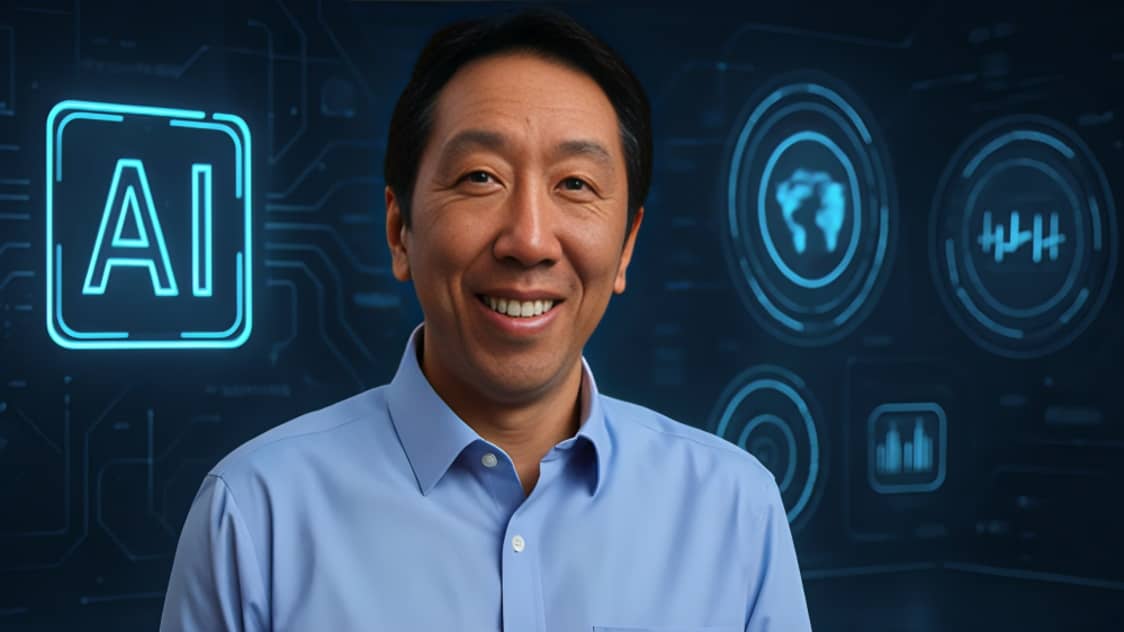

Artificial intelligence researcher and entrepreneur Andrew Ng, co founder of Google Brain and Coursera, has explained the concept of loop engineering, describing it as an important approach for building more reliable and effective AI applications. According to Ng, the technique enables developers to improve AI systems through continuous feedback and repeated refinement while ensuring that human expertise remains an essential part of the process.
Loop engineering refers to the practice of designing AI workflows in which outputs are repeatedly evaluated, refined, and improved through structured feedback mechanisms. Instead of relying on a single interaction between a user and an AI model, developers create cycles where the system reviews previous results, identifies areas for improvement, and generates better responses or solutions over multiple iterations.
Ng emphasized that the effectiveness of modern AI applications depends not only on the capabilities of large language models but also on the quality of the surrounding software architecture. Carefully designed workflows can help AI systems perform complex tasks more accurately by combining reasoning, validation, testing, and continuous improvement.
One of the key advantages of loop engineering is its ability to reduce errors. AI generated content can be automatically reviewed using predefined evaluation criteria or additional AI models before being presented to users. In software development, this approach can allow AI systems to write code, test it, identify bugs, revise the code, and repeat the process until quality standards are achieved.
The concept is increasingly being applied across a wide range of industries. Developers are using iterative AI workflows for programming assistance, customer support, document analysis, medical research, financial services, education, and scientific computing. In each case, repeated evaluation helps improve consistency and reliability while reducing the likelihood of inaccurate outputs.
Despite rapid advances in artificial intelligence, Ng stressed that human oversight remains essential. He explained that AI systems should support human decision making rather than replace it entirely. Developers, domain experts, and end users continue to play an important role in defining objectives, reviewing results, correcting mistakes, and ensuring that AI applications operate responsibly.
Loop engineering also supports the development of more robust enterprise AI systems by enabling continuous monitoring and improvement after deployment. Organizations can collect feedback from users, measure system performance, identify recurring issues, and update workflows to enhance future results.
The growing popularity of agent based AI systems has further increased interest in iterative workflows. AI agents often perform multiple connected tasks such as planning, executing actions, evaluating outcomes, and making adjustments before completing an assignment. Loop engineering provides the structured framework needed to support these complex processes.
Industry experts believe that workflow design is becoming as important as the underlying AI model itself. High quality applications increasingly depend on how developers integrate artificial intelligence with data management, testing procedures, user feedback, security measures, and governance practices.
As artificial intelligence adoption continues to expand across industries, loop engineering is expected to become an important component of next generation AI software development. By combining automated reasoning with continuous improvement and responsible human supervision, developers aim to create applications that are more accurate, dependable, and better suited to solving real world problems.


