
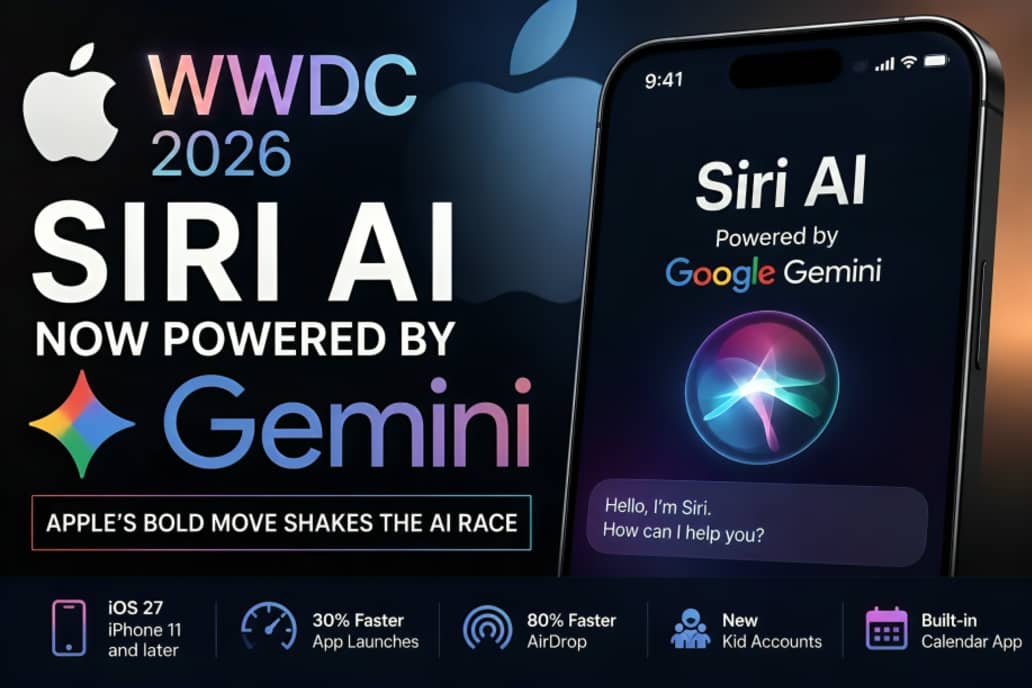
Apple has unveiled a range of new artificial intelligence features and enhancements to Siri during its annual Worldwide Developers Conference 2026, showcasing the company's continued focus on integrating AI across its ecosystem of devices and services. However, the company has also indicated that certain AI-powered Siri capabilities will not be launched immediately in the European Union due to regulatory and compliance-related concerns.
The announcement has drawn attention from the technology industry, regulators, developers, and consumers, as artificial intelligence increasingly becomes a key battleground among major global technology companies. Apple has been investing heavily in AI-driven technologies aimed at improving user experiences across iPhone, iPad, Mac, Apple Watch, and other platforms.
The newly introduced Siri enhancements are designed to make the digital assistant more intelligent, context-aware, and capable of handling complex user requests. AI-powered improvements are expected to help Siri better understand conversations, provide more personalized responses, and integrate more deeply with applications and device functions.
Despite unveiling these advancements, Apple stated that certain AI features will not be available in European Union countries during the initial rollout phase. The decision is believed to be linked to ongoing regulatory considerations and the need to ensure compliance with European laws governing digital markets, competition, privacy, and data protection.
The European Union has implemented several major technology regulations in recent years aimed at increasing transparency, protecting consumer rights, and promoting fair competition within digital markets. Large technology companies operating in the region are required to meet strict compliance standards before introducing new products and services.
Industry analysts note that artificial intelligence systems often involve complex issues related to data processing, user privacy, interoperability, and platform access. As regulators around the world continue developing AI-related frameworks, technology firms must carefully evaluate legal requirements before launching new capabilities.
Apple has consistently positioned itself as a company that prioritizes privacy and security. The company has frequently emphasized on-device processing and privacy-focused technologies as key elements of its product strategy. As AI capabilities become more advanced, balancing innovation with regulatory compliance is expected to remain an important challenge.
The European Union has become one of the most influential regulatory regions for global technology companies. Decisions made by European authorities often shape how products and services are designed and deployed worldwide. As a result, companies frequently adjust launch strategies to ensure compliance with regional regulations.
Developers attending the Worldwide Developers Conference received demonstrations of Apple's latest software updates, artificial intelligence tools, and platform enhancements. Many of these innovations are expected to support productivity, communication, creativity, and user engagement across Apple's ecosystem.
Market observers believe the delay of certain Siri AI features in the European Union reflects the broader regulatory environment surrounding artificial intelligence. Governments and policymakers globally are increasingly focused on establishing rules that encourage innovation while addressing concerns related to privacy, transparency, and consumer protection.
Apple has not indicated a specific timeline for the launch of the affected AI features in European Union markets. The company is expected to continue working with regulators to address compliance requirements and ensure that future rollouts meet applicable standards.
As artificial intelligence becomes central to the next generation of digital products, the interaction between technology innovation and regulatory oversight is likely to remain a major focus for companies, policymakers, and consumers worldwide.


