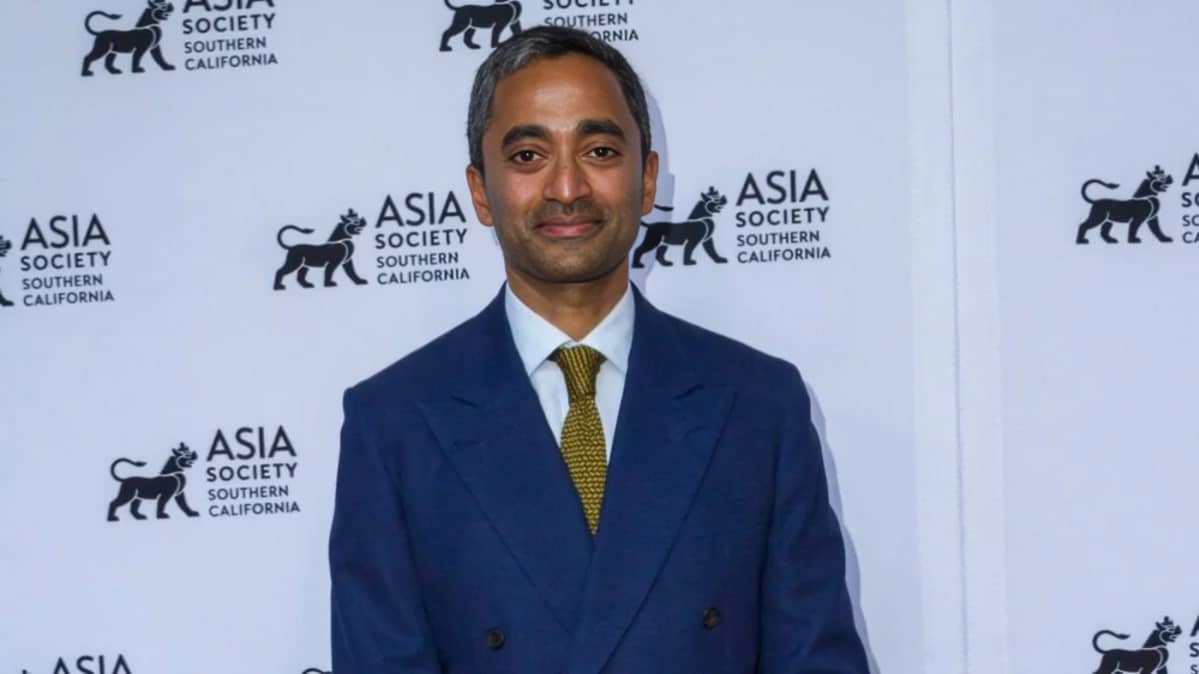

Venture capitalist Chamath Palihapitiya has raised concerns about the growing backlash against artificial intelligence infrastructure, particularly the rapid expansion of data centres in the United States.
Data centres are essential to the development and operation of modern AI systems. As companies build increasingly powerful models, they require large amounts of computing capacity, which has led technology companies to invest heavily in new data centre facilities.
However, the expansion has increasingly faced opposition from local communities and politicians. Palihapitiya has warned that the technology industry could face a significant political and public relations problem if these concerns are not addressed effectively.
Palihapitiya's criticism of AI leaders
Palihapitiya has specifically criticised prominent AI industry figures, including OpenAI CEO Sam Altman and Anthropic CEO Dario Amodei.
His argument is that AI companies have not done enough to explain why communities should support the construction of large data centres.
According to Palihapitiya, technology companies need to demonstrate the tangible benefits that these facilities can provide to local communities instead of assuming that economic and technological progress will automatically generate public support.
He described the growing resistance as a potentially volatile situation and warned that the issue could develop into a broader political challenge for the AI sector.
Why data centres are facing opposition
AI data centres require substantial amounts of electricity to operate their servers and cooling systems.
The rapid growth of AI has therefore increased pressure on power infrastructure in areas where new facilities are being planned.
Local residents have also raised concerns about noise generated by large facilities, environmental effects and the availability of water and other resources.
Another concern is employment. While the construction of a data centre can create many temporary jobs, the number of permanent employees required once the facility becomes operational can be relatively limited.
These issues have contributed to growing debate over whether local governments should approve new data centre projects.
Political pressure is increasing
The debate is no longer limited to neighbourhood-level opposition.
According to recent reports, data centre development has become a political issue in several US states. Both Republican and Democratic politicians have expressed concerns about the effects of large facilities on electricity infrastructure and local communities.
This has increased pressure on technology companies to engage more directly with policymakers and residents.
Palihapitiya has warned that if opposition continues to grow, more politicians could take positions against rapid data centre expansion.
AI companies need a new communication strategy
One of Palihapitiya's central arguments is that AI companies need to improve how they communicate with the public.
Technology companies frequently highlight the potential of artificial intelligence to transform healthcare, science, productivity and the economy.
However, residents living near proposed data centres may be more concerned about immediate local issues such as electricity costs, noise, environmental impact and employment.
Palihapitiya believes the industry needs to connect its broader AI ambitions with tangible benefits for the communities hosting its infrastructure.
Dario Amodei and the trust debate
Anthropic CEO Dario Amodei has also spoken publicly about the growing public distrust surrounding artificial intelligence.
Amodei has argued that the backlash reflects a broader crisis of trust in technology companies and institutions. He has rejected the idea that warnings about AI risks alone are responsible for opposition to the technology.
Amodei has also argued that AI companies need to deliver meaningful benefits to society rather than relying only on promises about what the technology could eventually achieve.
This highlights a broader disagreement within the technology sector over how AI companies should communicate with the public.
Sam Altman's position
OpenAI CEO Sam Altman has generally presented AI as a transformative technology with the potential to produce significant economic and scientific benefits.
At the same time, the rapid development of AI has generated concerns about employment, safety, privacy and the concentration of technological power.
The debate surrounding data centres adds another physical dimension to those concerns because AI expansion requires large-scale infrastructure.
As more computing facilities are built, companies must deal not only with technological challenges but also with community and political resistance.
Economic importance of data centres
Data centres play a central role in the modern digital economy.
They support cloud computing, online services, artificial intelligence models, streaming platforms and numerous business applications.
For AI companies, data centre capacity is particularly important because training and operating advanced AI systems require powerful computing hardware.
Supporters argue that data centre construction can bring investment, infrastructure improvements, construction employment and tax revenue to communities.
However, opponents argue that these benefits must be balanced against the demands placed on local electricity networks and other resources.
The challenge for the AI industry
The AI industry is now facing a difficult balancing act.
Companies want to expand computing capacity quickly because demand for AI services continues to grow.
At the same time, local governments and communities are increasingly asking questions about the cost and impact of this expansion.
This creates a challenge for companies such as OpenAI and Anthropic, which need large amounts of computing infrastructure to develop increasingly advanced AI systems.
The debate could influence where future data centres are built and how quickly new projects receive regulatory approval.
Community benefits could become more important
Some technology companies have already begun offering financial incentives and community investment programmes in areas where they are developing data centres.
Such measures can include investments in local infrastructure, education programmes and other community initiatives.
However, critics argue that financial incentives alone may not resolve concerns about electricity consumption, noise and environmental impact.
A more comprehensive approach could require companies to work with local communities before projects are approved and clearly explain how residents are expected to benefit.
A growing trust problem
The controversy surrounding data centres is part of a larger debate about public confidence in artificial intelligence.
Surveys have indicated that many people remain uncertain or concerned about the rapid development of AI.
Young people, in particular, have expressed concerns about the impact of AI on employment and their future careers. A recent survey reported that many younger Americans are concerned about the pace of AI development and favour greater oversight.
This means that AI companies may need to address both the technical and social consequences of their expansion.
What could happen next
The debate over AI data centres is likely to continue as technology companies increase investment in computing infrastructure.
Future projects could face greater scrutiny from local governments, residents and environmental groups.
Companies may therefore need to provide clearer information about electricity use, water consumption, noise reduction, employment opportunities and local economic benefits.
For AI leaders, the challenge will be to demonstrate that the infrastructure required for artificial intelligence can create meaningful benefits while limiting its impact on surrounding communities.
Conclusion
Chamath Palihapitiya's latest comments highlight a growing challenge for the artificial intelligence industry.
While AI companies are investing heavily in data centres to support the next generation of technology, communities and politicians are increasingly questioning the local costs of these facilities.
Palihapitiya has criticised AI leaders such as Sam Altman and Dario Amodei for not doing enough to explain the benefits of data centre development and address public concerns.
Electricity demand, noise, environmental concerns and questions about permanent employment are among the issues driving opposition.
The controversy suggests that the future expansion of AI will depend not only on technological progress but also on the industry's ability to build public trust and establish stronger relationships with the communities where its infrastructure is located.