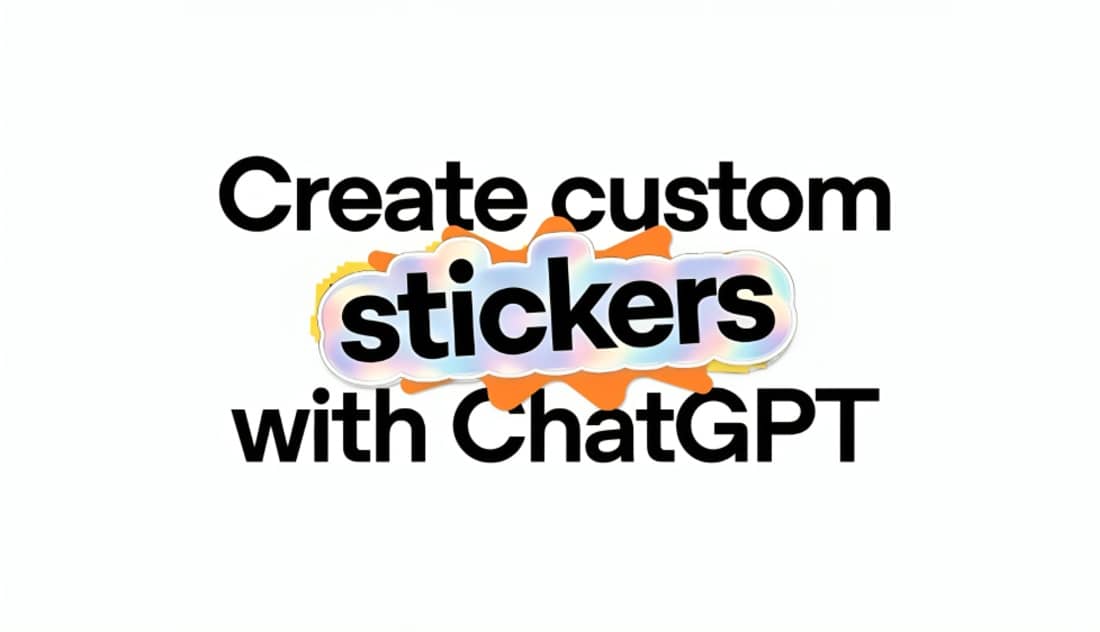
OpenAI has introduced a new creative feature in ChatGPT that allows users to create personalised sticker packs using artificial intelligence. The new Stickers feature is designed to turn ideas, photographs, personal memories and everyday moments into custom stickers that can be used in messaging conversations.
The feature is powered by ChatGPT Images 2.0, OpenAI's latest image generation technology. According to reports on the rollout, the feature is available globally to ChatGPT mobile users at no additional cost.
The new tool is aimed at users who want to create stickers without relying on separate design applications. Instead of manually editing images, users can describe the type of stickers they want in a text prompt. ChatGPT can then generate a collection based on that description.
Users can create stickers around a wide range of subjects. Examples include pets, food, friends, personal memories, favourite characters and humorous reactions. The feature can also be used to create stickers based on an uploaded photograph.
One of the main features is the ability to create a complete sticker pack rather than generating only one sticker at a time. According to the available information, users can create up to nine stickers in a single pack.
The stickers can also be produced in different visual styles. Reports say that users can choose from 18 styles, including options such as anime, three dimensional and holographic designs. This gives users the ability to create different looks depending on the type of conversation or personality they want their stickers to reflect.
Another feature allows users to remix generated stickers with emojis. This can help users create variations of an existing sticker without starting the entire creation process again.
The generated stickers are designed with transparent backgrounds, making them suitable for use in messaging applications. Once a sticker pack has been created, users can download the images or share them through supported messaging services.
WhatsApp and iMessage are among the platforms mentioned in connection with the new feature. This means users can create their sticker collection inside ChatGPT and then use the resulting images in their regular conversations.
The process begins inside the ChatGPT mobile application. Users can select the Images option and then choose the Stickers option. They can describe the sticker pack they want ChatGPT to create and provide additional details about the preferred style or theme.
For example, a user could request a sticker pack based on a pet, a group of friends or a particular set of reactions. The user can also upload an existing photograph and ask ChatGPT to transform it into sticker designs.
This approach could make sticker creation more accessible to people who do not have experience with image editing software. Instead of learning graphic design tools, users can explain their ideas in natural language and allow the AI system to generate the artwork.
The feature also expands the role of ChatGPT beyond traditional text based conversations. In recent years, AI image generation has become increasingly popular, and OpenAI has continued to add visual creation capabilities to ChatGPT.
The sticker tool is particularly focused on casual communication. Stickers are commonly used to express emotions, reactions and humour in messaging conversations, and personalised stickers can provide a more individual way for users to communicate.
For example, users can create different reactions for situations such as happiness, surprise, celebration or frustration. They can also create stickers based on inside jokes shared with friends and family.
The ability to use personal photographs adds another dimension to the feature. Users can potentially transform photographs of themselves, their pets or other personal subjects into sticker designs. However, users should consider privacy and consent when uploading photographs involving other people.
The introduction of the feature also reflects the growing connection between generative AI and everyday digital communication. Rather than using only pre-designed sticker collections, users can now create visual content specifically for individual conversations.
OpenAI has also highlighted the creative possibilities of its image generation technology. The company has been expanding image creation capabilities within ChatGPT, allowing users to generate and modify visual content through conversational instructions.
The new sticker feature builds on those capabilities by providing a more specific format for messaging applications.
The rollout is particularly relevant for mobile users because messaging and social communication are heavily concentrated on smartphones. By making sticker creation available directly through the ChatGPT mobile experience, users do not necessarily need to switch between multiple applications to develop their ideas.
The feature also gives users the ability to experiment with different styles. A person could create one sticker pack in an anime inspired style and another in a three dimensional or holographic style. This flexibility can make the tool useful for different types of personal expression.
The new capability comes at a time when AI generated images are becoming increasingly common across social media, entertainment and digital communication. Personalised stickers represent a relatively simple way for users to turn AI generated images into content that can be used in everyday conversations.
The feature is reportedly being rolled out globally on mobile devices. Users should check their ChatGPT application for the Stickers option, as availability and interface details can vary depending on the rollout.
It is also important to distinguish the new feature from the earlier ChatGPT WhatsApp service. OpenAI had previously announced that ChatGPT would no longer be available directly through WhatsApp after January 15, 2026, because of changes to WhatsApp's policies and terms. The new feature allows users to create stickers in ChatGPT and share the resulting content through WhatsApp; it does not mean that the old ChatGPT conversational service has returned to WhatsApp globally.
For users who want to try the feature, the basic process is straightforward. Open ChatGPT on a supported mobile device, go to Images, select Stickers and describe the desired sticker pack. Users can provide a theme, visual style and other instructions. They can also use a photograph as the starting point where supported.
After the sticker pack is generated, users can review the results and make changes or create variations. The final stickers can then be downloaded or shared through supported messaging platforms.
The feature could be especially useful for users who frequently communicate through WhatsApp and want stickers that are more personal than standard sticker packs. It could also provide a simple way for families and friend groups to create stickers based on shared memories or humorous situations.
Overall, OpenAI's new Stickers feature adds another practical use for AI image generation. By combining text prompts, photographs, multiple visual styles and direct sharing options, ChatGPT is making personalised sticker creation easier for everyday users.
The rollout also demonstrates how generative AI is moving beyond conventional content creation and becoming part of ordinary digital communication. For users who enjoy personalised visual messages, the new ChatGPT sticker maker could offer a simple way to create unique sticker packs for WhatsApp and other messaging platforms.