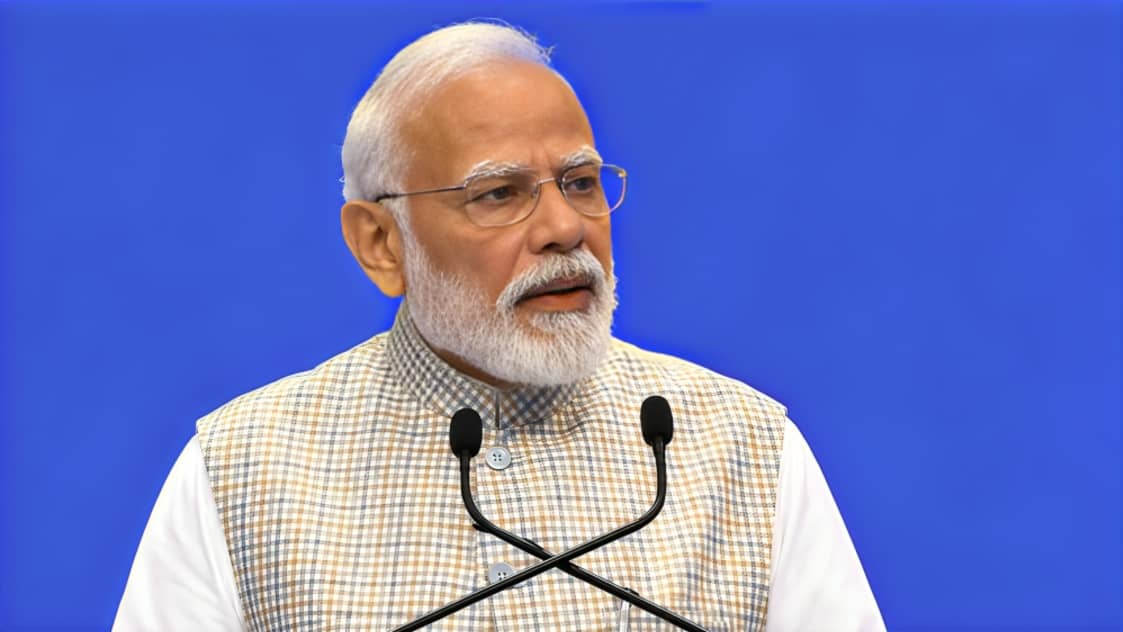
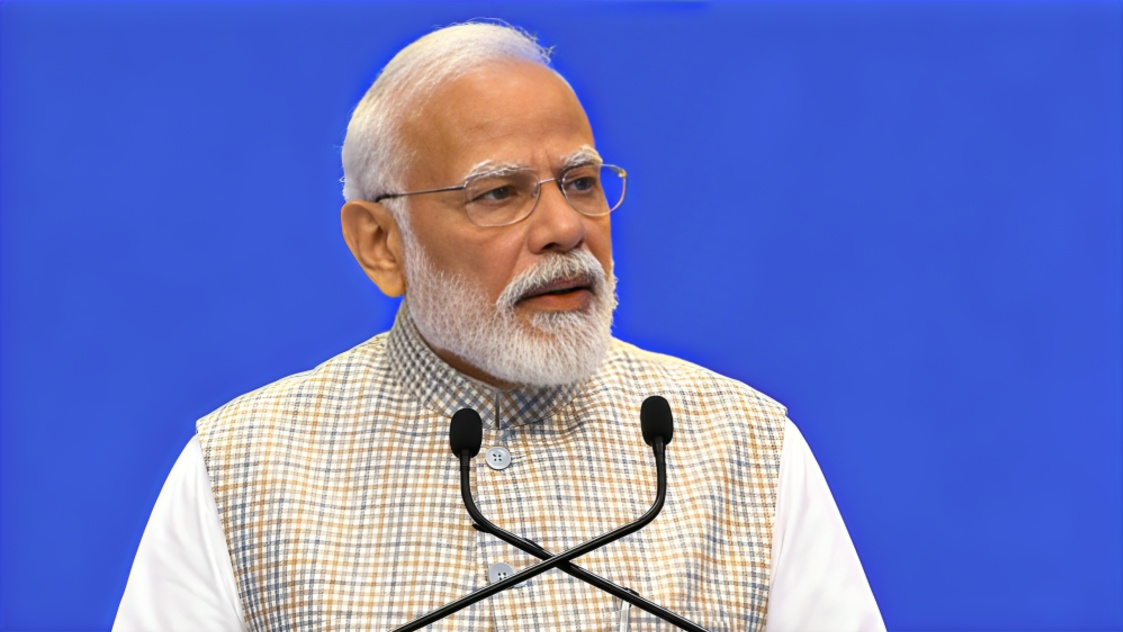
Prime Minister Narendra Modi inaugurated the 10th edition of India Mobile Congress 2026 at Yashobhoomi in New Delhi on October 8. The four day technology and telecommunications event is being held from October 7 to October 10 and brings together companies, startups, investors, policymakers, researchers and technology leaders from India and other countries.
The theme of India Mobile Congress 2026 is Scale Without Boundaries. The theme reflects India’s focus on expanding digital innovation, next generation connectivity and technology driven growth. The event is being jointly organised by the Department of Telecommunications and the Cellular Operators Association of India.
During the inauguration, Prime Minister Modi highlighted the wider impact of mobile and digital technologies on everyday life. He said mobile phones have moved beyond being simple communication devices and have contributed to reducing travel, waiting time and costs while improving convenience for citizens.
The Prime Minister also pointed to the changing role of mobile technology in entertainment and content creation. He noted that smartphones can now function as gaming devices and creation platforms, reflecting the rapid expansion of digital services and faster internet connectivity in India.
India Mobile Congress 2026 is being held at a time when India is expanding its focus from 5G deployment towards next generation connectivity and 6G research. The event provides a platform for companies and policymakers to discuss developments in telecommunications, artificial intelligence, digital infrastructure and emerging technologies.
The 2026 edition covers several established technology sectors. These include 5G and 6G, next generation AI networks, semiconductors, non terrestrial networks, cybersecurity, quantum communication, enterprise transformation, circular economy and ESG, and electronics manufacturing.
The event has also expanded into four new areas this year. These are smart mobility, stadium experiences, industrial robotics and transport technology. The expansion reflects the increasing connection between telecommunications and other technology driven sectors.
Artificial intelligence is one of the major themes at the event. AI is increasingly being integrated into telecom networks, enterprise applications and digital services. AI based network management can help operators analyse network performance, identify problems and improve the efficiency of digital infrastructure.
The event is also showcasing technologies connected with 6G. While 5G networks continue to expand across India, research into 6G is focused on developing higher capacity networks and integrating communication with computing, sensing and artificial intelligence.
Union Communications Minister Jyotiraditya Scindia had earlier said that India’s next phase of telecom development should focus on taking locally developed innovations and technologies to international markets. He also highlighted the role of initiatives such as the Bharat 6G Alliance and telecom manufacturing programmes.
The government has also highlighted India’s progress in 5G connectivity. According to statements made ahead of the event, nearly 500 million people had been connected to 5G services within two and a half years, supported by substantial investment and the expansion of telecom infrastructure.
Cybersecurity is another major area of discussion at India Mobile Congress 2026. As digital services become more widely used, protecting mobile networks, devices, applications and user information has become increasingly important.
During his address, Prime Minister Modi emphasised the need to strengthen security frameworks for telecommunications and digital technology. He also highlighted deepfakes as an emerging challenge and called for work towards a global framework to address the issue.
Deepfake technology has become a growing concern because artificial intelligence can be used to create realistic but manipulated audio, images and videos. Such content can create challenges related to misinformation, fraud, public trust and digital safety.
The Prime Minister also highlighted the role of Digital India in expanding access to technology. The government has positioned digital public infrastructure as an important part of India’s digital transformation, with online services increasingly being used for payments, public services, communication and other activities.
In his remarks, Modi also described India’s shift from being primarily a consumer of technology towards becoming a creator of technology and digital products. He highlighted the importance of developing products, designs, technologies and intellectual property within the country.
The focus on domestic technology development is also connected with India’s semiconductor and electronics manufacturing ambitions. Semiconductor production, telecom equipment manufacturing and electronics production are being developed as important components of the country’s technology ecosystem.
India Mobile Congress provides companies with an opportunity to demonstrate products and technologies in these areas. The event also gives startups an opportunity to present their innovations to investors, technology companies and government representatives.
According to the Prime Minister’s Office, IMC 2026 is expected to attract more than 1.5 lakh attendees from over 100 countries. The event is expected to feature more than 500 partners and exhibitors, 600 startups and 900 thought leaders. More than 2,000 technology use cases and over 120 sessions are planned during the four day programme.
The international participation is significant because telecommunications and digital technology are increasingly global industries. Standards developed for 5G, 6G, artificial intelligence and cybersecurity can affect markets across countries.
India is also seeking to strengthen its position as a technology development and manufacturing hub. The government has been encouraging telecom equipment production, electronics manufacturing and domestic innovation through various policy initiatives.
At IMC 2026, companies are displaying technologies ranging from next generation wireless networks to AI systems, satellite communication, robotics and smart mobility solutions. These demonstrations show how telecommunications infrastructure is increasingly becoming connected with other technology sectors.
Industrial robotics is one of the new focus areas at this year’s event. Robots are increasingly being used in manufacturing, logistics and industrial environments, while improved connectivity can enable machines to exchange information and operate as part of connected systems.
Smart mobility is another area receiving attention. Connected vehicles and intelligent transport systems rely on communications networks to exchange information between vehicles, infrastructure and users. Developments in 5G and future 6G technologies could support more advanced connected mobility applications.
Transport technology is also being discussed as part of the broader digital transformation. The integration of communications, artificial intelligence, sensors and data processing is creating new possibilities for transportation and logistics.
Stadium experiences have also been added to the event’s sectoral focus. Modern sports and entertainment venues increasingly use high speed connectivity, digital displays, connected devices and immersive technologies to improve visitor experiences.
The event therefore extends beyond conventional mobile phone technology. Its programme reflects the broader role of telecommunications as a foundation for connected services and digital infrastructure.
The government has also stressed the importance of affordability and inclusion. Prime Minister Modi has said that technology and digital services should remain accessible to people across different sections of society, including underserved populations and countries in the Global South.
Digital inclusion remains an important policy consideration because access to fast internet and digital services can influence education, employment, financial services and access to government facilities. Expanding connectivity is therefore being considered alongside efforts to make digital services more affordable and accessible.
The discussions at India Mobile Congress 2026 also come as artificial intelligence is becoming increasingly important across the technology sector. AI is being integrated into networks, devices, cloud platforms and enterprise systems, creating new opportunities while also raising questions about cybersecurity, privacy and responsible use.
For India’s telecommunications industry, the transition from 5G towards 6G is expected to be an important area of research and investment in the coming years. The country is working with industry and research institutions to develop technologies that could contribute to future communication standards.
Overall, India Mobile Congress 2026 is being positioned as a major platform for showcasing India’s progress in telecommunications and digital technology. The event brings together established companies and emerging startups while providing opportunities for international collaboration.
Prime Minister Modi’s inauguration has placed particular emphasis on the broader social and economic impact of technology. His remarks highlighted mobile connectivity, Digital India, artificial intelligence, cybersecurity and the need to develop technology within the country.
With the event continuing until October 10, participants are expected to discuss developments in 5G, 6G, AI, semiconductors, robotics, smart mobility and other emerging technologies. The focus will remain on how these technologies can support digital growth while maintaining security, accessibility and public trust.