

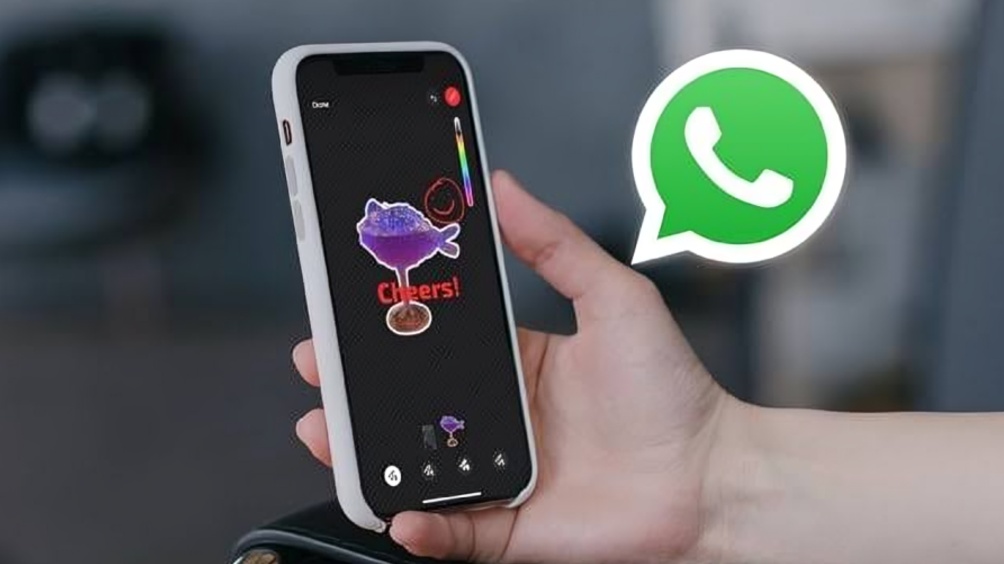
OpenAI is reportedly developing a new feature for ChatGPT that could allow users to create custom stickers and export them directly to WhatsApp. The reported feature would give users another way to use AI generated content in everyday messaging and could make the process of creating personalised stickers considerably easier.
Stickers have become an important part of digital communication. Along with emojis and GIFs, they allow people to express emotions, reactions, humour and ideas through visual content. Unlike standard emojis, stickers can offer more detailed designs and can be customised around particular characters, situations or messages.
The reported ChatGPT feature could take this concept further by allowing users to create stickers with the help of artificial intelligence. Instead of designing a sticker manually through a separate graphics application, users could potentially describe what they want and allow ChatGPT to generate the visual content.
The possibility of exporting those creations directly to WhatsApp could make the feature more convenient. WhatsApp is widely used for personal and group communication, and users frequently rely on stickers to make conversations more expressive.
If the feature is officially introduced, users could potentially create personalised stickers for different occasions. These could include reactions, greetings, celebrations, jokes or other forms of visual communication.
The development would also demonstrate how generative AI is expanding beyond traditional text based interactions. ChatGPT has increasingly been used for creating and working with different types of content, including images and other creative material. A sticker creation feature could provide another practical use for the technology.
However, the reported feature should be treated as a development in progress until OpenAI officially announces its availability. Features being tested or discovered during development may change before a public release, and some experimental functions may never become widely available.
For users, the potential integration with WhatsApp could reduce the number of steps required to use AI generated content in messaging applications. Currently, users who create visual content through an AI platform may need to save the image, convert it into an appropriate format and then import it into a messaging application.
A direct export option could simplify this process.
The feature could be particularly useful for users who regularly create personalised digital content. Small businesses, content creators and social media users could potentially use custom stickers for branding, promotions or communication.
For ordinary WhatsApp users, the main attraction could be personalisation. AI generated stickers could allow users to create visuals based on specific conversations rather than relying only on the standard sticker collections available through messaging platforms.
The popularity of stickers has grown as messaging applications have expanded their multimedia capabilities. Stickers are often used as quick visual responses because they can communicate an idea without requiring a written message.
AI could make this form of communication more flexible by allowing users to generate new designs whenever they need them.
For example, a user could potentially request a sticker showing a particular emotion, character or situation. ChatGPT could then generate the visual concept, which could be exported for use in WhatsApp if the reported feature becomes available.
The integration could also make AI tools more relevant to everyday users who may not regularly use generative AI for professional tasks. Creating a sticker is a simple and familiar activity, making it an accessible demonstration of AI capabilities.
At the same time, the introduction of AI generated stickers could raise questions about content moderation and intellectual property. An AI system would need to handle requests involving copyrighted characters, trademarks and other protected material appropriately.
The platform would also need safeguards to prevent the creation of abusive, deceptive or otherwise harmful content.
Privacy could be another consideration. If a feature is integrated with a messaging application, users may want to understand what information is shared between the AI service and the messaging platform. Clear privacy controls and user consent would be important for any direct export functionality.
The reported development also reflects broader competition among technology companies to make AI tools part of everyday digital experiences. Rather than limiting AI to productivity and research tasks, companies are increasingly exploring entertainment, creativity and communication features.
ChatGPT's potential sticker functionality fits into this broader trend.
WhatsApp already supports a wide range of expressive communication formats, including text, images, GIFs, emojis, voice messages and stickers. Adding an easy way to create personalised AI powered stickers could further expand the platform's creative possibilities.
For OpenAI, such a feature could also increase engagement with ChatGPT. Users who create stickers for conversations may return to the platform repeatedly to generate new designs.
However, the actual functionality will depend on how OpenAI implements the reported feature. It is not yet clear whether users would be able to export individual stickers, complete sticker packs or other formats.
It is also unclear whether the feature would be available across all ChatGPT plans and devices or whether access could initially be limited to selected users.
Users should therefore wait for official information before assuming that the feature is available. Any instructions shared through unofficial sources should be verified against OpenAI's official announcements.
If launched, the feature could represent a small but useful expansion of ChatGPT's creative capabilities. The ability to move AI generated stickers directly into a popular messaging service could make the technology feel more integrated into everyday digital communication.
The development also highlights how AI generated images are becoming easier for ordinary users to create and share. Users without professional design experience can increasingly produce personalised visual content by describing what they want in natural language.
This could lower the barrier to creative expression and allow more people to experiment with digital design.
For WhatsApp users, the biggest advantage would likely be convenience. Instead of using multiple applications to generate, edit and transfer a sticker, the process could potentially be completed with fewer steps.
The reported ChatGPT and WhatsApp sticker feature is therefore worth watching as OpenAI continues to expand the practical uses of generative AI. While no final release details should be assumed until an official announcement, the reported development points toward a future in which AI generated content can move more easily between creative tools and everyday communication platforms.
If introduced, custom AI stickers could provide users with a simple new way to personalise their conversations while demonstrating how generative AI is increasingly becoming part of routine digital communication.


