
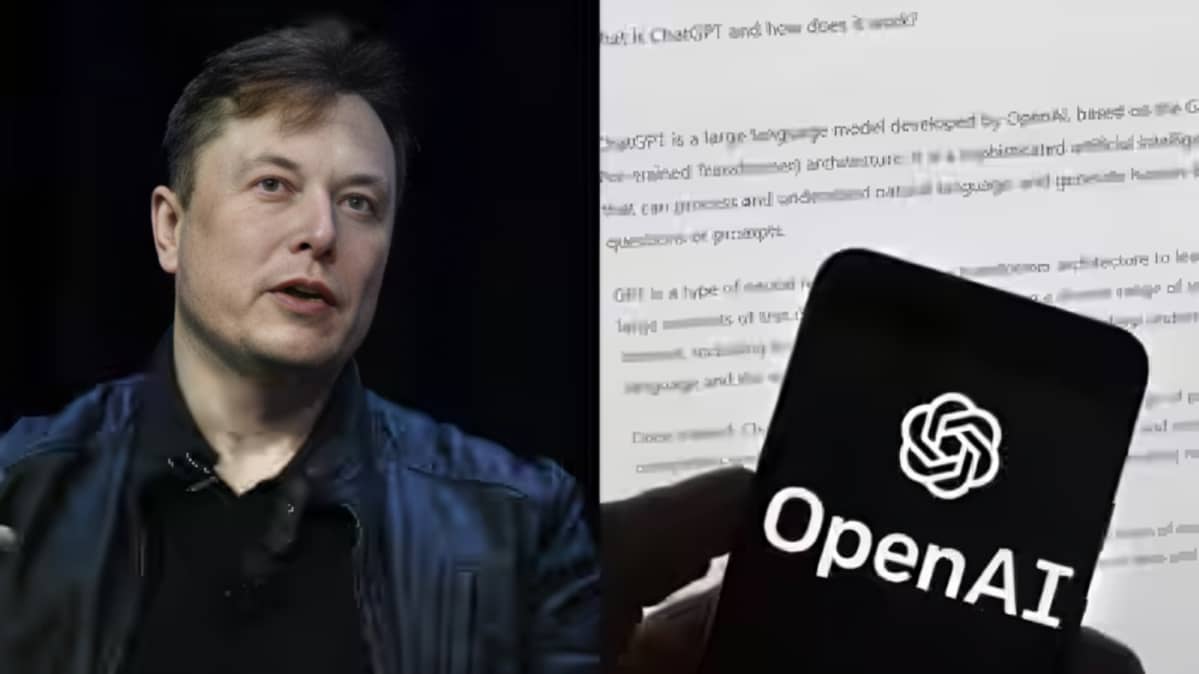

Technology entrepreneur Elon Musk has once again shared his views on the evolution of OpenAI, stating that the organization has significantly changed from the mission it was originally created to pursue. Speaking about the company's early vision, Musk suggested that OpenAI was established with the objective of promoting safe and transparent artificial intelligence development while serving as an alternative to the dominance of large technology companies in the AI industry.
OpenAI was founded nearly a decade ago as an artificial intelligence research organization with a mission focused on advancing AI technologies in ways intended to benefit society. The organization initially emphasized research, collaboration, and the responsible development of artificial intelligence while encouraging broad access to scientific progress.
Musk, who was among the early supporters of OpenAI before later distancing himself from the organization, said that the company's current direction differs from its founding principles. He argued that the organization has evolved in ways that were not originally envisioned during its establishment.
Over the past several years, OpenAI has become one of the world's leading developers of generative artificial intelligence technologies. Its AI models are widely used for applications including writing assistance, software development, education, business productivity, research, and customer support. The company has also formed strategic partnerships that have expanded the reach of its AI technologies across multiple industries.
The rapid commercialization of artificial intelligence has transformed the competitive landscape of the technology sector. Major companies are investing heavily in AI research, cloud computing infrastructure, semiconductor technology, and advanced language models to strengthen their positions in one of the fastest growing segments of the global digital economy.
Artificial intelligence is increasingly viewed as a foundational technology with applications across healthcare, education, finance, manufacturing, transportation, scientific research, entertainment, and public services. As investment in AI continues to accelerate, discussions surrounding governance, transparency, safety, and responsible deployment have become more prominent.
Musk has consistently expressed concern about the long term implications of advanced artificial intelligence. He has frequently advocated for stronger oversight, international cooperation, and regulatory frameworks designed to ensure that increasingly capable AI systems are developed responsibly and safely. His comments reflect broader debates taking place among researchers, policymakers, and technology leaders worldwide.
The discussion surrounding OpenAI also highlights the changing nature of AI research organizations. Many institutions that began as research focused initiatives have expanded into commercial product development as demand for AI powered services has grown rapidly across consumer and enterprise markets. This shift has prompted ongoing conversations about balancing commercial success with research objectives and public interest.
Industry analysts note that artificial intelligence development requires substantial financial investment in computing infrastructure, data centres, engineering talent, and research. Strategic partnerships and commercial operations often provide the resources necessary to sustain large scale AI innovation, although they may also influence organizational priorities over time.
The broader AI ecosystem continues to evolve rapidly, with competition among leading technology companies driving continuous improvements in model capabilities, performance, and accessibility. Organizations around the world are introducing increasingly sophisticated AI systems designed to support businesses, developers, educators, and consumers.
Experts believe that public discussions involving prominent technology leaders contribute to ongoing conversations about the future direction of artificial intelligence. Questions related to openness, transparency, governance, competition, and ethical development are expected to remain central as AI technologies become more deeply integrated into everyday life.
Musk's latest comments reflect his longstanding perspective on the importance of responsible AI development and the need to ensure that advanced technologies serve the broader interests of society. As artificial intelligence continues to advance at a rapid pace, debates regarding the mission, governance, and future direction of leading AI organizations are likely to remain an important part of the global technology conversation.


