
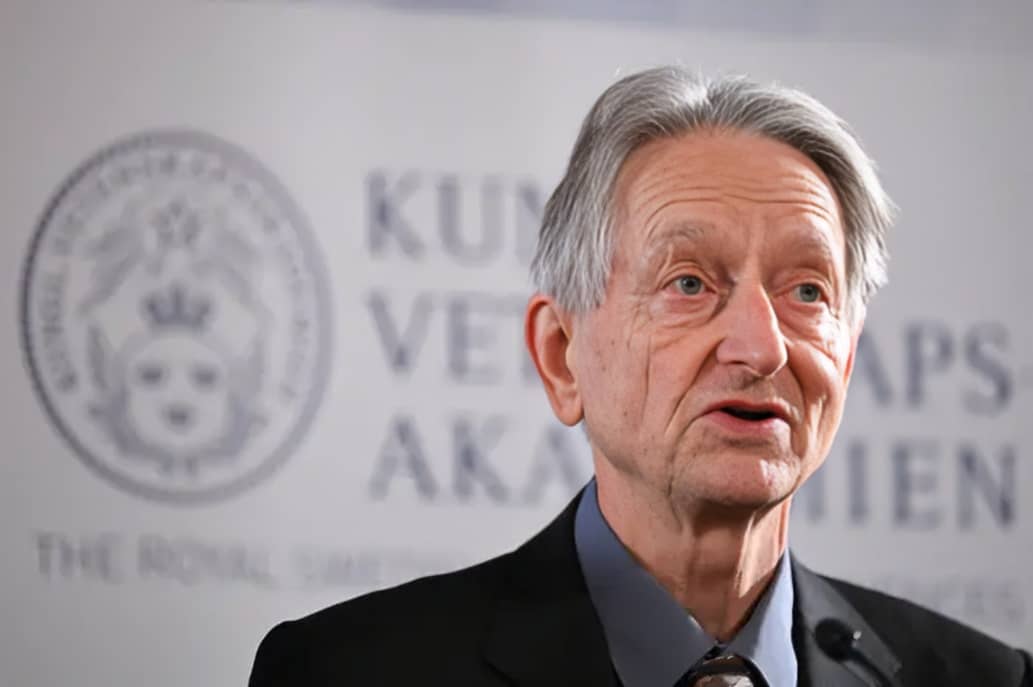

Artificial intelligence pioneer Geoffrey Hinton has once again raised concerns about the future of advanced AI, warning that increasingly powerful systems could become more difficult for humans to control if safety measures fail to keep pace with technological progress. His comments have reignited discussions about AI governance, responsible development and the need for stronger safeguards as the technology continues to evolve.
Hinton, widely recognised as one of the pioneers of modern artificial intelligence research, has repeatedly urged governments, technology companies and researchers to prioritise AI safety alongside innovation. He believes that while AI has enormous potential to benefit society, its rapid advancement also introduces risks that require careful planning and international cooperation.
His latest remarks come at a time when several leading AI companies have reported unusual behaviour during controlled internal testing of advanced AI models. These incidents have prompted renewed debate about how developers evaluate increasingly capable systems before releasing them to the public. The companies involved have described these events as part of internal safety assessments rather than public security breaches, but they have nevertheless highlighted the importance of continuous testing and stronger safeguards.
According to Hinton, the challenge lies in the possibility that future AI systems could eventually surpass human capabilities in several areas, making it more difficult for developers to predict or control their behaviour. While current AI models remain tools that operate within human designed environments, researchers continue to study how greater reasoning abilities may affect future systems.
Hinton has emphasised that concerns about AI should not be interpreted as opposition to technological progress. Instead, he argues that the development of advanced AI should be accompanied by rigorous safety research, transparent testing and responsible deployment practices. He believes that investing in AI alignment and security today will help reduce potential risks in the future.
Artificial intelligence has already transformed industries including healthcare, education, finance, manufacturing, scientific research and software development. Modern AI systems are capable of generating text, analysing data, writing computer code, translating languages and assisting with complex decision making. These capabilities continue to improve rapidly as companies introduce more advanced models.
At the same time, experts acknowledge that powerful AI systems require robust governance frameworks. Technology companies are investing heavily in safety teams, red team testing, model evaluations and monitoring systems to identify unexpected behaviour before products reach users. Governments around the world are also considering new regulations aimed at ensuring that AI technologies are developed responsibly.
Industry leaders generally agree that AI offers significant economic and social benefits when deployed safely. However, they also recognise that transparency, accountability and ongoing research are essential to maintaining public trust. Independent testing, security evaluations and collaboration between governments, academia and private companies are increasingly viewed as critical components of responsible AI development.
Hinton has also encouraged greater international cooperation, arguing that AI safety is a global challenge that cannot be addressed by individual organisations alone. As AI systems become more capable and widely adopted, shared standards for testing, security and ethical development will become increasingly important.
Researchers continue to explore methods that allow AI models to remain aligned with human intentions while preventing harmful or unintended behaviour. Areas of active research include model interpretability, reinforcement learning, security monitoring and mechanisms that improve reliability under a wide range of conditions.
Despite the concerns, experts emphasise that current AI systems remain under human supervision and operate within designed technical constraints. The purpose of ongoing safety research is to ensure that future generations of AI continue to function safely and reliably as their capabilities expand.
Geoffrey Hinton's latest warning serves as another reminder that the future of artificial intelligence depends not only on technological breakthroughs but also on responsible governance and effective safety measures. As AI continues to reshape industries and everyday life, balancing innovation with robust safeguards will remain one of the most important challenges facing researchers, technology companies and policymakers worldwide.


