
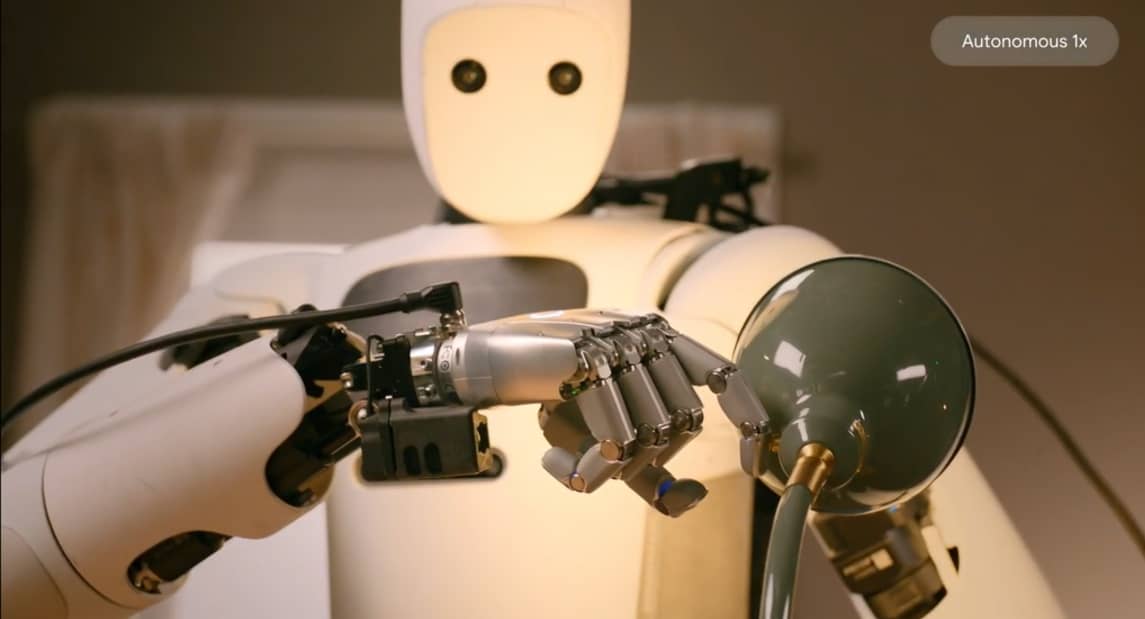
Google has announced the launch of Gemini Robotics 2, a new artificial intelligence model developed to enhance the capabilities of humanoid robots. The latest system represents another step in integrating advanced AI with robotics, allowing machines to perform more sophisticated physical tasks while interacting more naturally with their surroundings.
The announcement was accompanied by comments from Google DeepMind Chief Executive Officer Demis Hassabis, who said the upgraded model significantly improves the reasoning, planning, and manipulation abilities of robots. According to the company, Gemini Robotics 2 enables robots to complete intricate activities such as tying knots, handling delicate objects, coordinating multi-step tasks, and working alongside humans in dynamic environments.
Gemini Robotics 2 builds upon Google's broader Gemini family of artificial intelligence models. While previous versions focused primarily on language understanding and multimodal reasoning, the robotics-focused model extends these capabilities into the physical world by allowing AI systems to interpret visual information, understand spoken instructions, and execute precise movements through robotic hardware.
One of the key improvements introduced with Gemini Robotics 2 is enhanced physical reasoning. Robots equipped with the model can better understand the relationships between objects, predict the outcomes of movements, and adjust their actions when environmental conditions change. This enables more reliable performance in situations that require flexibility rather than repetitive programming.
Google stated that the model has been designed to improve robot collaboration during complex workflows. Instead of completing isolated tasks, robots can assist with sequences of interconnected activities by understanding broader objectives and adapting their actions accordingly. This capability may support applications in manufacturing, logistics, healthcare, scientific research, and warehouse automation.
According to Google DeepMind, the latest model also improves generalization. Rather than requiring extensive retraining for every new environment, robots using Gemini Robotics 2 can transfer previously learned knowledge to unfamiliar situations. This reduces development time and increases the practicality of deploying intelligent robots across different industries.
Artificial intelligence and robotics are increasingly converging as companies seek to develop machines capable of operating safely and efficiently in real-world environments. Advances in computer vision, natural language processing, motion planning, and reinforcement learning have accelerated progress toward robots that can assist humans in a wide range of tasks.
Industry experts believe intelligent robotics could transform sectors including manufacturing, healthcare, agriculture, transportation, retail, disaster response, and home assistance. Robots capable of understanding instructions, manipulating objects with precision, and adapting to changing conditions could help improve productivity while reducing repetitive manual work.
Google emphasized that safety remains a central consideration in robotics development. The company continues to invest in responsible AI research, testing procedures, and evaluation methods to ensure that robotic systems operate reliably and safely when interacting with people and physical environments.
Researchers also note that building capable humanoid robots requires more than advanced language models. Successful robotic systems depend on the integration of AI software with sensors, cameras, robotic arms, mobility systems, and real-time decision-making algorithms. Gemini Robotics 2 aims to improve this integration by combining advanced reasoning with physical action.
The announcement reflects growing investment in embodied artificial intelligence, where AI systems are designed not only to process information but also to interact directly with the physical world. Several technology companies and research organizations are actively developing humanoid robots capable of performing practical tasks in homes, factories, hospitals, and public spaces.
While widespread commercial deployment of advanced humanoid robots is still evolving, continued progress in AI models such as Gemini Robotics 2 demonstrates the rapid pace of innovation within the robotics industry. Improvements in reasoning, dexterity, adaptability, and collaboration are expected to expand the range of tasks that intelligent robots can perform in the coming years.
As artificial intelligence continues to advance, Google and other technology companies are expected to focus on creating robotic systems that combine high performance with safety, reliability, and responsible deployment. Gemini Robotics 2 represents another milestone in the broader effort to develop intelligent machines capable of supporting human activities across multiple industries.


