
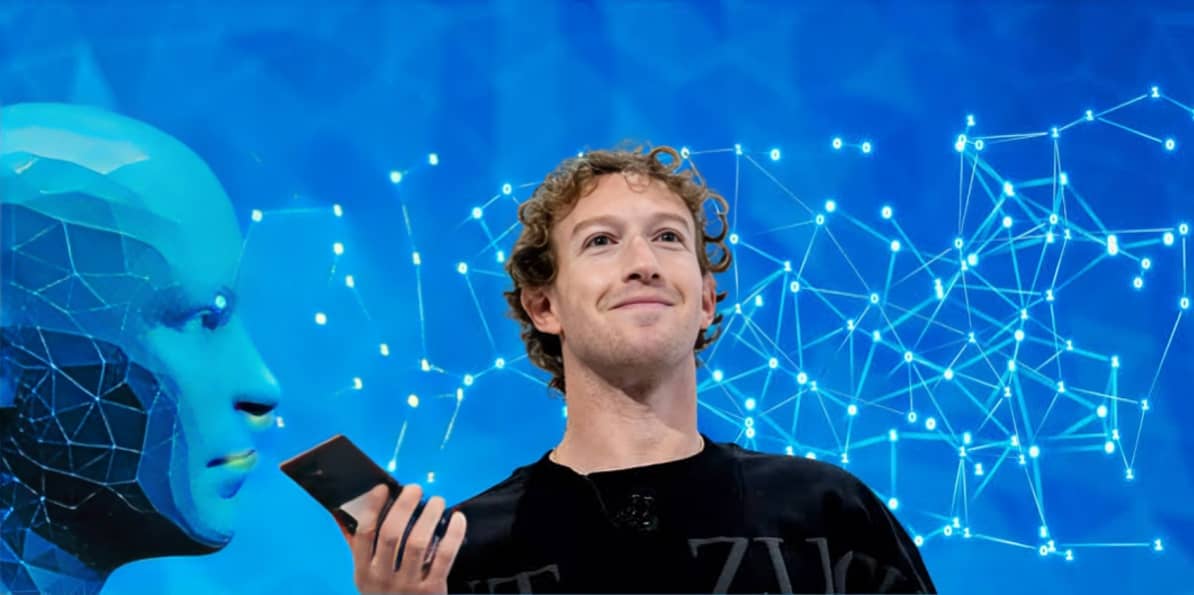

Meta CEO Mark Zuckerberg has presented a detailed vision for the future of artificial intelligence, highlighting the potential development of superintelligent AI and arguing that its benefits should be broadly available rather than concentrated among a limited number of companies or institutions.
In his lengthy essay, Zuckerberg discusses the rapid development of artificial intelligence and the possibility that increasingly capable AI systems could significantly change how people work, communicate and create. His comments come as technology companies around the world continue to invest heavily in AI research and infrastructure.
The concept of superintelligence refers to AI systems that could potentially perform a broad range of intellectual tasks at a level beyond human capabilities. Although the exact definition and timeline for such systems remain subjects of debate, the possibility has become a major focus of discussion within the technology industry.
Zuckerberg's vision places emphasis on accessibility. He argues that advanced AI should not become a technology controlled exclusively by a small group of companies or individuals. Instead, he supports the idea that people should have access to increasingly powerful AI tools that can help them pursue their own goals.
The argument reflects a broader debate about the future ownership and distribution of artificial intelligence. As AI systems become more capable, questions about who controls the technology, who benefits from it and how it should be regulated are becoming increasingly important.
Meta has been investing heavily in artificial intelligence and has positioned AI development as a major part of its long term technology strategy. The company has developed AI models, products and infrastructure aimed at expanding the use of artificial intelligence across its platforms.
Zuckerberg's comments also highlight the importance of open development in the AI sector. Open AI approaches can allow researchers, developers and businesses to study, modify and build on technology, depending on the licensing terms involved.
The debate between open and closed AI development has become increasingly prominent. Supporters of open approaches argue that broader access can encourage innovation, competition and independent research. Critics, however, point to concerns involving safety, misuse, security and the difficulty of controlling highly capable systems once they become widely available.
Zuckerberg's essay comes at a time when technology companies are competing to develop increasingly advanced AI models. Major companies are spending substantial amounts on computing infrastructure, specialised chips, data centres and research teams.
The rapid pace of development has created both optimism and concern. Supporters believe advanced AI could improve productivity, accelerate scientific research, assist with medical discoveries and create new tools for individuals and businesses.
At the same time, researchers and policymakers have raised concerns about misinformation, privacy, cybersecurity, employment disruption and the possibility of advanced AI being misused.
Zuckerberg's argument for wider access therefore forms part of a larger discussion about how society should approach increasingly capable AI systems. The question is not simply whether superintelligence can be developed but also how it should be distributed and governed.
His vision suggests that AI could become a form of personal technology capable of helping individuals achieve goals that previously required large organisations or specialised teams.
For example, advanced AI assistants could potentially support education, software development, creative work, research and business activities. If such systems become more capable, individuals could gain access to tools that significantly expand their ability to analyse information and produce content.
However, making powerful AI widely available would also require appropriate safeguards. Technology companies and governments will need to consider how advanced systems can be used responsibly while maintaining access for legitimate users.
The issue of regulation is therefore likely to remain central to discussions surrounding AI superintelligence. Different countries are developing their own approaches to AI governance, covering areas such as data protection, transparency, safety testing and accountability.
Zuckerberg's emphasis on broad access also reflects the competitive landscape of the AI industry. Companies are seeking to attract developers and users by providing powerful models and tools, while governments are considering how AI could affect national competitiveness.
For Meta, AI is becoming increasingly important across its products and services. The company has integrated AI features into social media platforms and continues to develop larger AI models and computing infrastructure.
The future described by Zuckerberg remains dependent on technological progress. While AI capabilities have advanced rapidly, there is no certainty about when or whether artificial superintelligence will be achieved.
The timeline for reaching such capabilities is debated among researchers and technology leaders. Some expect rapid progress, while others believe major technical challenges remain.
Zuckerberg's essay therefore represents a vision rather than a guaranteed prediction. It outlines how he believes society could approach an era of increasingly powerful artificial intelligence.
The central message is that advanced AI should empower individuals rather than become concentrated in the hands of a small number of organisations. The argument places personal access, technological openness and broad participation at the centre of his vision.
As the AI industry continues to develop, debates over openness, safety and control are likely to intensify. The decisions made by technology companies, governments and researchers could influence how advanced AI affects society.
Zuckerberg's comments add another perspective to this debate, particularly from the leadership of one of the world's largest technology companies.
The development of superintelligence remains uncertain, but the discussion around its potential impact is already shaping technology policy and investment. Whether the future follows the open and broadly accessible model envisioned by Zuckerberg will depend on technological advances, business decisions and regulatory frameworks.
For users and developers, the continuing expansion of AI could create new opportunities while also introducing new responsibilities. Ensuring that increasingly powerful systems are safe, reliable and accessible will remain an important challenge.
Zuckerberg's AI manifesto ultimately presents a future in which advanced artificial intelligence is intended to be widely distributed and used as a tool for individual empowerment. His vision contributes to the growing global conversation about how humanity should develop and manage the next generation of AI technologies.


