Meta has introduced Muse Voice Transcribe, a new artificial intelligence model focused on real time speech recognition and audio processing. Developed by Meta Superintelligence Labs, the model is designed to convert spoken audio into text while a conversation is taking place. The launch expands Meta's work in multilingual speech technology, with support for more than 70 languages globally.
For users in India, one of the key aspects of Muse Voice Transcribe is its native support for five major Indian languages. These are Hindi, Tamil, Telugu, Kannada and Malayalam. Support for multiple Indian languages could be particularly relevant in situations where speakers use more than one language during the same conversation.
The model is designed to handle code switching, a common feature of multilingual conversations. Code switching occurs when speakers move between languages while speaking. Instead of requiring separate processing systems for different languages, Muse Voice Transcribe is designed to manage such changes within the same model. This could make real time transcription more practical for conversations involving multiple languages.
Another important capability is streaming transcription. Traditional speech recognition systems may process an entire audio recording before producing a complete transcript. Muse Voice Transcribe is designed to generate text as speech is received. This approach can be useful for applications where users need information from spoken content without waiting for an entire recording to finish.
Meta has also designed the system to identify different speakers. According to reports about the launch, Muse Voice Transcribe can separate more than 20 speakers in recordings lasting longer than one hour. This capability can be useful for meetings, interviews, group discussions and other situations where several people contribute to the same recording. Speaker separation allows the resulting transcript to distinguish between different voices rather than treating the entire recording as one speaker.
The model combines several audio processing capabilities in a single system. These include speech to text transcription, speaker separation and endpoint detection. Endpoint detection helps identify when a speaker begins and finishes speaking, which is particularly important for real time voice applications.
Another feature highlighted in reports is the model's approach to balancing speed and accuracy. In real time transcription, a system needs to produce text quickly, but waiting slightly longer can sometimes improve recognition accuracy. Muse Voice Transcribe uses an adaptive approach that adjusts the delay associated with predicting words. The aim is to balance the need for fast output with the need for accurate transcription.
The model has also been reported to perform strongly in independent speech recognition benchmarking. Indian Express reported that Muse Voice Transcribe ranked first on the Artificial Analysis streaming speech to text leaderboard as of September 1, 2026. Reports also noted that the model had been validated across 25 languages at launch, despite being trained across more than 70 languages.
Meta's latest development is part of its broader investment in artificial intelligence and multilingual technologies. The company has previously worked on speech recognition and translation systems intended to expand access to AI across different languages. Its multilingual speech research has included efforts to improve speech to text and text to speech capabilities across a large number of languages.
For India, support for Hindi, Tamil, Telugu, Kannada and Malayalam is particularly notable because multilingual communication is common across many parts of the country. People may use English alongside an Indian language or switch between different Indian languages depending on the situation. A speech recognition model capable of handling such conversations could potentially improve transcription and voice based applications.
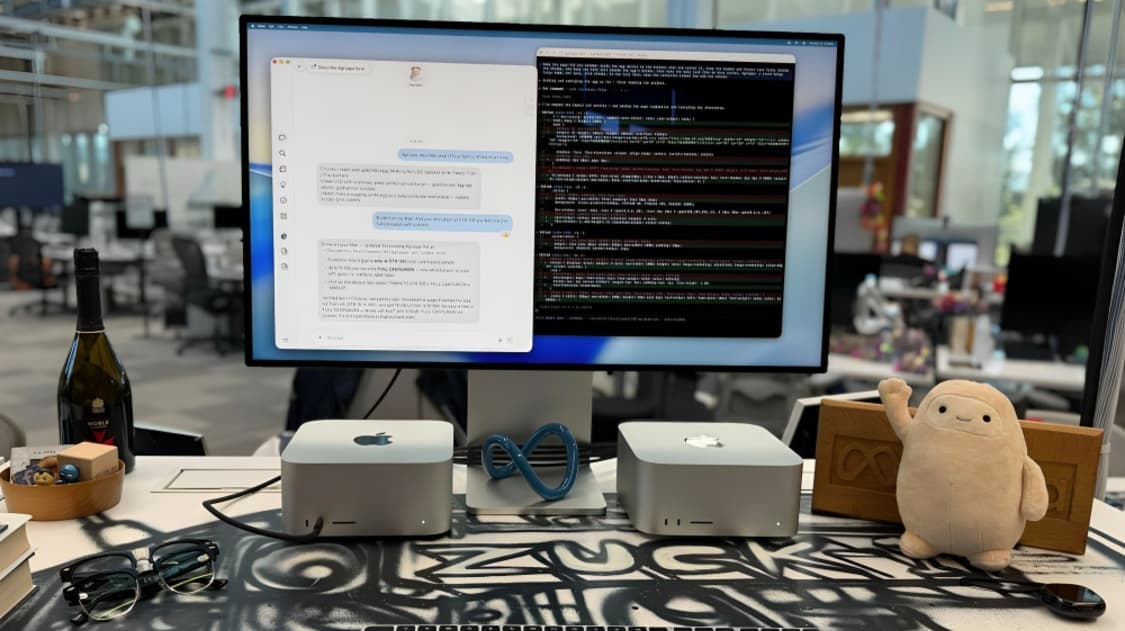
The technology may have applications in areas such as meeting transcription, voice assistants, dictation, accessibility tools, customer service and software development. Reports said Muse Voice Transcribe is already being used for dictation in Meta AI for Mac and Muse Code. It is also available through Meta's Model API, providing developers with access to the model's speech processing capabilities.
The introduction of Muse Voice Transcribe also reflects the growing competition among technology companies to develop speech based artificial intelligence systems. Real time speech recognition is becoming increasingly important as AI assistants, voice interfaces and accessibility technologies expand.
However, the availability of a language within an AI model does not necessarily mean that every regional accent, dialect or conversational situation will receive identical transcription quality. Speech recognition performance can vary depending on background noise, pronunciation, recording quality, speaker characteristics and the language combination being used.
Meta's launch therefore represents an expansion of its multilingual speech technology rather than a guarantee of perfect transcription in every situation. The company's stated focus is on combining multilingual support, real time processing and speaker identification in a single audio perception system.
With support for more than 70 languages and five major Indian languages, Muse Voice Transcribe is positioned as a tool for developers and users who need speech to be converted into text with low delay. Its ability to handle code switching and multiple speakers could make it particularly relevant to multilingual conversations and longer recordings.
The launch adds another development to the growing use of artificial intelligence for speech recognition and demonstrates Meta's continued focus on building AI systems that can process spoken language across a wider range of global and Indian languages.