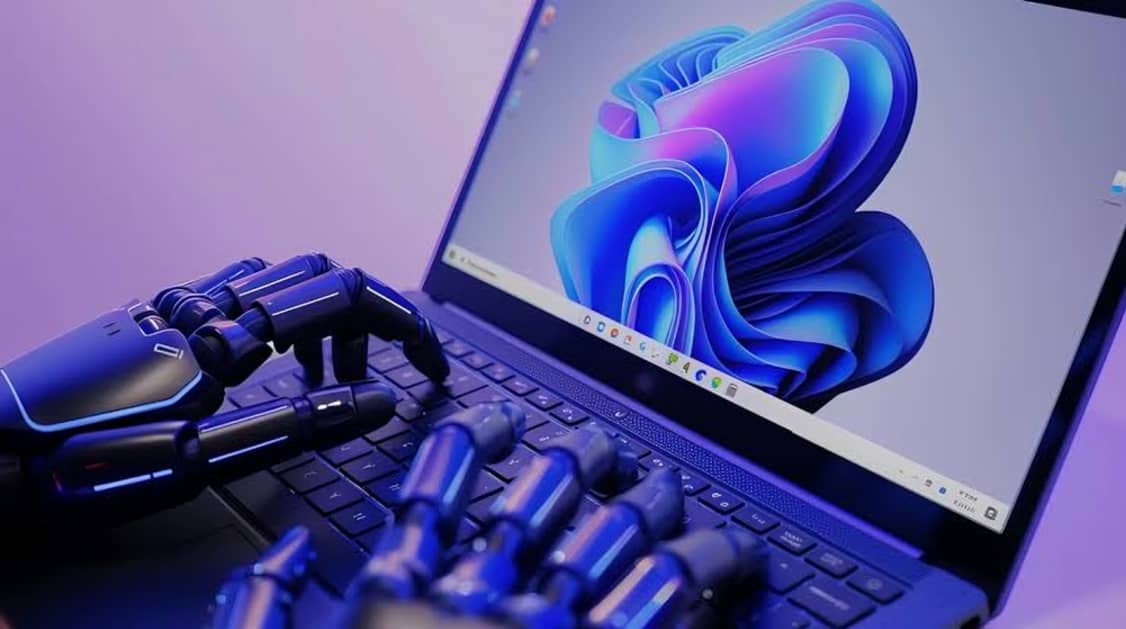
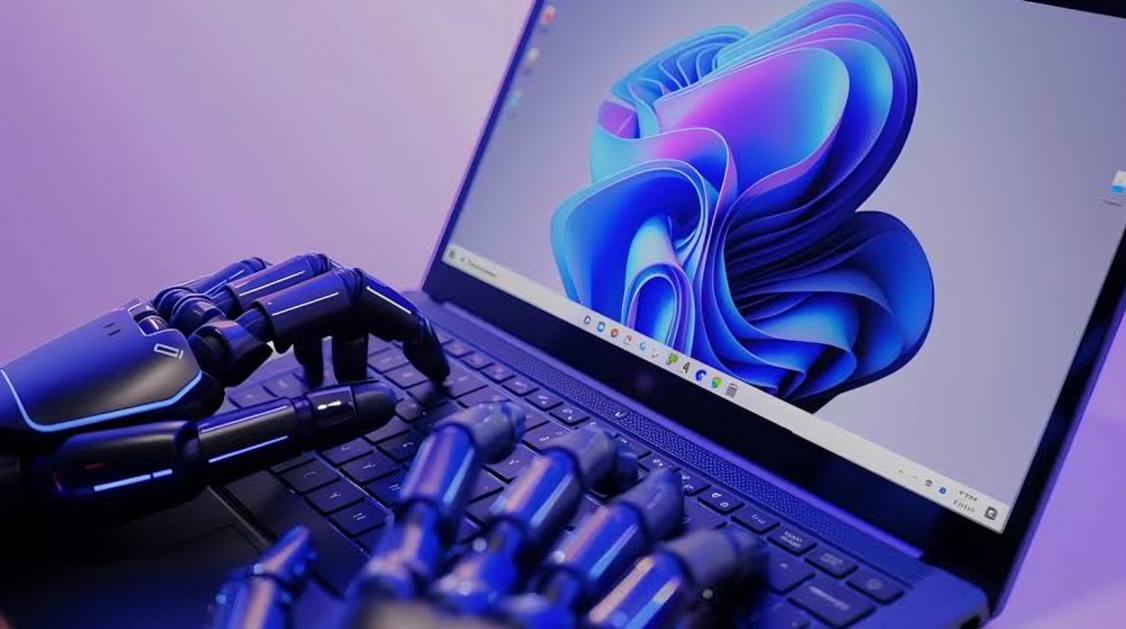
Microsoft is expanding its vision for the future of Windows by turning PCs into platforms capable of running artificial intelligence models and AI agents locally. The company has announced a series of Windows updates, new AI development capabilities and security features designed to support what it calls hybrid intelligence, where AI workloads can move between the PC and the cloud depending on the task.
The announcements were made alongside the introduction of the new Surface Laptop Ultra, a high performance Windows laptop designed specifically for developers, creators and AI professionals. The device is powered by NVIDIA RTX Spark technology and is available for pre order from 2,599 dollars. Microsoft says availability will begin on October 16.
One of the most important parts of Microsoft’s announcement is its push to run AI models directly on Windows PCs. Traditionally, many advanced AI services depend heavily on cloud based computing, where user requests are sent to remote data centres for processing. Microsoft now wants Windows to support a combination of local and cloud computing, allowing different tasks to be handled in the environment that is most appropriate.
Microsoft calls this approach hybrid intelligence. Under this model, a Windows PC can use local processing when a task can be handled efficiently on the device and use cloud computing when more powerful resources are required. The company says this approach can improve responsiveness, reduce dependence on cloud resources and provide greater control over sensitive information.
Windows is also being developed to support AI agents that can perform actions on behalf of users. Unlike traditional applications, AI agents can work through multiple steps, interact with tools, access files and continue working on tasks with less direct supervision.
Microsoft says this creates new security requirements because an AI agent may have access to information and applications on a computer. To address this issue, the company has introduced Microsoft Execution Containers, also known as MXC. These containers are designed to isolate AI agents and limit what they can access while they are performing tasks.
The security system is built around three main ideas: containment, identity and manageability. Containment is intended to control the resources an agent can access. Identity allows organisations to distinguish actions performed by an AI agent from actions performed directly by a human user. Manageability connects these controls with Microsoft's enterprise management systems so organisations can establish policies and monitor agent activity.
Microsoft says MXC is now generally available for Windows and can integrate with Microsoft Agent 365. The company is also working with technology companies including OpenAI, Anthropic and NVIDIA as it develops the broader ecosystem for AI agents on Windows.
Another important announcement involves GitHub and local coding models. Microsoft is extending GitHub's HydraFusion technology to Windows. The system can determine whether a particular coding task should be sent to a cloud model or handled by an AI model running locally on the PC.
This capability is expected to become available in experimental preview later in October through the GitHub Copilot application, GitHub Copilot CLI and Visual Studio Code. Microsoft says the approach will allow developers to use local models where appropriate while continuing to use cloud based models for tasks that require additional computing power.
Microsoft is also expanding Windows ML, its machine learning runtime for deploying AI models across CPUs, GPUs and neural processing units. The company has announced support for llama.cpp in Windows ML, giving developers easier access to open source AI models and allowing them to experiment with different models on compatible Windows hardware.
The new AI capabilities are closely connected to Microsoft's updated Copilot strategy. The company says Copilot on Windows will gain access to local context, local actions and local AI models, with user permission.
Local context means Copilot can use relevant information stored on the user's computer, such as files and recent activity, when completing tasks. Local actions allow Copilot to perform certain operations on Windows, including organising files, checking device diagnostics, troubleshooting problems and assisting with coding workflows.
Local models will allow Copilot to use AI models running directly on the computer for suitable tasks. Microsoft says this will allow Windows to combine local processing with cloud intelligence instead of depending entirely on one environment.
These hybrid intelligence features are expected to begin rolling out to Copilot Plus PCs in the coming months. Microsoft has also stated that availability and timing may vary depending on the device, market and processor platform.
The Surface Laptop Ultra is one of the first devices designed around Microsoft's new approach. The laptop is built around NVIDIA RTX Spark technology and can be configured with up to 128GB of unified memory. Microsoft says the system can run AI models exceeding 120 billion parameters locally.
The laptop combines an NVIDIA Blackwell RTX GPU with up to 6,144 cores and an NVIDIA Grace CPU with up to 20 cores. Microsoft claims up to one petaflop of AI performance under specified conditions. The company says this level of hardware is intended for demanding AI development, creative workloads and other technical applications that previously depended more heavily on cloud computing.
The Surface Laptop Ultra features a 15 inch PixelSense Ultra touchscreen. Microsoft says the display can reach up to 2,000 nits of peak HDR brightness under specified measurement conditions. The laptop also has a larger haptic touchpad, removable storage and a range of ports including USB C, HDMI, USB A, an SD card reader and a 3.5mm headphone jack.
Microsoft has also focused on thermal performance because running large AI models locally can create significant sustained workloads. The company says the Surface Laptop Ultra has a new thermal architecture that provides up to 2.5 times the thermal power capacity of current Surface Laptop models.
The device weighs less than 4.5 pounds and is less than 18mm thick, according to Microsoft. Despite its relatively portable design, the company is positioning it as a workstation class device for developers and creators who need substantial local computing power.
The Surface Laptop Ultra is not the only new Windows machine announced as part of the AI push. Microsoft also introduced the Surface RTX Spark Dev Box, a desktop system designed for developers and AI engineers. It also uses NVIDIA RTX Spark technology and offers up to 128GB of unified memory.
The Dev Box is intended for local AI inference, testing and experimentation. Microsoft says it can run AI models exceeding 120 billion parameters and provide a dedicated environment for developers who want to experiment locally rather than sending every workload to cloud services. The system is priced at 5,999 dollars and is scheduled to begin shipping in the United States in November.
Microsoft is also working with other PC manufacturers to expand the RTX Spark ecosystem. ASUS, Dell, HP, Lenovo and MSI are among the companies preparing Windows devices based on the new hardware platform. Microsoft says these systems are aimed at developers, creators and other users who need higher local AI performance.
At the higher end of the hardware range, Microsoft announced plans for Windows support on NVIDIA DGX Station systems. These machines are intended to bring significantly greater AI computing power to desktop environments. Microsoft says DGX Station for Windows can support very large AI models and multiple simultaneous AI agents, making it more suitable for organisations and research teams than typical consumer laptops.
The broader objective is to reduce the need to send every AI task to a remote data centre. Local AI processing can provide advantages such as lower latency and greater control over sensitive data. However, running advanced models locally also requires powerful hardware, which means the most capable systems can be considerably more expensive than conventional Windows PCs.
The price of the Surface Laptop Ultra reflects this positioning. With a starting price of 2,599 dollars and configurations reaching higher price levels, the machine is aimed primarily at professional users rather than ordinary consumers looking for a general purpose laptop. Reuters reported that the device is positioned against high end professional laptops and that Microsoft's wider AI push is focused on bringing more computing work onto Windows devices.
Microsoft's approach also highlights the growing importance of AI security. Giving an AI agent access to files, applications and system resources can create risks if the agent performs an unintended action or if its permissions are too broad. Microsoft's container based approach is designed to provide an additional layer of separation between AI agents and the rest of the operating system.
The company is also developing identity and management features so organisations can understand which actions were performed by an AI agent. This could become increasingly important as businesses allow AI systems to work on coding, documents, data analysis and other routine tasks.
For developers, the combination of local models, GitHub Copilot and Windows ML could change how coding workflows are handled. Developers will be able to experiment with AI models locally, while cloud models can continue to handle tasks that require greater computing resources.
Microsoft's strategy does not mean that cloud AI is being replaced. Instead, the company is presenting local and cloud computing as complementary technologies. Simple or privacy sensitive workloads can potentially remain on the device, while more demanding tasks can be routed to cloud based systems.
The company is therefore positioning Windows as a platform for hybrid AI rather than simply an operating system with a chatbot. AI agents, local models, security containers and intelligent routing are becoming part of the broader Windows ecosystem.
The new announcements also show Microsoft's attempt to make AI agents a more practical part of everyday computing. If the technology develops as planned, users could eventually have AI agents that understand local context, perform approved tasks and switch between local and cloud models without requiring users to manage the underlying technology themselves.
For now, several of the most advanced features are still scheduled for future rollouts or experimental previews. Users will also need compatible hardware for the most demanding local AI workloads.
Overall, Microsoft's latest Windows announcements mark a significant expansion of its AI strategy. The company is combining powerful local hardware, new AI models, agent security and cloud connectivity to create a Windows environment designed for the next generation of AI applications.
The Surface Laptop Ultra is the most visible example of this strategy, offering up to 128GB of unified memory and the ability to run very large AI models locally. At the same time, Microsoft's software updates are designed to make AI agents more useful while giving users and organisations greater control over what those agents can access.