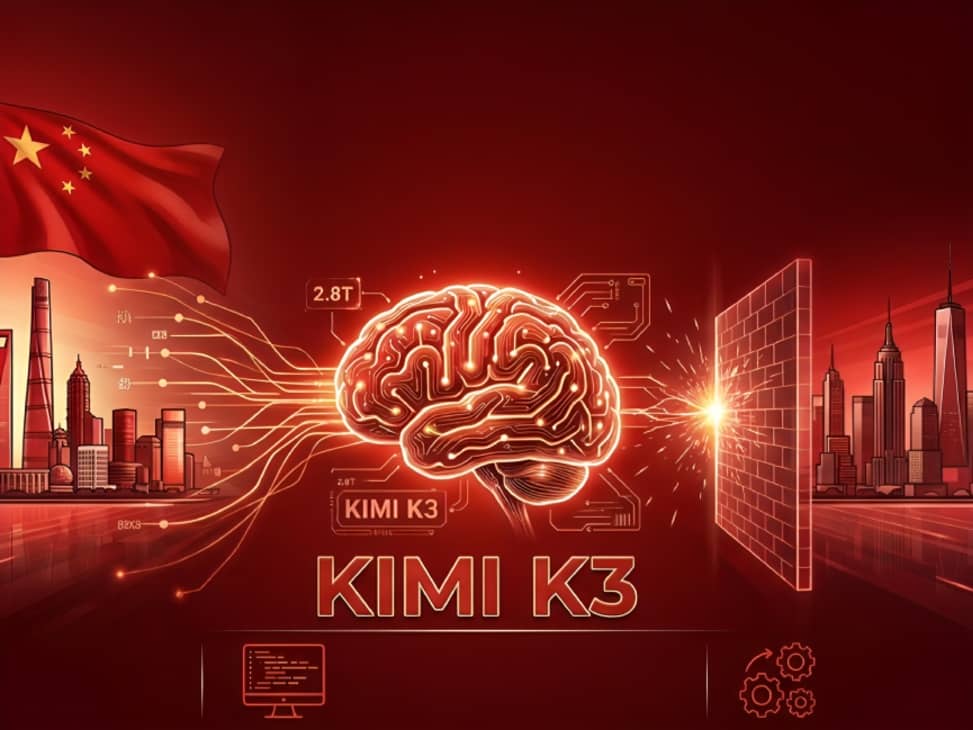
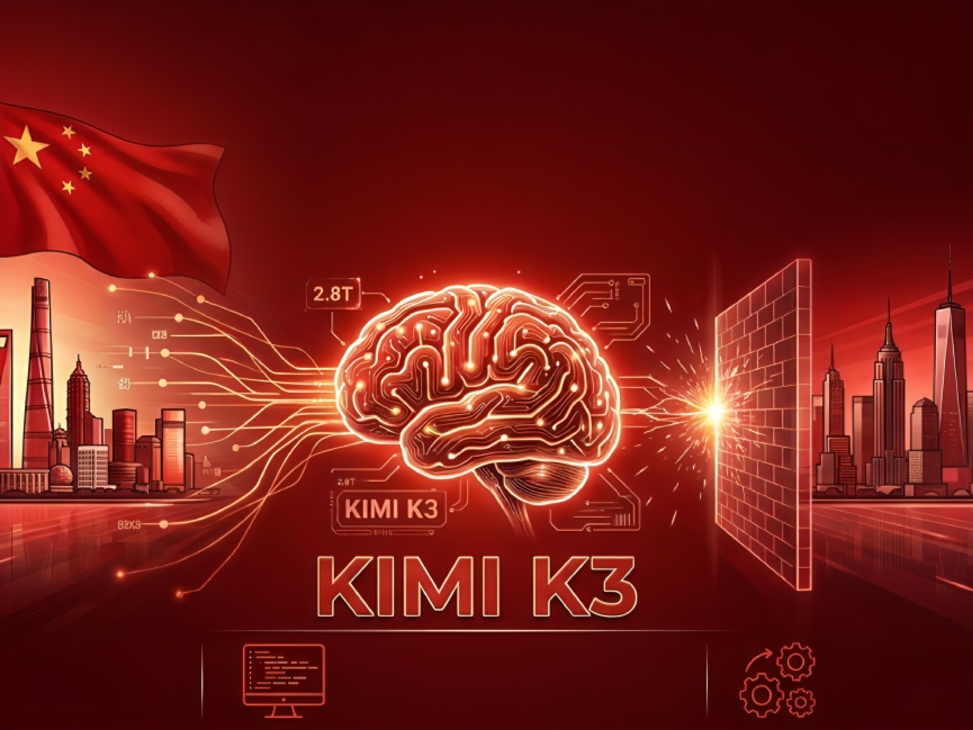
Chinese artificial intelligence startup Moonshot AI is reportedly in discussions with three of the world's biggest cloud technology companies over a potential commercial arrangement for its Kimi K3 model.
According to people familiar with the talks, Moonshot is negotiating with Microsoft, Amazon and Google about hosting Kimi K3 on their respective cloud platforms. The discussions involve potential revenue sharing arrangements and could create an unusual commercial connection between a Chinese AI developer and major American cloud companies.
Moonshot Seeks Revenue Share
Reports indicate that Moonshot AI is seeking as much as a 30 percent share of revenue generated from Kimi K3 related services hosted on Microsoft Azure, Amazon Web Services and Google Cloud.
The proposed arrangement would allow customers to access the AI model through major cloud infrastructure while Moonshot would receive a portion of the resulting revenue.
The reported terms are similar to arrangements the company has discussed with other customers using its open weight model.
However, the negotiations are still in their early stages. The people familiar with the discussions said there is no certainty that the three companies will ultimately sign agreements with Moonshot.
Why Kimi K3 Is Attracting Attention
Kimi K3 has emerged as one of the more prominent Chinese AI models in the global artificial intelligence market.
Moonshot released the model as an open weight system, allowing developers and organisations to access and deploy the technology under its licensing conditions.
The model has attracted attention because of its large scale and reported performance across demanding AI tasks.
Reports indicate that Kimi K3 has around 2.8 trillion parameters. Its size makes running the model independently expensive and technically demanding, increasing the importance of cloud infrastructure for organisations that want to use it at scale.
For Moonshot, partnerships with major cloud companies could therefore provide a much broader distribution channel for Kimi K3.
Microsoft, Amazon and Google
The companies involved in the reported discussions operate some of the world's largest cloud computing platforms.
Microsoft Azure, Amazon Web Services and Google Cloud provide computing infrastructure to businesses, developers and organisations around the world.
If Kimi K3 were made available through these platforms, customers could potentially access the model without having to build and maintain the infrastructure required to operate such a large AI system themselves.
For Moonshot, such an arrangement could also provide access to a much larger international customer base.
The talks therefore have significance beyond a simple hosting agreement.
Early Stage Negotiations
Despite the attention surrounding the discussions, no final agreement has been announced.
Sources cited in the reports said the negotiations remain at an early stage.
Moonshot AI has not publicly confirmed that the agreements will be completed, while Microsoft, Google and AWS have also declined to comment on the reported discussions.
This means the reported 30 percent revenue share should be viewed as a proposed term rather than a confirmed commercial arrangement.
The final structure could change if negotiations progress.
Data Access and Revenue Calculation
One of the challenges in any potential agreement could involve determining how revenue generated by Kimi K3 should be calculated.
Usage based AI services are frequently billed according to the amount of computing or tokens consumed.
The parties would therefore need to establish how Kimi K3 usage is measured and how the resulting revenue is divided.
Reports have also identified questions surrounding data access and auditing token usage as issues that may need to be resolved before any agreement is finalised.
These technical and commercial details could become important if Kimi K3 is offered to large enterprise customers through major cloud platforms.
US Security Concerns
The negotiations are taking place against a complicated backdrop in US China technology relations.
American officials have raised concerns about Chinese AI companies and their access to advanced computing technology.
Moonshot AI has also faced criticism from US officials, including allegations concerning intellectual property and the acquisition of advanced Nvidia chips.
US Treasury Secretary Scott Bessent has previously indicated that placing Moonshot on a trade blacklist was among the measures that could be considered.
Moonshot has not publicly accepted those allegations.
The possibility of future restrictions could therefore become an important factor in any potential agreement with US cloud providers.
Potential Significance for the AI Industry
If the reported negotiations result in agreements, they could mark an important development in the global AI industry.
A major US cloud provider hosting a Chinese AI model would demonstrate that commercial demand can create links between technology companies despite wider geopolitical tensions.
Reuters reported that such a deal could become the first major revenue sharing agreement between a Chinese AI company and a major US cloud provider.
It would also demonstrate the increasing importance of AI models as commercial software products distributed through cloud platforms.
Competition Between Chinese and US AI Models
The development comes at a time when Chinese AI companies are increasingly competing with American developers.
Chinese companies have been releasing models that aim to offer strong performance at lower costs.
Open weight models have also gained attention because developers can download and deploy them rather than relying exclusively on proprietary AI services.
Kimi K3 is part of this broader trend.
Its potential availability through major US cloud platforms could increase its exposure to international businesses and developers.
Why Cloud Distribution Matters
Developing an advanced AI model is only one part of building a successful AI business.
The model also needs computing infrastructure, reliable access, customers and distribution channels.
Major cloud platforms can provide all of these elements at scale.
For Moonshot, access to Azure, AWS or Google Cloud could make Kimi K3 easier for businesses to test and integrate into existing technology systems.
For cloud companies, hosting a popular AI model could create additional demand for computing resources and strengthen their position in the rapidly expanding AI services market.
Moonshot's Commercial Strategy
Moonshot AI is reportedly preparing for a possible Hong Kong initial public offering, adding another dimension to its efforts to expand the commercial use of Kimi K3.
The company has already secured significant funding and has explored revenue sharing arrangements with other platforms.
The proposed agreements with Microsoft, Amazon and Google would represent a much larger opportunity because of the scale and international reach of these cloud providers.
No Deal Has Been Finalised
It is important to distinguish between reported negotiations and a completed partnership.
At present, the discussions are reportedly preliminary.
There is no confirmed agreement stating that Kimi K3 will definitely become available through Azure, AWS or Google Cloud.
The commercial terms, revenue split, data access arrangements and potential regulatory considerations all remain subject to negotiations.
Therefore, the reported 30 percent revenue share should not be presented as a final deal.
What Happens Next
The next stage will depend on whether Moonshot and the three cloud providers can resolve their commercial and regulatory concerns.
If agreements are reached, Kimi K3 could gain a significant new distribution route outside China.
The model's availability through major cloud platforms could also encourage more businesses to experiment with Chinese AI technology.
However, potential US regulatory action could affect the future of such arrangements.
The combination of strong AI competition, cloud computing demand and geopolitical tensions makes the negotiations particularly significant.
Conclusion
Moonshot AI is reportedly in early talks with Microsoft, Amazon and Google over potential revenue sharing agreements that would allow the US cloud companies to host its Kimi K3 artificial intelligence model.
Moonshot is reportedly seeking up to a 30 percent share of revenue generated from Kimi K3 services on Azure, AWS and Google Cloud.
No agreement has been finalised, and the discussions could still end without a deal.
If completed, however, the partnerships could represent a notable development in the global AI industry by connecting a major Chinese AI model with leading US cloud infrastructure.
The outcome will depend on commercial negotiations, questions surrounding data and usage measurement, and the wider regulatory environment between the United States and China.