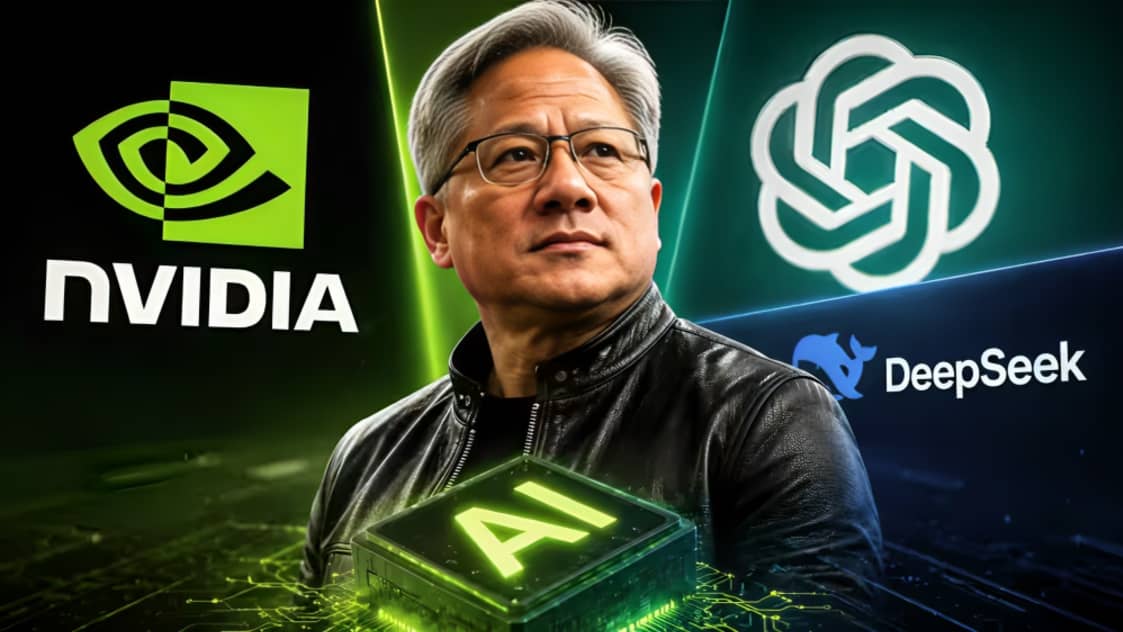
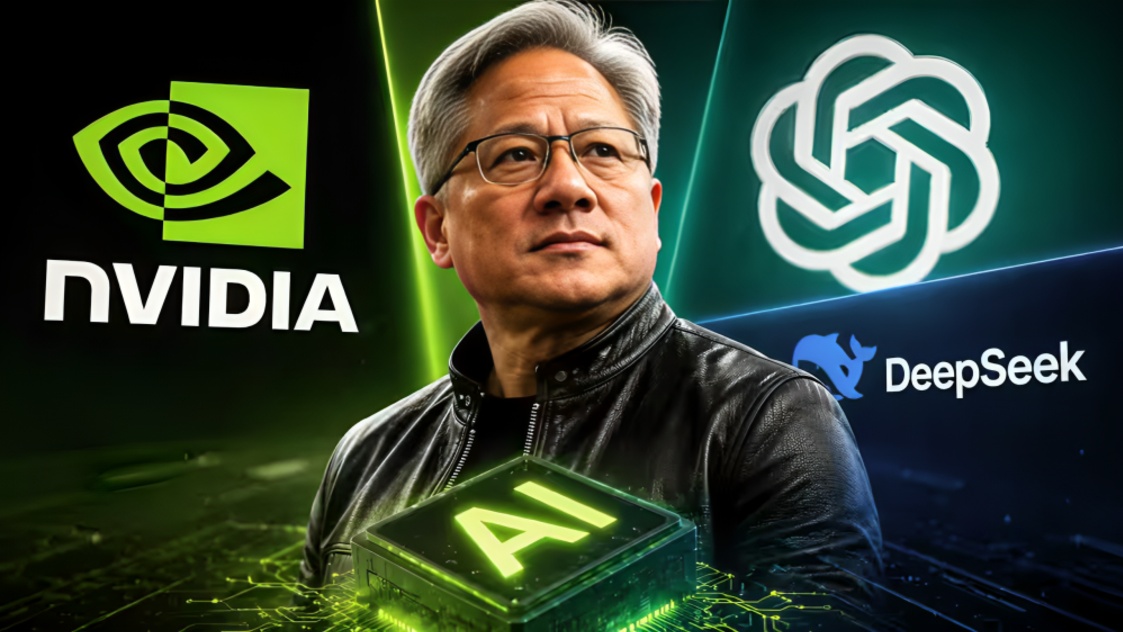
Nvidia is making a major move beyond the artificial intelligence chip business by expanding its presence in AI model development. The company has agreed to a reported 6 billion dollar deal with AI startup Poolside that will give Nvidia access to the startup's model development technology and a group of experienced AI engineers.
The agreement is structured primarily as a licensing and hiring arrangement rather than a conventional acquisition. According to reporting on a letter sent by Poolside to investors, Nvidia will license the startup's Model Factory technology and make offers to hire 109 Poolside employees involved in developing its AI model technology. Poolside's founders will remain with the company.
Nvidia will also invest an additional 1 billion dollars in Poolside at a reported pre money valuation of 12 billion dollars. The investment is separate from the 6 billion dollar licensing agreement, making the transaction an important strategic commitment by Nvidia to Poolside's technology and talent.
The deal reflects Nvidia's changing position in the AI industry. The company has traditionally been best known for supplying the graphics processing units and computing platforms used to train and operate advanced AI systems. However, Nvidia has increasingly moved into software, AI models and complete computing infrastructure as competition in artificial intelligence has intensified.
The Poolside agreement is particularly significant because Nvidia is seeking to strengthen its open weight AI model efforts. Open weight models allow developers and organisations greater access to model parameters and can be adapted for different applications, in contrast to proprietary systems whose core model weights remain controlled by the developer.
The market for open weight AI has grown rapidly, particularly because Chinese companies such as DeepSeek and other developers have demonstrated that powerful models can be built and distributed at comparatively lower cost. Reuters has reported that US technology companies are increasingly investing in open weight models as they seek to respond to the growing influence of Chinese AI developers.
Nvidia's move therefore places it in a more direct competitive position with both established US AI companies and emerging Chinese competitors. Companies such as OpenAI and Anthropic have focused heavily on proprietary frontier models, while Nvidia is looking to expand its role across the AI software ecosystem.
The Poolside technology is also important because the startup has experience developing AI systems designed to automate software engineering and coding tasks. Poolside originally became known for its work on AI coding agents before shifting toward broader model development. Its Model Factory technology is designed to help build and train AI models more efficiently.
Nvidia's recruitment of more than 100 Poolside employees could strengthen its research and engineering capabilities at a time when competition for experienced AI professionals is intense. Talent has become one of the most valuable assets in the AI sector, with major companies recruiting researchers and engineers from competing laboratories.
The deal also demonstrates how Nvidia is using its financial strength to expand its influence across the AI ecosystem. In recent months, the company has invested in several AI businesses and established partnerships designed to secure access to computing infrastructure, software and specialised technologies.
Nvidia has also announced a long term strategic partnership with Safe Superintelligence, the AI company founded by former OpenAI chief scientist Ilya Sutskever. The partnership includes an Nvidia investment and increased access to Nvidia's next generation computing systems.
At the same time, Nvidia is working to finance the broader expansion of AI infrastructure. Earlier in August, the company announced partnerships with major investment firms including BlackRock, Blackstone, Brookfield, Apollo, Goldman Sachs and KKR to create financing platforms intended to mobilise more than 500 billion dollars of third party capital for AI infrastructure over time.
These moves show that Nvidia increasingly sees the AI market as a complete ecosystem rather than simply a chip market. The company is becoming involved in computing hardware, software, model development, infrastructure financing and investments in AI startups.
The Poolside agreement could also help Nvidia strengthen its Nemotron family of open weight models. Recent reports indicate that Poolside technology and talent will support Nvidia's efforts to develop more capable open weight systems, potentially increasing competition with Chinese models that have gained attention for their performance and efficiency.
For Nvidia, developing competitive AI models could create another revenue opportunity while also increasing demand for its computing hardware. More advanced models generally require substantial computing resources for training and deployment, giving Nvidia a potential advantage because of its dominant position in AI accelerators and data centre systems.
However, the move also creates a more complicated competitive relationship with Nvidia's customers. The company supplies chips and infrastructure to several leading AI developers, including firms that could eventually compete with Nvidia's own model offerings. This creates both opportunities and risks as Nvidia expands further into software.
The scale of the Poolside transaction has also raised questions about the price Nvidia is paying for the technology. The reported 6 billion dollar licensing fee is unusually large for a software licensing arrangement, although the exact commercial terms and long term financial benefits have not been publicly detailed.
The deal comes at a time when the economics of AI development are changing rapidly. Companies are looking for models that can deliver strong performance without requiring the enormous costs associated with some of the most advanced proprietary systems. Open weight models can potentially reduce development barriers and give businesses greater flexibility.
Competition from China is another factor behind the shift. DeepSeek and other Chinese developers have increased pressure on US technology companies by demonstrating strong performance from models that are more accessible and, in some cases, less expensive to operate. American companies are now investing heavily in alternative open weight systems to maintain technological competitiveness.
For users and businesses, increased competition could eventually result in more choice among AI models, lower costs and faster improvements in performance. For developers, open weight models may provide greater control over deployment, customisation and data management.
The Nvidia and Poolside agreement therefore represents an important development in the broader AI race. Nvidia is no longer positioning itself only as the company that supplies the computing power behind AI. It is also seeking a more direct role in developing the models and software that use that computing power.
Whether Nvidia can challenge OpenAI and Chinese competitors effectively will depend on the performance of its future models, the quality of its research team and its ability to translate large investments into commercially useful AI systems.
For now, the Poolside agreement confirms that the competition in artificial intelligence is expanding beyond model companies themselves. Chip manufacturers, startups, cloud providers and investors are increasingly competing across multiple layers of the AI technology stack.