
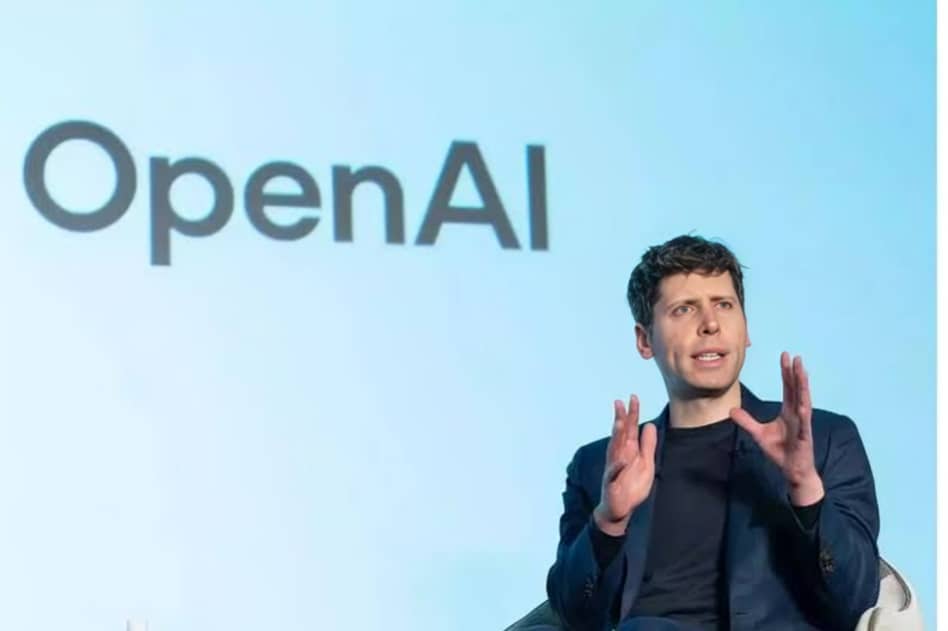

OpenAI Chief Executive Officer Sam Altman recently shared a personal experience involving his child's early language development while discussing the rapid evolution of artificial intelligence. During his remarks, Altman reflected on how hearing his child combine words for the first time reminded him of the progress achieved by modern AI language models, including GPT series systems.
Altman's comments were intended to illustrate the remarkable pace of advancement in language processing technologies rather than suggest an equivalence between human cognition and artificial intelligence. He noted that observing a child's early learning process highlighted the complexity of language acquisition and the impressive capabilities that AI models have developed in understanding and generating natural language.
Human language development is the result of complex biological, social, and cognitive processes that begin in infancy and continue throughout life. Children gradually learn to recognize sounds, understand words, form sentences, and communicate through continuous interaction with parents, caregivers, and their environment. Artificial intelligence systems, by contrast, are trained using computational methods and large datasets to identify patterns in language rather than experiencing human learning in the same way.
Modern AI language models have advanced significantly in recent years. They are capable of generating coherent text, answering questions, summarizing information, translating languages, assisting with programming, and supporting educational and professional tasks. These capabilities have contributed to the growing adoption of AI across industries including healthcare, education, finance, software development, research, and customer service.
Despite these advances, researchers consistently emphasize that AI systems do not possess consciousness, emotions, personal experiences, or human understanding. Large language models generate responses by identifying statistical relationships within data rather than thinking or reasoning in the same manner as people. Experts continue to stress the importance of distinguishing between sophisticated language generation and genuine human cognition.
Altman's remarks also reflect broader discussions within the technology community about the future of artificial intelligence. As AI systems become increasingly capable, researchers, policymakers, educators, and industry leaders continue to examine questions relating to safety, transparency, responsible development, and the long term societal impact of advanced AI technologies.
OpenAI has repeatedly stated that its objective is to develop artificial intelligence that benefits humanity while prioritizing safety and responsible deployment. The organization continues to invest in research focused on improving model reliability, reducing harmful outputs, increasing transparency, and supporting the safe integration of AI into everyday applications.
The comparison between child development and artificial intelligence has long been discussed within the fields of cognitive science and machine learning. While such comparisons can help explain certain aspects of language acquisition or pattern recognition, experts generally agree that biological intelligence and machine learning operate through fundamentally different mechanisms.
Artificial intelligence continues to transform many aspects of modern society by improving productivity, accelerating research, and enabling new forms of digital interaction. At the same time, ongoing discussions regarding ethics, regulation, privacy, and accountability remain central to ensuring that AI technologies are developed and deployed responsibly.
Sam Altman's personal reflection illustrates how everyday experiences can inspire broader conversations about technological innovation. His comments underscore both the remarkable progress of modern AI systems and the enduring uniqueness of human learning, creativity, and cognitive development. As artificial intelligence continues to evolve, researchers and industry leaders are expected to maintain their focus on balancing innovation with responsible governance and public trust.


