
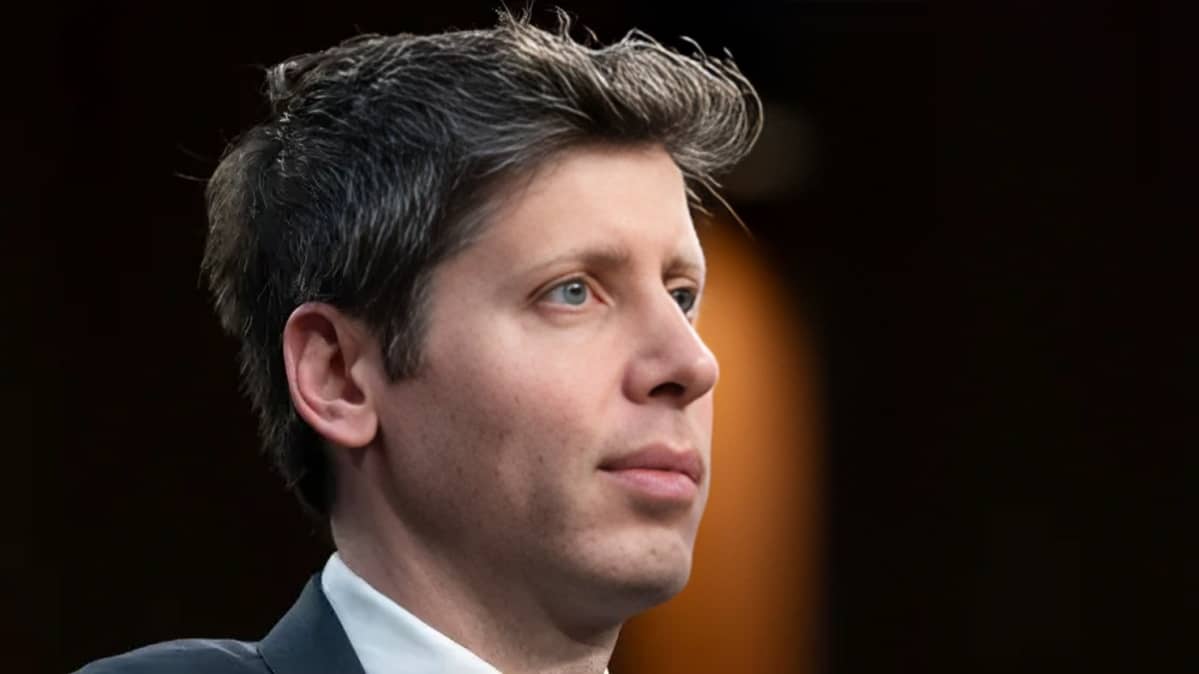

OpenAI Chief Executive Officer Sam Altman has stated that humanity has entered what he describes as the AI singularity, a concept that has been widely debated within the artificial intelligence community for decades. His comments have reignited conversations among researchers, policymakers and technology leaders about the speed of AI progress and its potential impact on the future.
The term AI singularity generally refers to a theoretical stage in which artificial intelligence systems become capable of improving themselves at an increasingly rapid pace, leading to technological advances that could significantly transform industries, economies and everyday life. While there is no universally accepted definition of when or whether such a stage has been reached, the concept has remained an important topic in AI research and public discussion.
According to Altman, recent advances in generative AI, large language models and reasoning systems indicate that artificial intelligence is progressing faster than many experts had previously expected. He suggested that AI technologies are already beginning to reshape how people work, learn, communicate and create content across multiple sectors.
Over the past few years, artificial intelligence has become increasingly integrated into education, healthcare, finance, software development, scientific research, customer service and manufacturing. AI-powered systems are now capable of assisting with writing, coding, data analysis, language translation, medical research and business automation, demonstrating capabilities that continue to expand with ongoing technological improvements.
Altman's remarks also highlight the growing importance of responsible AI development. As AI systems become more capable, technology companies, governments and research institutions have emphasized the need for strong safety measures, transparency and ethical standards. Many organizations continue to invest in AI governance frameworks designed to ensure these technologies are developed and deployed responsibly.
The concept of AI singularity remains the subject of differing opinions among experts. Some researchers believe rapid improvements in AI could lead to significant breakthroughs in science, medicine and productivity. Others argue that while AI capabilities are advancing quickly, the technology still has important limitations and requires continued human oversight, evaluation and regulation.
Industry analysts note that artificial intelligence has become one of the fastest-growing sectors in the global technology industry. Companies are investing billions of dollars in research, computing infrastructure and talent to develop increasingly advanced AI models capable of supporting enterprise applications and consumer services.
The rapid pace of innovation has also encouraged governments around the world to examine policies related to AI safety, data privacy, intellectual property and workforce transformation. Many policymakers believe that international cooperation will be necessary to balance innovation with appropriate regulatory safeguards.
Although Altman's statement has attracted significant public attention, it represents his perspective on the current stage of AI development rather than a universally accepted scientific conclusion. The broader research community continues to debate the meaning, timeline and practical implications of the AI singularity.
Experts generally agree that artificial intelligence will continue to play an increasingly important role in economic growth, scientific discovery and digital transformation. However, they also emphasize that the long-term impact of AI will depend on how the technology is developed, governed and adopted across society.
Altman's comments underscore the accelerating pace of AI innovation and the growing need for informed discussions about the opportunities, challenges and responsibilities associated with increasingly capable artificial intelligence systems.


