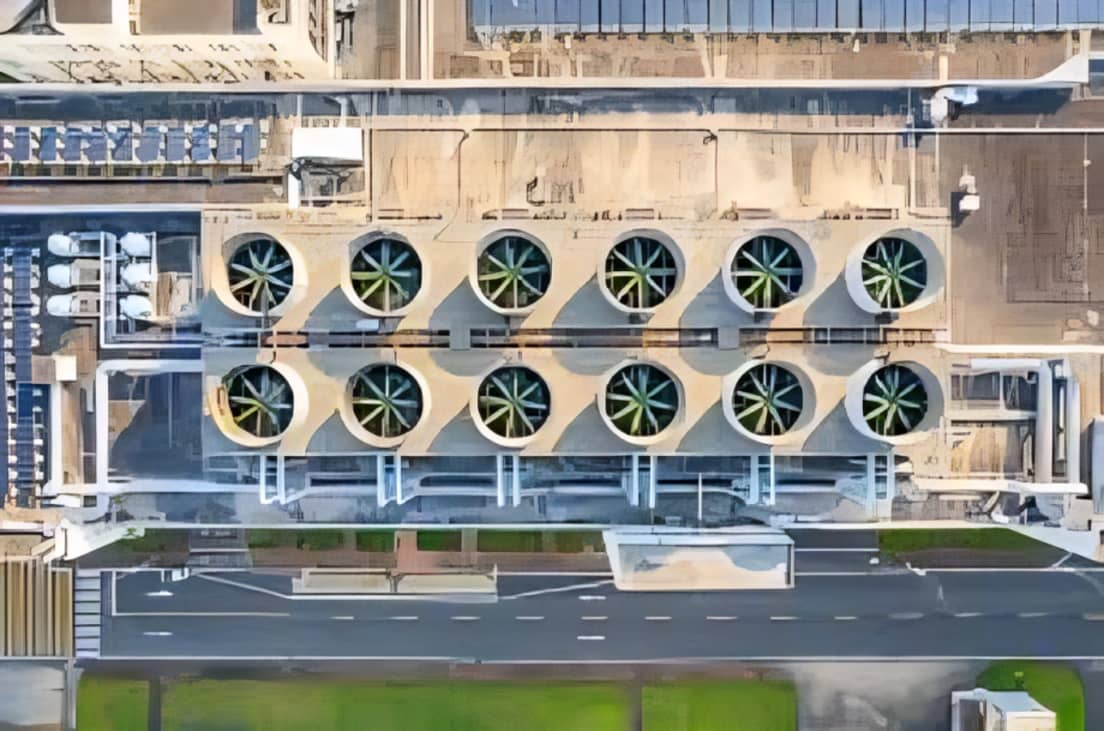
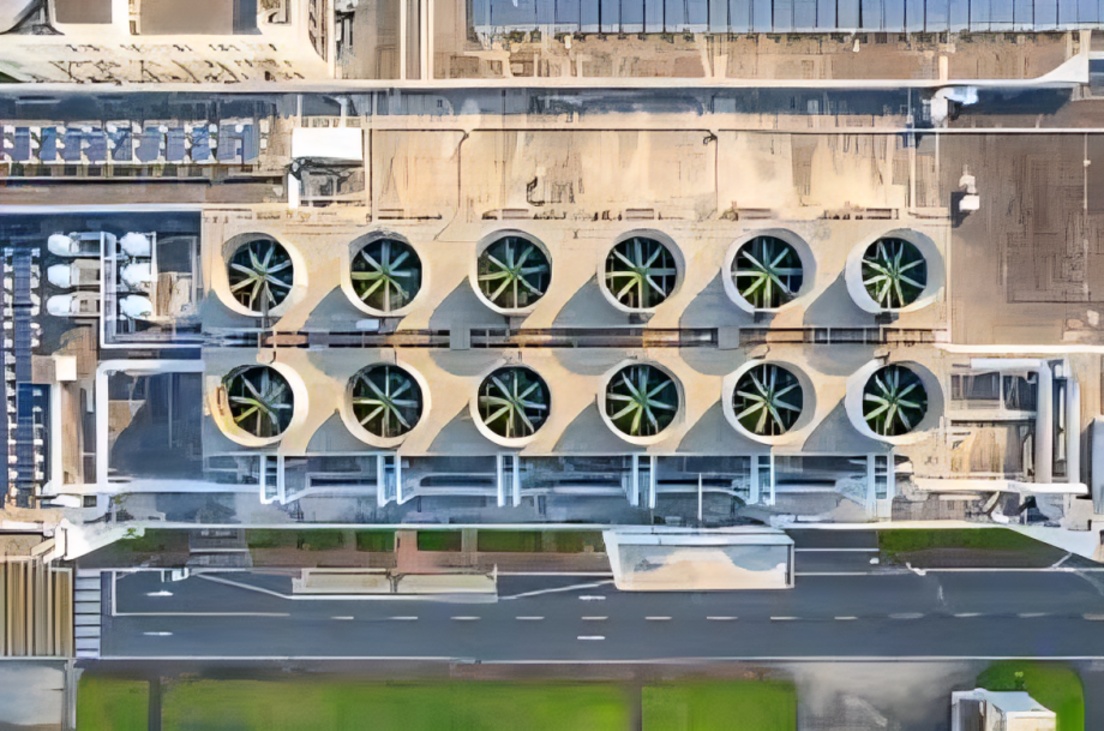
A residential neighborhood in Yuncheng has attracted international attention after videos of its rooftop mist cooling system became widely shared on social media. Designed to help reduce temperatures during periods of extreme heat, the system sprays a fine mist of water across rooftops, creating a cooling effect through the natural process of evaporation.
The innovative setup has been introduced as part of local efforts to improve outdoor thermal comfort while reducing dependence on conventional cooling systems. Unlike traditional air conditioners, which consume significant amounts of electricity, the rooftop mist system primarily operates using water pumps and distribution pipes, resulting in comparatively lower energy consumption.
The science behind the technology is based on evaporative cooling. When tiny droplets of water are sprayed into warm air or onto heated surfaces, they absorb heat from the surrounding environment as they evaporate. This process lowers the temperature of nearby surfaces and the surrounding air, making buildings and outdoor spaces more comfortable during hot weather.
Evaporative cooling has been used in various forms for many years in agriculture, industrial facilities, public spaces, and greenhouse environments. Advances in water nozzle technology and automated control systems have now made it possible to apply the same principle more efficiently in residential and urban settings.
The rooftop system installed in Yuncheng is designed to produce an extremely fine mist that evaporates quickly without creating excessive standing water. Automated controls regulate the operation of the system based on weather conditions, temperature, and humidity, helping optimize water use while maximizing cooling performance.
Experts explain that evaporative cooling is generally most effective in regions with relatively low humidity. In dry climates, water evaporates more rapidly, resulting in greater cooling. In areas with high humidity, the efficiency of such systems may decrease because the air already contains a significant amount of moisture.
Apart from lowering rooftop temperatures, the cooling system can also reduce the amount of heat transferred into buildings. Cooler roofs help decrease indoor temperatures, which may reduce the demand for air conditioning and contribute to lower electricity consumption during periods of intense heat.
Urban heat has become an increasing concern in many cities around the world due to expanding concrete infrastructure, reduced vegetation, and rising global temperatures. Governments, researchers, and urban planners continue to explore innovative solutions such as reflective roofing materials, green roofs, urban tree planting, improved building insulation, and evaporative cooling technologies to address this challenge.
While rooftop mist systems offer several potential advantages, specialists also emphasize the importance of responsible water management. Large-scale implementation requires careful consideration of local water availability, maintenance requirements, water quality, and operational efficiency to ensure long-term sustainability.
Environmental researchers note that no single cooling solution can completely address urban heat challenges. Instead, a combination of energy-efficient building design, sustainable landscaping, renewable energy, and innovative cooling technologies is often considered the most effective strategy for improving urban resilience against rising temperatures.
The growing interest in the Yuncheng rooftop cooling project highlights how practical engineering solutions can contribute to climate adaptation. As cities continue searching for environmentally responsible ways to reduce heat stress, technologies based on evaporative cooling may become an increasingly valuable option alongside traditional cooling methods.