
Google is taking an experimental step toward moving artificial intelligence computing beyond traditional data centres on Earth through a research programme called Project Suncatcher. The project explores whether satellites equipped with Google’s artificial intelligence chips could eventually form large computing networks in low Earth orbit.
The idea was first announced by Google in November 2025. At the time, the company described Project Suncatcher as a long term research effort to explore space based machine learning infrastructure. Google’s vision involves compact satellites equipped with its Tensor Processing Units, or TPUs, connected with high bandwidth optical links.
The company is now moving from research on Earth to an initial test in orbit. Google said on September 24, 2026, that a prototype satellite would be launched to determine how its AI hardware performs under real space conditions. The mission is designed to collect data that could help engineers understand whether the concept can be developed further.
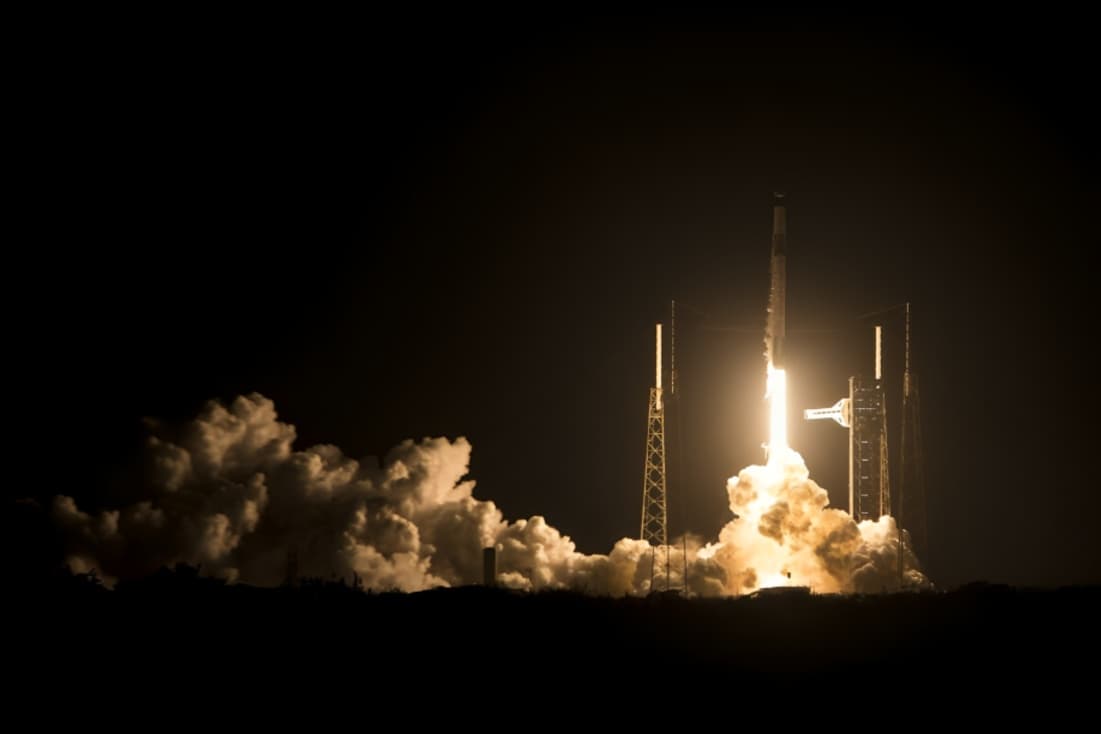
The prototype is scheduled to travel aboard SpaceX’s Transporter 18 rideshare mission, with satellite company Planet involved in the spacecraft development. Reuters reported that the mission will examine how Google’s AI hardware responds to launch forces, radiation and extreme temperatures in low Earth orbit.
One of the main reasons Google is investigating space based computing is the availability of sunlight. Satellites operating in suitable orbits can receive sunlight for much longer periods than solar installations on Earth. Google says a solar panel in the right orbit could be up to eight times more productive than on Earth and could generate power almost continuously, reducing the need for large battery systems.
This could become important as artificial intelligence systems require increasing amounts of computing power. Training and operating large AI models requires substantial electricity, and conventional data centres also require sophisticated cooling systems. Google is therefore investigating whether some future AI computing infrastructure could be placed in orbit and powered primarily by solar energy.
However, Project Suncatcher is not currently an operational orbital data centre. The first mission is primarily an engineering experiment designed to identify technical problems and collect information. Google has said that the initial launch is intended to determine what works, identify possible failure points and use those findings to improve future designs.
One of the biggest challenges is protecting AI chips from radiation. Earth’s atmosphere and magnetic field provide significant protection from the space environment, while satellites in orbit are exposed to higher levels of radiation. Solar activity and cosmic rays can interfere with electronic components and potentially cause errors known as bit flips.
Google has already conducted radiation testing of its Trillium TPUs at the University of California, Davis, using a proton beam facility. The company said its initial testing showed that the TPUs could withstand radiation levels greater than those expected during a five year space mission. However, Google says actual orbital testing is necessary because laboratory simulations cannot reproduce every condition encountered in space.
Launch conditions are another major challenge. A rocket travelling into low Earth orbit subjects spacecraft and their components to intense vibration and acceleration. Google said a trip to orbit takes roughly 10 minutes and can expose the spacecraft to loads of up to 10 times the force of gravity. Individual components can experience even higher forces.
To prepare for this environment, engineers subjected the satellite and hardware to vibration tests designed to reproduce the conditions of a rocket launch. The upcoming orbital mission will provide another opportunity to determine how the AI chips perform after experiencing an actual launch.
Cooling is an even more complicated problem. Conventional data centres use air or liquid based systems to remove heat from processors. In the vacuum of space, there is no surrounding air to carry heat away through conventional airflow.
Google is therefore investigating a different approach using heat pipes and radiators. Heat generated by the TPUs can be transferred through these components and ultimately radiated into space. The company has already tested its cooling system inside a thermal vacuum chamber designed to simulate the conditions found in orbit.
The first prototype will be much smaller than a conventional AI data centre. Reporting from Ars Technica says the experimental satellite, known as MVP, carries four Google TPUs and has solar panels capable of generating about one kilowatt of power. The satellite is intended for testing rather than large scale AI production.
The limited power available also means that the first experiment cannot demonstrate the full vision of an orbital AI data centre. Instead, the mission will allow Google to understand how its hardware, power systems and cooling technology work together in space.
Google's longer term plan involves multiple satellites operating together. Future designs could carry larger numbers of TPU chips and communicate with one another through high bandwidth laser links. Such a system would allow computing workloads to be distributed across multiple spacecraft.
Communication between satellites is another significant engineering challenge. The spacecraft would need to maintain extremely precise laser connections while moving around Earth at high speeds. Google says it plans to test this technology with two satellites in 2027. The goal would be to determine whether separate satellites can maintain the high bandwidth connections required for distributed AI computing.
The potential advantages of orbital computing extend beyond solar power. Google says that placing computing infrastructure in space could reduce pressure on some terrestrial resources. Its original research paper described a modular system of smaller satellites that could potentially be scaled by adding more spacecraft to a constellation.
At the same time, significant challenges remain. Launch costs, satellite manufacturing, maintenance, radiation protection, thermal management, communications and the reliability of space based hardware all need to be addressed before such a system could become commercially practical.
Reuters also reported that experts consider the concept to be years away from commercial viability because of launch costs, engineering limitations and satellite production constraints. The first Suncatcher mission is therefore better understood as a technology demonstration rather than the beginning of a commercial space data centre service.
Google's project is part of a wider interest in space based computing. Other companies, including SpaceX and Starcloud, are also exploring the possibility of putting computing infrastructure in low Earth orbit. The broader idea is to use increasingly capable satellites and abundant solar energy to support the growing demand for AI computing.
For Google, the immediate objective is much more limited. The company wants to determine whether its AI chips can survive launch, operate reliably in the radiation environment of space and manage their heat without conventional data centre cooling systems.
If the early experiments succeed, Google plans to continue testing the technology. The proposed 2027 satellite experiments would focus on high bandwidth laser communication between spacecraft. These tests could provide important information about whether multiple satellites can eventually function as a connected computing system.
Project Suncatcher therefore represents an early attempt to rethink where AI computing infrastructure could operate. Rather than replacing Earth based data centres in the immediate future, the project is focused on answering basic engineering questions about running AI hardware in orbit.
The outcome of the first mission will help Google determine which parts of the concept are technically practical and which require further development. For now, the company is treating Suncatcher as a long term research project, with the first satellite serving as an important test of AI hardware in the space environment.