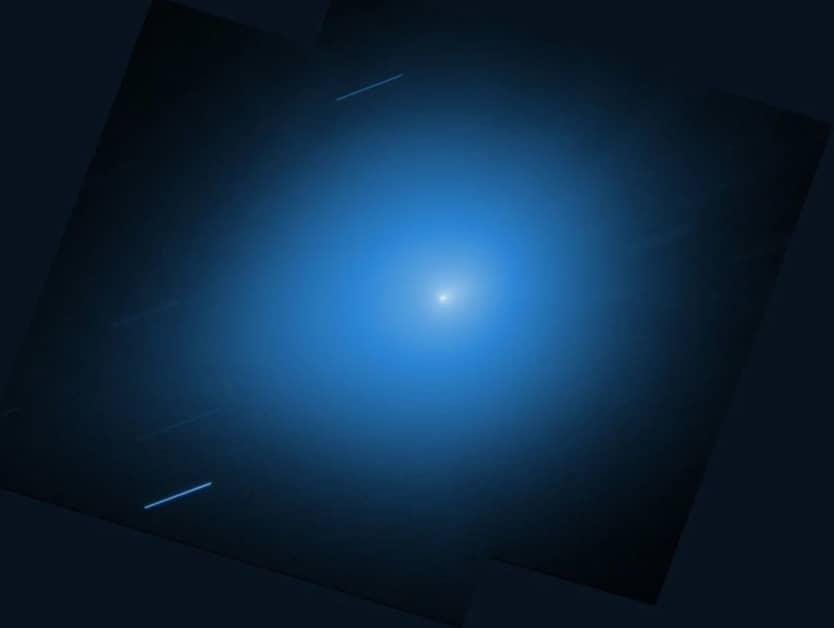
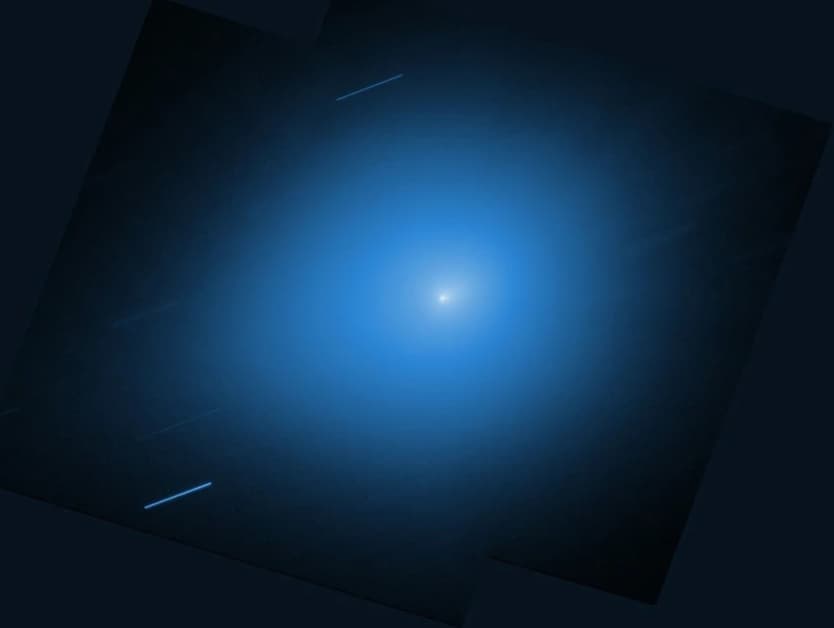
Astronomers around the world are preparing for the upcoming close approach of Comet 3I ATLAS, an interstellar object that will pass near Earth on December 19, 2025. Classified as only the third confirmed interstellar comet after 1I Oumuamua and 2I Borisov, 3I ATLAS is drawing significant interest from the scientific community due to its unique origin outside our solar system.
The comet, first detected by the Asteroid Terrestrial-impact Last Alert System (ATLAS) survey, has been observed for several months as it travels along a hyperbolic trajectory. This unusual path indicates that the comet did not originate within the Sun’s gravitational influence but entered the solar system from deep interstellar space. Its upcoming flyby offers researchers an important opportunity to gather data about its composition, behavior, and how it interacts with solar radiation.
According to current estimates from astronomers, Comet 3I ATLAS will pass by Earth at a distance of nearly 270 million kilometres. This trajectory poses no threat to the planet but ensures that scientists can monitor its movement in great detail. The comet’s brightness is not expected to reach levels visible to the naked eye, although it may be observed through mid-range telescopes under ideal sky conditions. For amateur astronomers, the best viewing opportunity will be from regions with minimal light pollution, particularly in the early morning hours.
Researchers say that the comet’s close approach provides a rare occasion to examine an interstellar body directly. Unlike comets native to our solar system, interstellar comets carry material formed around distant stars, offering clues about the chemistry of other planetary systems. Early observations suggest that Comet 3I ATLAS may contain traces of volatile compounds that differ from those typically found in solar system comets.
Space agencies, including NASA and the European Space Agency, are expected to track the comet using both ground-based observatories and space telescopes. Instruments such as the James Webb Space Telescope may capture high-resolution data, allowing scientists to analyze the comet’s dust, ice, and gas emissions. The information collected during the flyby could help researchers understand the processes that shape star-forming regions across the galaxy.
Interstellar objects remain extremely rare, and each one that enters the solar system expands knowledge about the universe beyond our immediate neighborhood. The arrival of Comet 3I ATLAS follows significant research conducted on 2I Borisov in 2019, which provided valuable insights into the composition of distant comets. Scientists expect similar breakthroughs as they continue observing ATLAS.
For the general public, the event serves as an exciting reminder of the vastness of space and the constant movement of celestial bodies. Though it will not be a visually dramatic event, astronomers say that the scientific value of this interstellar visitor is substantial. Updates on visibility, brightness, and observational data will continue to be shared by major observatories worldwide as the comet approaches.