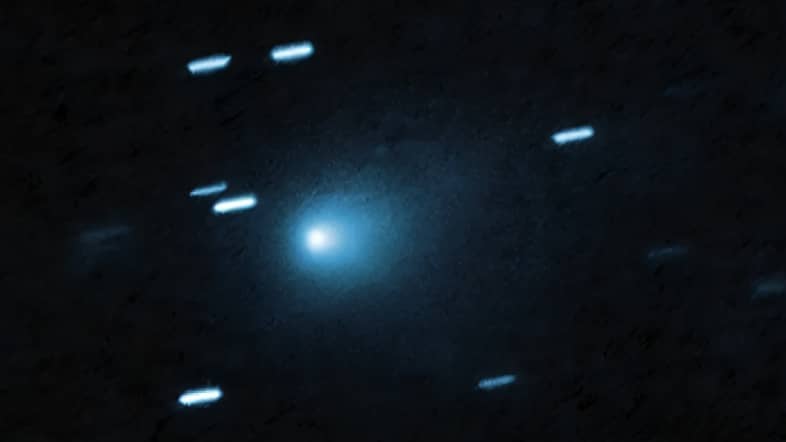
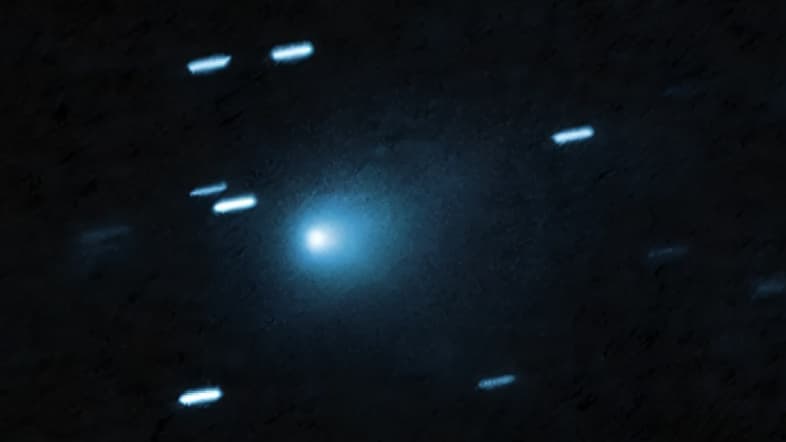
NASA is set to release new images of Comet 3I/ATLAS during a live broadcast tomorrow, providing astronomers and space enthusiasts with an unprecedented view of the interstellar visitor. First discovered in 2019, Comet 3I/ATLAS has been closely monitored because of its unique trajectory and its origin beyond the solar system, making it one of the few known interstellar objects to pass through our planetary neighborhood.
The upcoming live event will feature high-resolution images captured by NASA’s telescopes and observational instruments. Scientists hope these images will reveal details about the comet’s nucleus, tail, and overall composition. Understanding the physical and chemical properties of 3I/ATLAS can provide valuable insights into the building blocks of other star systems and the processes that shaped them.
According to NASA experts, Comet 3I/ATLAS is particularly significant because it helps researchers study material from outside our solar system. Unlike typical comets, which originate in the Kuiper Belt or Oort Cloud, interstellar comets carry clues about distant stars, planets, and cosmic environments. The live event will include commentary from astronomers explaining the scientific importance of each image, offering the public a clear understanding of why this comet is unique.
The live streaming event will be accessible via NASA’s official website and social media channels. Space enthusiasts and students are encouraged to tune in to observe the latest observations and gain insights into ongoing comet research. NASA has also mentioned that attendees will have the opportunity to learn about observational techniques and the technologies used to track fast-moving interstellar objects.
Comet 3I/ATLAS has already been observed to display a bright coma and a dynamic tail, which evolve as the comet moves closer to the Sun. Scientists are particularly interested in studying these changes to understand how interstellar material reacts to solar radiation. Early analyses suggest that the comet’s chemical composition differs slightly from typical solar system comets, indicating it may have formed under conditions not found near our Sun.
The live images will also help astronomers refine predictions of the comet’s trajectory as it continues its journey out of the solar system. This data is crucial for understanding how interstellar objects travel through space and interact with gravitational forces from the Sun and planets.
In conclusion, NASA’s live event tomorrow promises to be a landmark moment for astronomy enthusiasts worldwide. By showcasing the latest images of Comet 3I/ATLAS, NASA aims to expand public understanding of interstellar objects and the broader cosmos. Observers can expect detailed visuals, expert analysis, and an educational experience that highlights the unique characteristics of this rare comet. This event underscores the importance of continued space exploration and research in unveiling the mysteries of objects that travel between star systems.