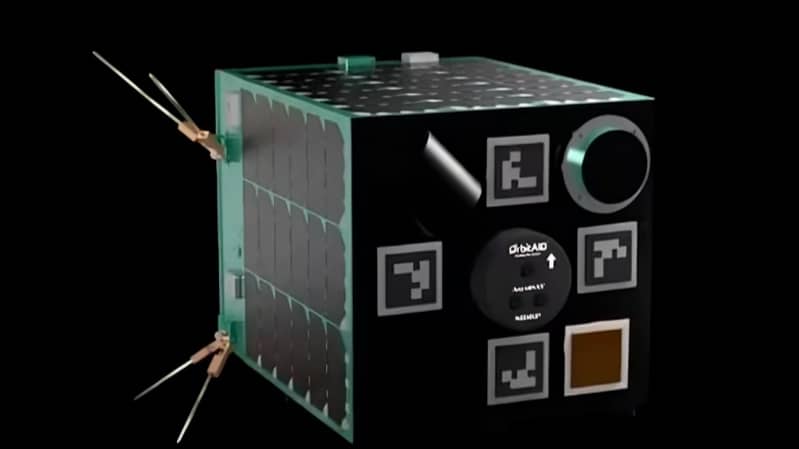
India is poised to achieve a major milestone in space technology with the launch of OrbitAid’s Ayulsat, a 25-kg satellite, aboard ISRO’s PSLV-C62 on Monday. The mission is not merely a technology demonstration; it represents a step forward in India’s pursuit of on-orbit satellite refuelling, a capability that so far has only been publicly demonstrated by China.
On-orbit refuelling allows satellites to extend their operational life by replenishing fuel while in space, a capability that significantly enhances satellite longevity and mission flexibility. If successful, India will become only the second country in the world to achieve this milestone, joining China, which reportedly carried out a similar demonstration last year. While details of China’s operation are limited, the demonstration underscored the strategic and technological significance of on-orbit refuelling.
OrbitAid’s Ayulsat mission, though lightweight at 25 kilograms, will carry advanced technology to demonstrate satellite-to-satellite fuel transfer in orbit. Experts note that mastering this capability involves precise navigation, docking technology, and controlled fuel transfer mechanisms, all of which are critical for future satellite servicing missions. The success of this mission could pave the way for India to develop technologies for satellite maintenance, debris removal, and extended space operations.
Globally, on-orbit refuelling remains a rare achievement. No other spacefaring nation, including the United States, has publicly demonstrated the capability in orbit. US-based private firms like Astroscale are actively developing refuelling technology, but commercial deployment is yet to be realized. India’s success could place it at the forefront of this specialized space domain, opening opportunities for international collaboration and strategic advantage in space infrastructure.
The launch from ISRO’s Sriharikota spaceport is expected to attract considerable attention from the global scientific and space technology community. Analysts say that India’s demonstration will not only strengthen its space capabilities but also highlight its commitment to advancing self-reliant and innovative solutions for satellite operations. Additionally, the technology has potential applications in communication, defense, and earth observation satellites, ensuring longer operational lifespans and reduced costs for replacement missions.
Ayulsat’s success will be a testament to India’s growing expertise in space technology, especially in complex operations such as docking, autonomous navigation, and fuel transfer. It will also position India alongside global leaders in advanced satellite servicing capabilities. The mission reflects ISRO’s commitment to innovation and the broader vision of establishing India as a leader in next-generation space technologies.
In conclusion, the launch of OrbitAid’s Ayulsat aboard PSLV-C62 is more than a satellite mission—it is a step toward India demonstrating strategic, cutting-edge space capabilities. Successful on-orbit refuelling will not only extend satellite lifespans but also enhance India’s position in the global space technology arena, signaling its readiness for complex space operations and international collaboration in the years ahead.