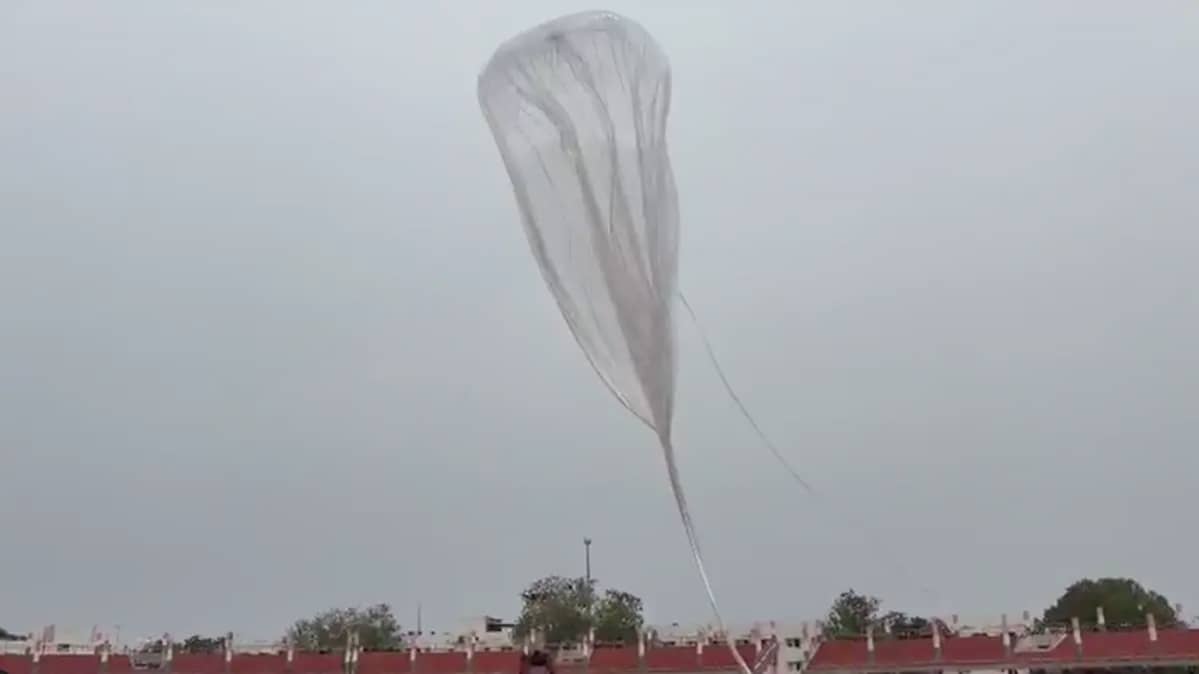

Red Balloon Aerospace is moving forward with ambitious plans to launch a high-altitude balloon mission capable of reaching approximately 25 kilometers above Earth by 2026. The company recently completed a successful super-pressure balloon trial in Vijayawada, marking an important step in India’s expanding near-space technology sector.
The project is part of growing efforts by Indian startups and aerospace innovators to explore near-space environments using cost-effective technologies. High-altitude balloon systems are increasingly being viewed as valuable platforms for scientific research, communication testing, weather monitoring, and atmospheric observation.
According to reports, the recent trial conducted in Vijayawada focused on testing the performance and durability of a super-pressure balloon system under operational conditions. Super-pressure balloons are designed to maintain stable altitude for extended durations while carrying scientific instruments, sensors, or communication equipment into the stratosphere.
The planned mission aims to reach nearly 25 kilometers above Earth’s surface, placing the balloon in the stratosphere, a layer of the atmosphere located above commercial aircraft flight levels. Experts explained that near-space environments offer important opportunities for research and technology development at significantly lower costs compared to traditional satellite missions.
India’s aerospace and space technology ecosystem has witnessed rapid growth in recent years, driven by government initiatives, private investment, and increased participation from startups. Companies involved in drone systems, satellite technology, launch services, and atmospheric research are attracting rising interest from investors and scientific institutions.
Near-space missions using high-altitude balloons are considered useful for testing sensors, imaging systems, communication technologies, and environmental monitoring equipment. Such systems can remain operational for long periods while collecting valuable scientific and atmospheric data.
Industry experts noted that high-altitude balloon technology could support applications in disaster monitoring, agricultural analysis, internet connectivity, climate research, and national security surveillance. The relatively lower operational cost of balloon systems makes them attractive for research institutions and emerging aerospace companies.
The project by Red Balloon Aerospace also reflects broader international interest in near-space technologies. Several companies and research organizations worldwide are exploring stratospheric platforms for communication systems, Earth observation, and scientific experiments.
India’s growing space sector has received additional momentum following policy reforms that encourage private participation in aerospace research and commercial space activities. Startups are increasingly collaborating with research institutions, universities, and government agencies to develop indigenous technologies.
Experts explained that high-altitude balloon systems require advanced engineering in areas such as pressure management, lightweight materials, navigation systems, and environmental resilience. Operating in the stratosphere involves extreme temperatures, low atmospheric pressure, and challenging wind conditions.
The successful completion of the Vijayawada trial is being viewed as an important milestone for the startup’s future plans. Analysts believe additional testing and technical refinements will likely take place before the company attempts the full-scale 2026 mission.
The increasing role of private companies in India’s aerospace sector is also contributing to job creation, technological innovation, and research development. Educational institutions and engineering organizations are showing growing interest in near-space research and atmospheric science projects.
Industry observers stated that near-space exploration may become an important commercial and scientific sector over the next decade as countries seek affordable alternatives for certain communication and monitoring applications.
As Red Balloon Aerospace continues preparations for its planned 2026 mission, the project is expected to draw attention from the scientific community, technology investors, and India’s growing aerospace ecosystem.
The development highlights India’s expanding capabilities in emerging aerospace technologies and reflects the country’s broader ambitions in innovation, scientific research, and advanced space-related industries.