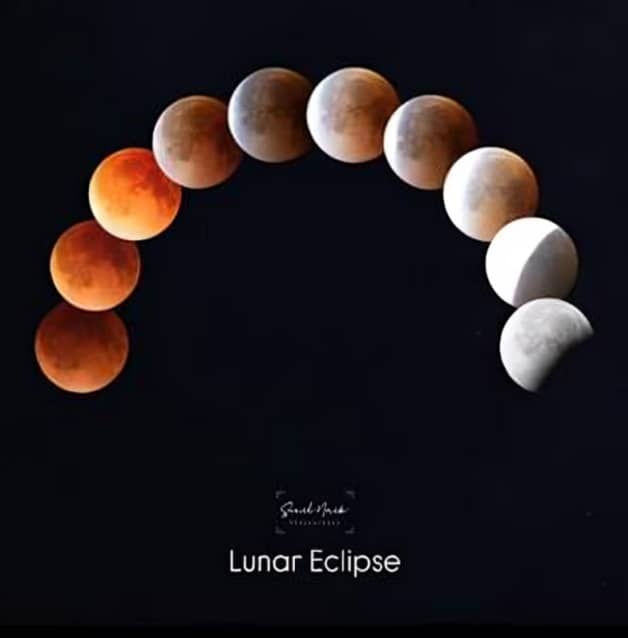
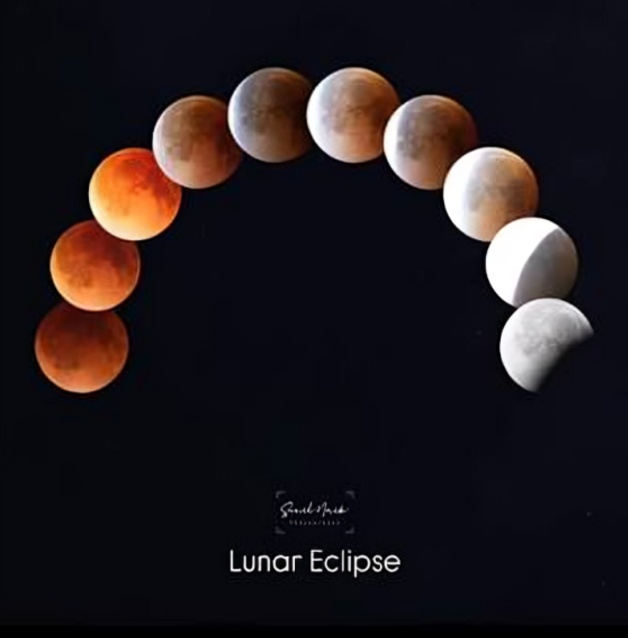
Skywatchers around the world are preparing for a spectacular astronomical event as a deep partial lunar eclipse takes place on August 27 and 28, 2026. During the eclipse, approximately 96.2 percent of the Moon will pass through the darkest central portion of Earth’s shadow, known as the umbra.
Although this will not be a total lunar eclipse, the unusually deep partial phase means that almost the entire lunar disk will enter Earth’s darkest shadow. The event can therefore produce an impressive reddish or copper coloured appearance across much of the Moon.
According to astronomical data, the partial lunar eclipse will be one of the most significant celestial events of August 2026.
What is a lunar eclipse
A lunar eclipse occurs when the Earth moves between the Sun and the Moon and the Moon passes through Earth's shadow.
The shadow has two main regions. The outer region is known as the penumbra, while the darker central region is called the umbra.
During a partial lunar eclipse, only part of the Moon enters the umbra. In the August 2026 event, however, the portion entering the umbra will be extremely large, reaching approximately 96.2 percent at maximum eclipse.
Why is it called a Blood Moon
The term Blood Moon is commonly used when the Moon takes on a reddish or copper coloured appearance during a lunar eclipse.
This colour is produced by sunlight passing through Earth's atmosphere before reaching the Moon. Earth's atmosphere scatters shorter blue wavelengths more strongly, allowing more red and orange light to reach the lunar surface.
Because almost the entire Moon will enter the umbra during this deep partial eclipse, observers in areas where the event is visible may see a large portion of the lunar disk taking on a reddish or copper tone.
However, scientifically, this event remains a partial lunar eclipse rather than a total lunar eclipse.
When will the eclipse occur
The eclipse begins with the Moon entering Earth's faint outer shadow. The more noticeable partial phase begins later, when the Moon starts entering the umbra.
According to astronomical calculations, the partial phase begins at approximately 02:34 UTC on August 28. The greatest eclipse occurs at around 04:13 UTC, when approximately 96 percent of the Moon will be inside Earth's umbra.
The partial phase lasts about three hours and 18 minutes, while the complete eclipse sequence, including the penumbral stages, lasts approximately five hours and 38 minutes.
Where can the eclipse be seen
The August 2026 lunar eclipse will be visible from large parts of North and South America.
It can also be observed from parts of Europe and Africa, depending on the local time and the position of the Moon above the horizon.
The visibility will vary from one location to another. Some regions will see the entire eclipse, while others will see only part of the event as the Moon rises or sets.
Astronomers recommend choosing a location with a clear and unobstructed view of the sky for the best experience.
Will the lunar eclipse be visible in India
One of the important points for Indian skywatchers is that this particular lunar eclipse will not be visible from India.
Astronomical visibility data indicates that the Moon will remain below the horizon in India during the eclipse. Therefore, people in Indian cities will not be able to watch the event directly from their locations.
This also means that people in India should be cautious about social media posts claiming to show a live view of the eclipse from Indian locations. Official astronomical information should be used to verify such claims.
Is it safe to watch a lunar eclipse
Unlike a solar eclipse, a lunar eclipse can be viewed safely with the naked eye.
There is no need for special eye protection when observing a lunar eclipse. Skywatchers can simply look at the Moon during the eclipse.
Binoculars or a telescope can be used to get a closer view, although they are not necessary. A location away from bright city lights can provide better visibility, especially when the Moon becomes darker during the deeper stages of the eclipse.
A major astronomical event of 2026
The August lunar eclipse is part of the sequence of eclipses occurring during 2026.
Earlier in the year, a total lunar eclipse occurred in March, while a total solar eclipse took place in August. The deep partial lunar eclipse at the end of August forms another notable event in the year's astronomical calendar.
The August 27 to 28 eclipse is particularly interesting because almost the entire Moon will enter Earth's umbra despite the event remaining technically partial.
Difference between total and partial lunar eclipse
The main difference between a total and partial lunar eclipse is how much of the Moon enters Earth's umbra.
During a total lunar eclipse, the entire lunar disk passes through the umbra.
During a partial lunar eclipse, only part of the Moon enters the umbra. In the August 2026 event, about 96.2 percent of the Moon will be covered by Earth's darkest shadow, making it an unusually deep partial eclipse.
What skywatchers can expect
Observers in regions where the eclipse is visible can expect the Moon to gradually darken as Earth's shadow moves across its surface.
During the deepest stage, almost the entire lunar disk will be within Earth's umbra. The remaining small portion outside the darkest shadow will make the event visually different from a total lunar eclipse.
The reddish or copper colour produced by Earth's atmosphere could make the eclipse particularly striking for photographers and astronomy enthusiasts.
Important details
Event: Deep partial lunar eclipse
Date: August 27 to 28, 2026
Maximum eclipse: Approximately 04:13 UTC on August 28
Maximum umbral coverage: Approximately 96.2 percent
Partial phase duration: About 3 hours and 18 minutes
Entire eclipse duration: About 5 hours and 38 minutes
Visibility: Parts of North and South America, Europe and Africa
India: Not visible
The eclipse is expected to be one of the most visually interesting partial lunar eclipses of the year because almost the entire Moon will enter Earth's darkest shadow.
Final update
The August 27 to 28, 2026 lunar eclipse will be a deep partial eclipse rather than a total eclipse. With around 96.2 percent of the Moon entering Earth's umbra, observers in the visibility zone may witness a dramatic darkening and reddish appearance.
For viewers in India, however, the event will not be visible because the Moon will be below the horizon during the eclipse. Astronomy enthusiasts can follow reliable astronomical websites and official livestreams to experience the event remotely.