Washington, June 5
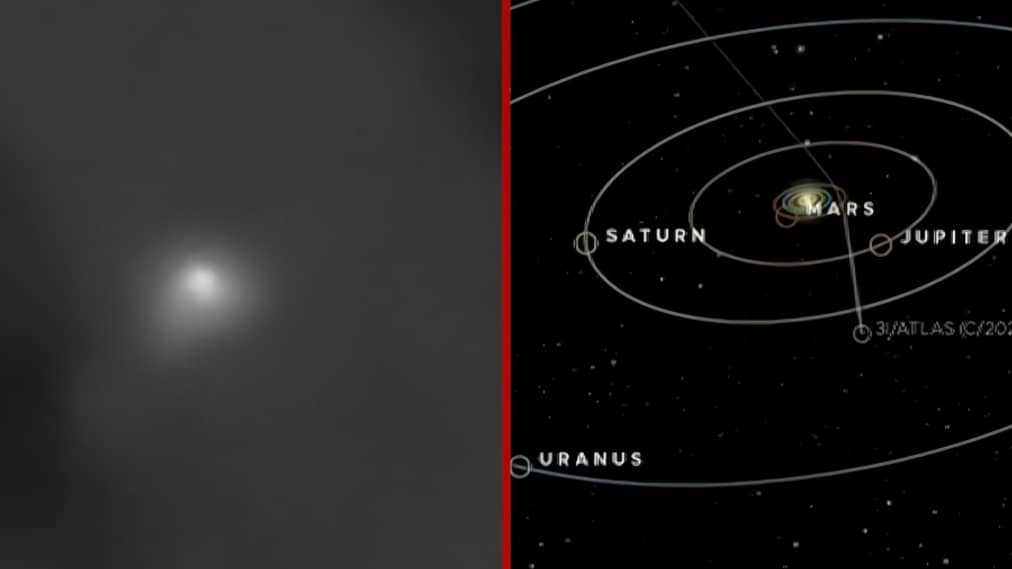
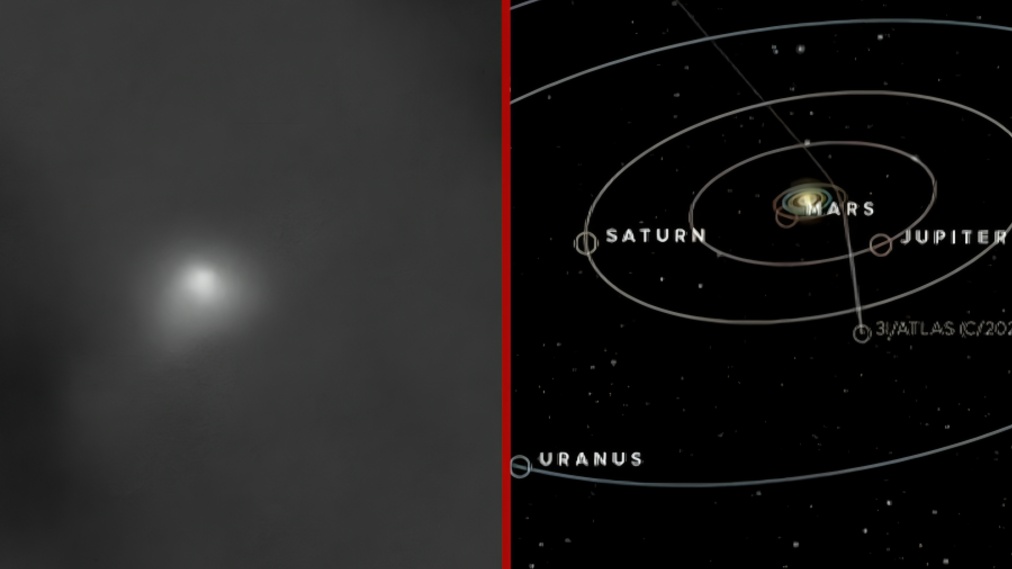
Astronomers studying the interstellar comet 3I ATLAS have identified the presence of methane, a discovery that could provide important information about the chemical makeup of planetary systems beyond our Solar System. The findings were published in the scientific journal The Astrophysical Journal Letters and have attracted attention from researchers investigating the origins of celestial objects that travel between star systems.
Interstellar comets are rare objects that originate outside the Solar System and pass through it during their journey through space. Because these objects formed around other stars, they offer scientists a unique opportunity to examine material from distant regions of the galaxy.
According to researchers, observations of 3I ATLAS revealed methane gas being released from the comet. Scientists believe the methane was trapped beneath the comet's icy surface and escaped after solar radiation warmed the object as it traveled closer to the Sun. The release of these gases provides valuable information about the comet's internal composition and history.
Methane is considered an important molecule in planetary science because it can reveal details about the environmental conditions present during the formation of celestial bodies. By analyzing methane and other compounds, researchers can gain a better understanding of how planets, comets and other objects develop within different star systems.
The discovery is particularly significant because interstellar objects are extremely rare. Only a small number of confirmed interstellar visitors have been observed passing through the Solar System. Each new observation provides scientists with an opportunity to study material that originated around another star.
Researchers involved in the study noted that the composition of 3I ATLAS appears to share certain similarities with comets found within the Solar System. At the same time, some characteristics may differ, offering clues about the diversity of planetary formation processes across the galaxy.
Scientists used advanced telescopes and observational instruments to detect the methane signature. Modern astronomical technology allows researchers to identify chemical compounds by analyzing the light emitted or absorbed by celestial objects. These techniques have become increasingly important in the study of comets, asteroids and distant planets.
The findings may also contribute to broader research into the origins of organic molecules in space. Methane and other carbon-based compounds are considered important building blocks in many cosmic environments. Understanding their distribution can help scientists develop more accurate models of planetary evolution.
Space agencies and research institutions continue to monitor interstellar objects whenever they enter the Solar System. Each observation provides valuable scientific data that may improve knowledge of how stars and planetary systems form throughout the Milky Way galaxy.
Astronomers expect future discoveries and technological advancements to reveal additional details about interstellar visitors such as 3I ATLAS. As more observations become available, scientists hope to compare these objects with comets from our own Solar System and gain a deeper understanding of the processes that shape planetary systems across the universe.