NASA scientists have reported a finding that could have important implications for future lunar exploration. Some microorganisms associated with humans may be capable of surviving for a limited period in shaded areas of the Moon’s South Pole region.
The study, published in the journal Science Advances on August 19, 2026, examines the ability of Earth based microbes to persist under conditions that resemble parts of the lunar environment. NASA said the findings highlight the need for greater understanding of microbial persistence as human activity on the Moon increases.
The Moon is generally considered an extremely hostile environment for life as we know it. It has virtually no atmosphere, experiences extreme temperature variations and is exposed to radiation and ultraviolet light. The lunar surface also lacks the liquid water and environmental conditions normally required for biological growth.
However, conditions are not identical everywhere on the lunar surface. Some areas near the lunar poles remain permanently or nearly permanently shaded. These locations can experience extremely low temperatures and do not receive direct sunlight for long periods.
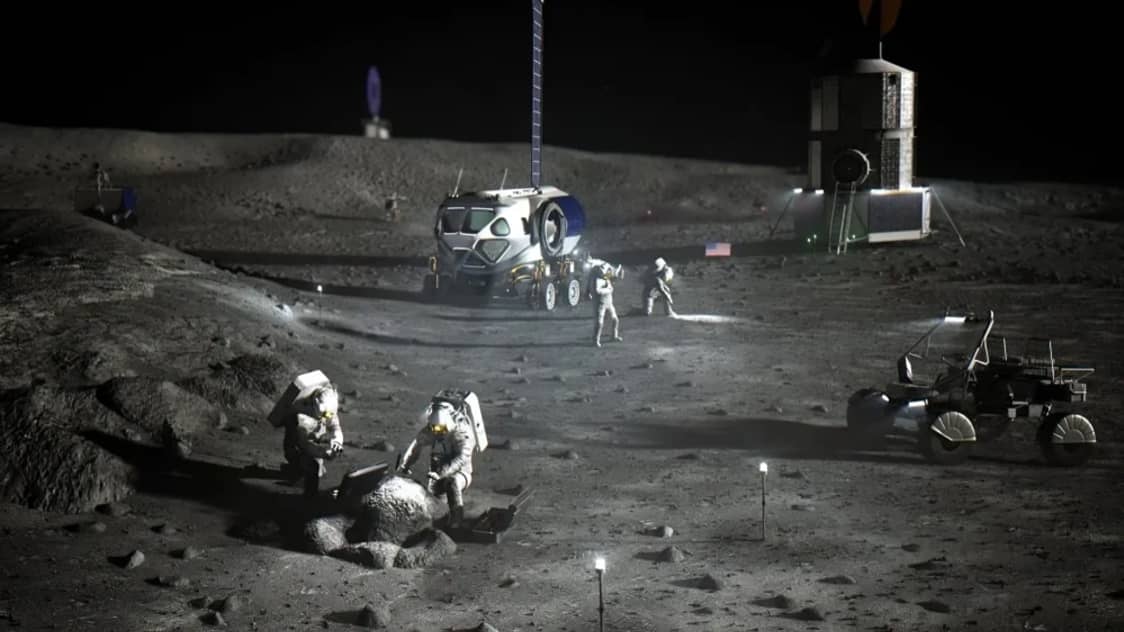
NASA scientists are particularly interested in the South Pole because the region contains permanently shadowed areas and potentially important water ice deposits. NASA's Lunar Reconnaissance Orbiter has been studying the Moon since 2009 and has helped identify areas near the South Pole that could be important for future exploration.
The new findings do not mean that the Moon has developed an environment capable of supporting a thriving microbial ecosystem. Instead, the research focuses on whether microorganisms originating from Earth could remain alive for a limited period after being transported to the lunar environment.
This distinction is important. Scientists are not reporting evidence of naturally occurring life on the Moon. Rather, the concern involves microbes that could accidentally travel with astronauts, spacecraft, equipment or other materials used during lunar missions.
Human beings naturally carry large numbers of microorganisms. Even spacecraft assembled in highly controlled environments can contain microbial material despite extensive cleaning and sterilisation procedures. NASA has previously studied microorganisms associated with spacecraft and cleanroom environments because of their potential ability to tolerate difficult conditions.
The possibility of microbial survival has implications for planetary protection. Scientists need to distinguish between material that originated naturally on another world and material that was introduced by humans.
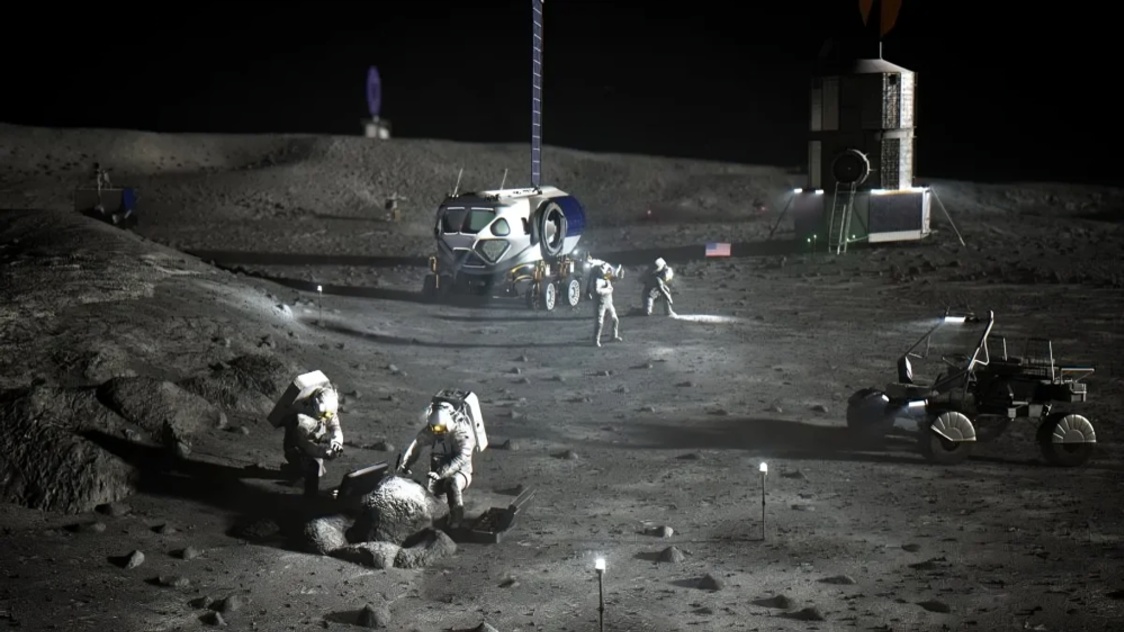
This issue could become increasingly important as lunar exploration becomes more frequent. NASA and international partners are planning missions designed to establish longer term operations around the Moon, including activities near the South Pole. NASA has described the lunar South Pole as a major focus for future exploration because of its scientific value and potential resources.
If microorganisms from Earth survive after being transported to the Moon, they could potentially leave biological or chemical traces behind. Such traces could complicate future scientific investigations, particularly if researchers are examining lunar samples for unusual organic compounds or other indicators of biological activity.
NASA's planetary protection work therefore includes monitoring microbial contamination associated with spacecraft. The agency maintains collections of microorganisms recovered from spacecraft assembly environments to better understand how different organisms respond to space related stresses.
The latest research also provides another reason for scientists to study the extreme environments found on the Moon. Understanding how microbes respond to temperature, radiation, vacuum and other conditions could help researchers develop better contamination control methods for future missions.
At the same time, scientists caution against interpreting the findings as evidence that life can easily survive or reproduce on the Moon. Survival for a limited period is very different from growth and reproduction. The lunar surface remains an exceptionally harsh environment for terrestrial organisms.
Earlier NASA research on planetary protection has also noted that the Moon does not currently provide conditions considered suitable for indigenous biological activity. The primary concern in future missions is therefore the introduction of Earth material and the effect that contamination could have on scientific research.
The findings come at a time when lunar exploration is entering a new phase. Governments and private companies are developing landers, rovers and other technologies intended to support sustained activity on the lunar surface.
As the number of missions increases, controlling biological contamination could become an increasingly important part of lunar exploration. Scientists will need to ensure that future experiments can distinguish between material naturally present on the Moon and substances introduced by human activity.
The latest NASA study therefore adds to the scientific understanding of how Earth microorganisms might respond to one of the most extreme environments accessible to human exploration. It also reinforces the importance of maintaining appropriate cleanliness and contamination controls as missions move toward longer and more complex operations on the Moon.
For future lunar explorers, the challenge is not simply reaching the Moon. Researchers must also ensure that human activity does not unintentionally alter the environment they are attempting to study.