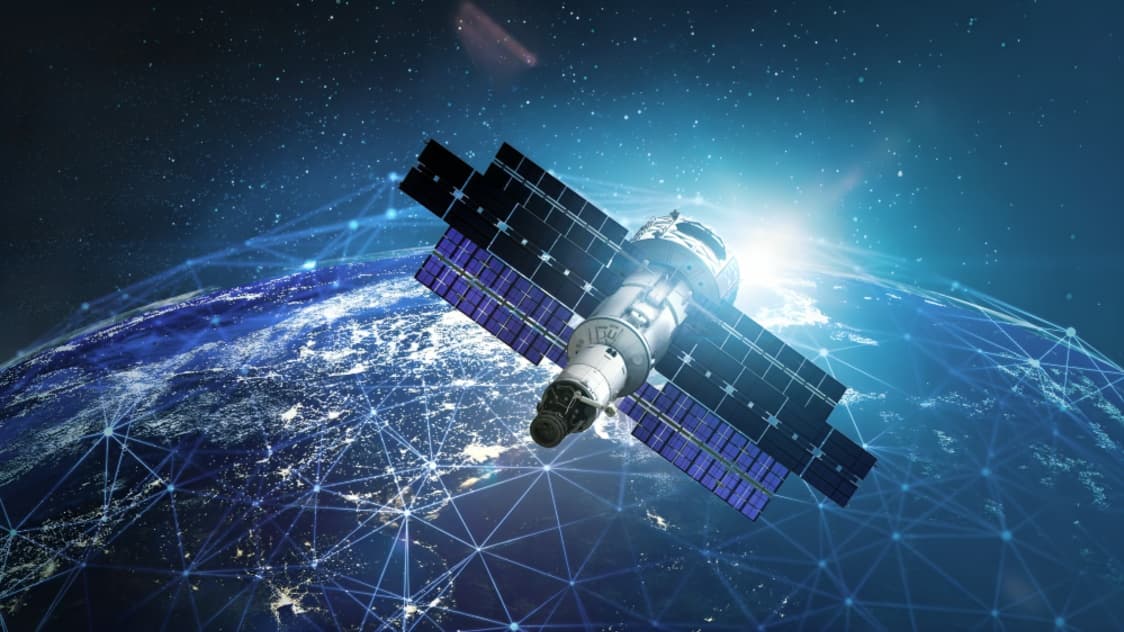
The increasing congestion in Earth’s orbit has led to a sharp rise in collision risks for satellites, with Indian space assets receiving more than 1.5 lakh close approach alerts in 2025. This development highlights the growing complexity of managing space traffic as the number of satellites in orbit continues to increase rapidly.
According to the Indian Space Situational Assessment Report 2025, a total of approximately 1.6 lakh alerts were generated globally during the year. Many of these alerts were issued by the United States Space Command’s Combined Space Operations Center, which monitors objects in space and tracks potential close approaches between satellites and debris.
Each alert indicates a possible near miss between space objects, reflecting how crowded orbital paths have become. The surge in satellite launches, especially the deployment of large constellations consisting of hundreds of satellites, has significantly increased the density of objects in low Earth orbit and other regions of space.
For the Indian Space Research Organisation, this situation has required continuous monitoring and rapid response to potential threats. In 2025, Indian missions conducted 18 collision avoidance manoeuvres to prevent possible impacts. Of these, 14 were carried out in low Earth orbit, where most satellites operate, while four took place in geosynchronous orbit, which is used for communication and weather satellites.
Collision avoidance manoeuvres are critical operations that involve adjusting a satellite’s trajectory to reduce the risk of impact with another object. These manoeuvres must be carefully planned and executed to ensure that they do not create new risks or interfere with the satellite’s mission.
The report also highlights the complexity of planning such manoeuvres. All manoeuvre plans were subjected to detailed risk analysis to ensure that they did not result in new close approaches with other space objects in the days following the adjustment. As a result, 82 manoeuvre plans for low Earth orbit satellites were revised to avoid potential post manoeuvre risks. Additionally, two plans for geosynchronous orbit satellites were modified for similar reasons.
The rapid growth in satellite constellations has reduced the time available for operators to respond to potential collisions. In some cases, multiple satellites are launched in a single day, further complicating tracking and coordination efforts. This has placed significant operational pressure on space agencies and satellite operators worldwide.
Experts warn that without improved coordination and stronger space traffic management systems, the risk of collisions could increase further. Such incidents could generate space debris, which in turn may lead to additional hazards for other satellites and missions.
India continues to strengthen its space situational awareness capabilities to address these challenges. The focus remains on enhancing monitoring systems, improving predictive models, and ensuring the long term sustainability of space operations.
The rising number of collision alerts underscores the urgent need for global cooperation in managing space traffic. As more countries and private players enter the space sector, maintaining safe and sustainable use of orbital resources has become a shared responsibility.