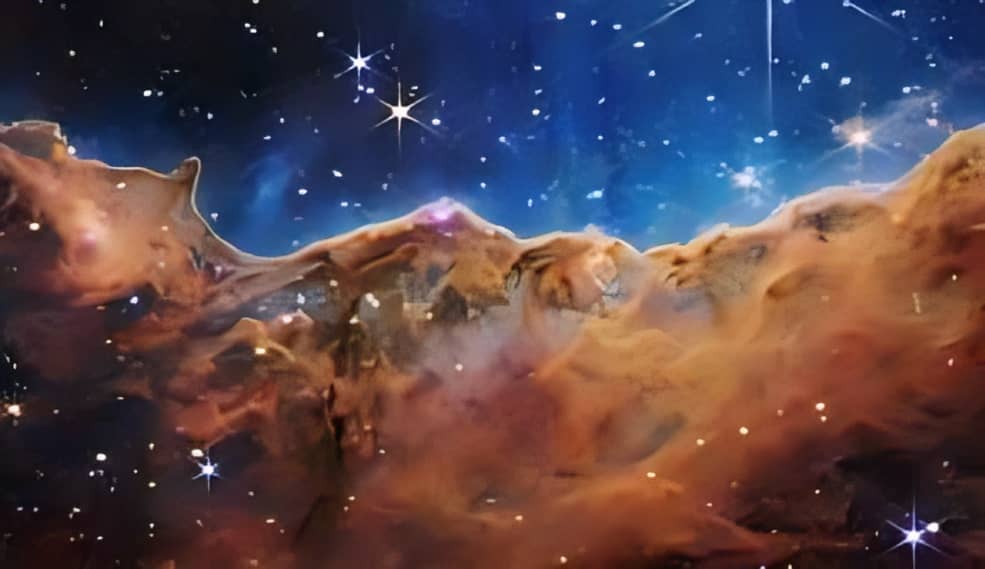
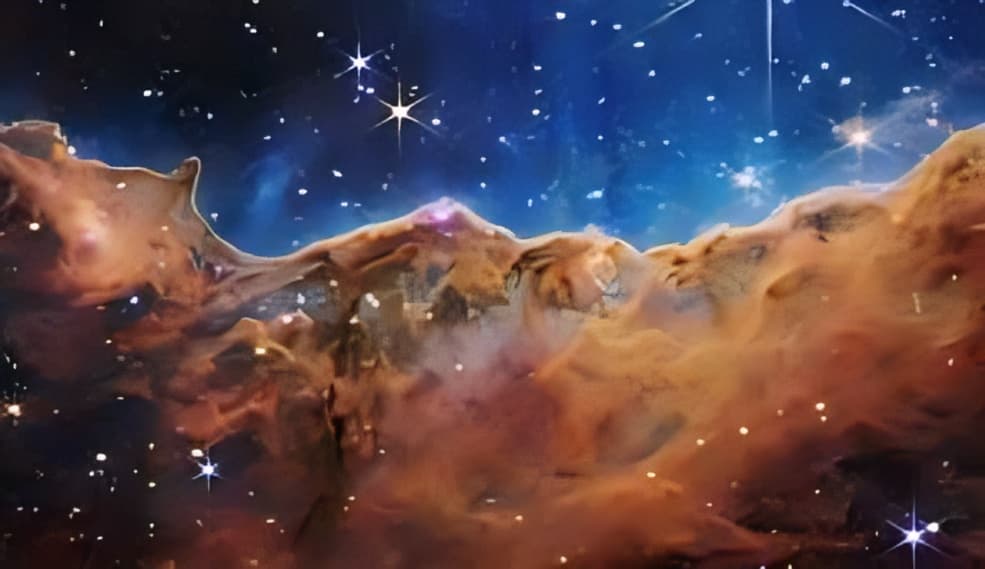
NASA’s James Webb Space Telescope continues to redefine humanity’s understanding of the universe with a series of stunning images captured by its Near Infrared Camera, known as NIRCam. Recently released visuals showcase six remarkable cosmic scenes, revealing distant galaxies, glowing nebulae, and star-forming regions with clarity never seen before.
NIRCam is one of Webb’s primary instruments and plays a crucial role in observing infrared light. Unlike visible light, infrared wavelengths can pass through dust clouds, enabling astronomers to study regions of space that were previously hidden. This capability allows scientists to look deeper into the universe and further back in time, offering insights into the early stages of cosmic evolution.
Among the images captured are vast galaxy clusters stretching across millions of light-years, each containing thousands of galaxies of varying shapes and sizes. Some of these galaxies formed just a few hundred million years after the Big Bang, providing valuable clues about how the universe evolved during its earliest phases.
Another image highlights a star-forming nebula, where clouds of gas and dust are collapsing under gravity to form new stars. The detailed structures visible in the image reveal the complex interactions between radiation, matter, and gravity. Scientists say such observations help them better understand how stars like the Sun were born and how planetary systems develop around them.
The NIRCam images also showcase stellar nurseries filled with young, hot stars illuminating their surroundings. These regions appear vibrant due to infrared emissions, allowing researchers to measure temperatures, chemical compositions, and distances with high precision. Such data are essential for studying stellar life cycles and the processes that shape galaxies.
One of the standout visuals features a deep-field image packed with countless galaxies, many of them previously unseen. Each tiny point of light represents an entire galaxy, underscoring the immense scale of the universe. Astronomers use these deep-field images to estimate the number of galaxies in the observable universe and to track how they have changed over billions of years.
NASA scientists note that the clarity and depth achieved by NIRCam exceed expectations. The telescope’s ability to capture fine details enables more accurate measurements and supports ongoing research into dark matter, star formation rates, and cosmic expansion.
The James Webb Space Telescope, a collaboration between NASA, the European Space Agency, and the Canadian Space Agency, is positioned about 1.5 million kilometres from Earth. From this vantage point, it can observe the universe without interference from Earth’s atmosphere.
As Webb continues its mission, scientists expect more groundbreaking discoveries and awe-inspiring images. The latest NIRCam visuals not only captivate the public but also serve as powerful tools for advancing space science and expanding humanity’s knowledge of the cosmos.