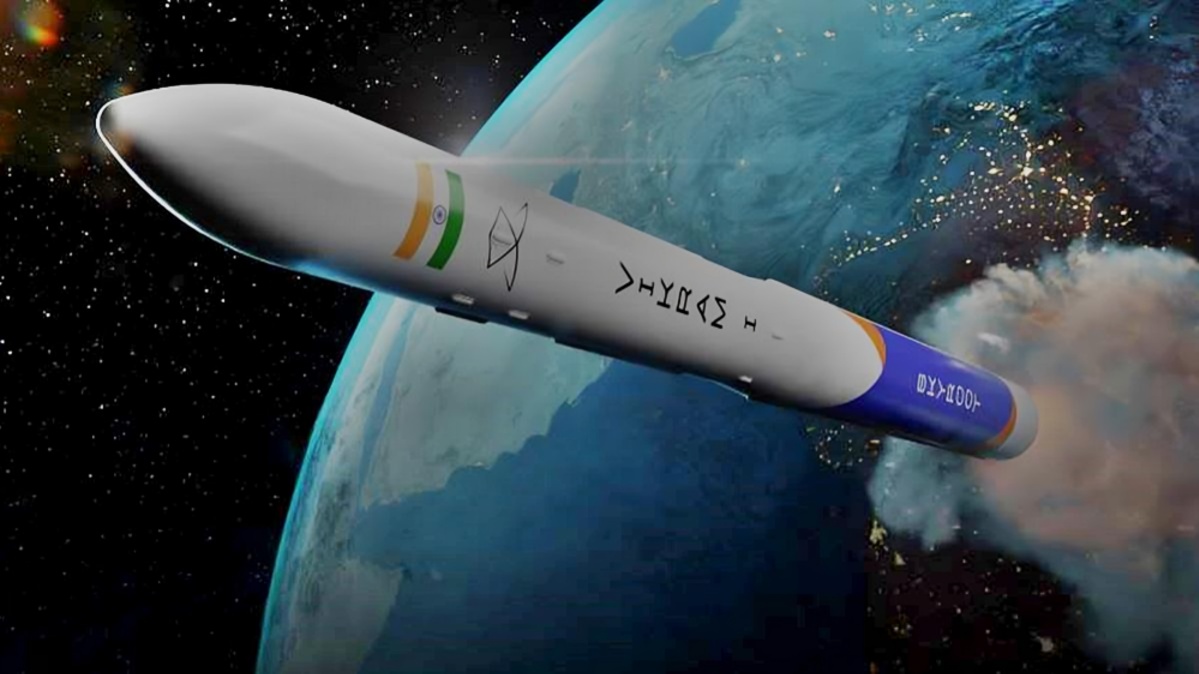
Skyroot Aerospace has announced that its Vikram 1 launch vehicle is prepared for Mission Aagaman, a landmark mission expected to become India's first orbital launch attempt by a privately developed rocket. The launch is scheduled within a window extending from July 12 to August 4, subject to technical readiness and weather conditions.
Mission Aagaman represents an important step in the growth of India's private space industry. The launch follows the successful suborbital flight of the Vikram S rocket, which demonstrated several technologies and validated key systems required for future orbital missions. Building on that achievement, Vikram 1 has been designed to carry satellites into orbit and support commercial space missions.
Skyroot Aerospace was established with the objective of developing affordable and reliable launch services for small satellite operators. Since its formation, the company has focused on designing launch vehicles that can meet the growing demand for satellite deployment from commercial customers, research organizations, and government agencies.
The Vikram 1 launch vehicle incorporates advanced engineering technologies, including lightweight composite materials, modern propulsion systems, and precision guidance technology. The rocket has been developed to transport small satellites into low Earth orbit, providing an additional launch option for customers seeking dedicated satellite missions.
Mission Aagaman is expected to demonstrate the operational capabilities of the Vikram 1 rocket. The mission will evaluate the launch vehicle's propulsion performance, stage separation systems, navigation accuracy, structural integrity, and orbital insertion capability. Successful completion of these objectives would represent a major milestone for India's expanding commercial space ecosystem.
India's space sector has undergone significant reforms in recent years, allowing greater participation by private companies in satellite manufacturing, launch services, and space technology development. These policy changes have encouraged innovation and investment while creating new opportunities for startups and private enterprises.
Organizations such as Indian National Space Promotion and Authorization Center have played a key role in supporting private participation by facilitating access to infrastructure, regulatory approvals, and collaboration with Indian Space Research Organisation. These initiatives aim to strengthen India's position in the global space economy.
The successful launch of Vikram S in 2022 demonstrated Skyroot Aerospace's technical capabilities and established confidence in the company's engineering approach. That mission tested several critical technologies, including propulsion systems and flight software, laying the foundation for the development of Vikram 1.
Industry experts believe that successful commercial orbital launch vehicles developed by Indian private companies could significantly enhance the country's competitiveness in the international launch services market. The global demand for launching small satellites continues to increase due to the rapid growth of Earth observation, communication, scientific research, and technology demonstration missions.
Mission Aagaman also reflects the growing collaboration between government institutions and private industry in advancing India's space ambitions. By combining public infrastructure with private innovation, the country is creating an ecosystem that supports technological development, entrepreneurship, and international commercial partnerships.
If successful, Vikram 1 could become an important platform for future commercial launches and contribute to expanding India's role in the global space industry. The mission would also demonstrate the capabilities of Indian private aerospace companies in developing sophisticated launch systems that meet international standards.
As the launch window approaches, engineers and mission teams continue to conduct final technical evaluations, system validations, and launch preparations. Mission Aagaman is expected to become a significant milestone not only for Skyroot Aerospace but also for India's rapidly evolving commercial space sector, marking a new chapter in the nation's journey toward greater participation in the global space econom