
A total solar eclipse is set to take place on August 12, offering one of the most anticipated astronomical events of the year. The celestial phenomenon is expected to attract astronomers, researchers, photographers, and millions of skywatchers across the globe as the Moon passes directly between the Earth and the Sun, temporarily blocking sunlight in specific regions.
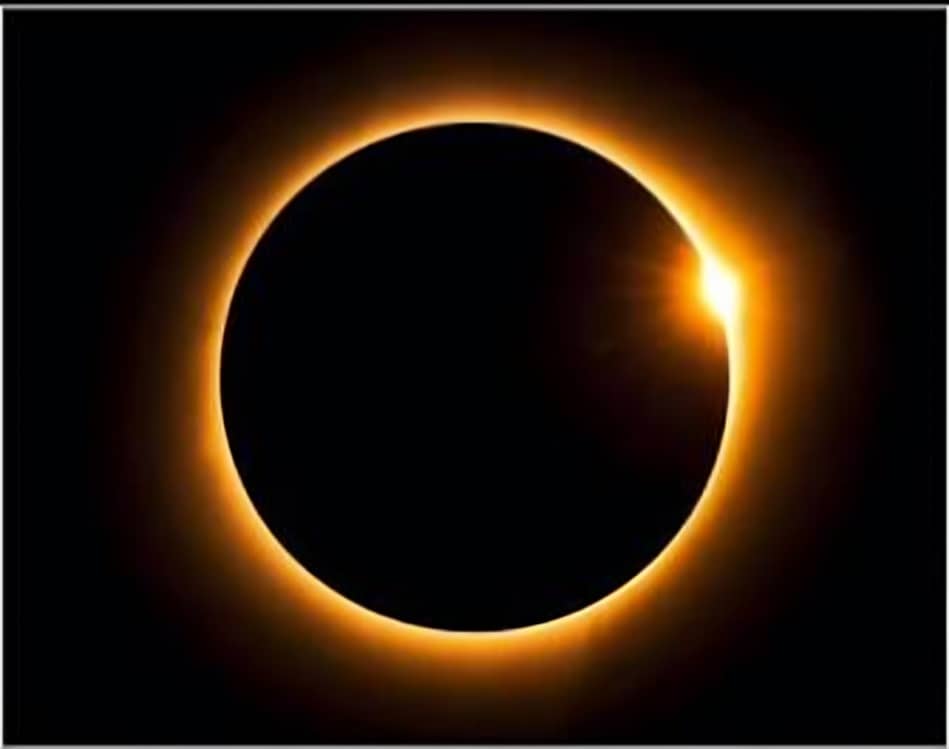
A solar eclipse occurs when the Moon aligns perfectly with the Sun and Earth during the new moon phase. In the case of a total solar eclipse, the Moon completely covers the visible surface of the Sun for observers located within the path of totality. People outside this narrow path may witness a partial solar eclipse, where only a portion of the Sun is obscured.
According to astronomical forecasts, the August 12 eclipse will be visible in different forms across several countries. Areas located along the path of totality will experience complete darkness for a brief period during daylight hours, while neighbouring regions will witness a partial eclipse.
Countries expected to experience either total or partial views of the eclipse include Greenland, Iceland, Ireland, the United Kingdom, Spain, Portugal, France, Belgium, the Netherlands, Germany, Denmark, Norway, Sweden, Finland, Russia, Canada, and parts of the Arctic region. The exact visibility will vary depending on geographical location and local weather conditions.
The precise timing of the eclipse will differ from one country to another because of differences in time zones and the movement of the Moon's shadow across the Earth's surface. National astronomical agencies and observatories are expected to publish local viewing schedules before the event to help observers plan accordingly.
Astronomers describe total solar eclipses as unique scientific opportunities. During totality, the Sun's outer atmosphere, known as the corona, becomes visible. Researchers study the corona to better understand solar activity, magnetic fields, and space weather, all of which can influence satellite communications, navigation systems, and power infrastructure on Earth.
For photographers and astronomy enthusiasts, total solar eclipses provide a rare opportunity to capture spectacular images of the Sun's corona, the diamond ring effect, and the changing colours of the sky during totality. Many observers travel to locations within the path of totality months in advance to maximise their chances of clear viewing conditions.
Experts strongly advise the public to observe the eclipse safely. Looking directly at the Sun without proper eye protection can cause permanent eye damage. Certified solar viewing glasses that comply with international safety standards should always be used during the partial phases of the eclipse. Ordinary sunglasses, camera filters, or homemade viewing devices do not provide sufficient protection.
Only during the brief period of complete totality, and only for observers located exactly within the path of totality, is it safe to view the Sun without eclipse glasses. Once sunlight begins to reappear, eye protection must be used immediately.
Weather conditions will play a major role in determining visibility. Cloud cover, rain, or haze may obstruct views in some locations, while clear skies will provide the best viewing experience. Astronomy organisations often recommend checking updated weather forecasts before travelling to observation sites.
Many observatories, science centres, universities, and astronomy clubs are expected to organise public viewing events where visitors can observe the eclipse using specialised telescopes equipped with certified solar filters. These programmes also help educate the public about the science behind solar eclipses and safe viewing practices.
The August 12 total solar eclipse is expected to be one of the most widely observed astronomical events of the year. Whether viewed in person or through live broadcasts from scientific organisations, the event offers a valuable opportunity to appreciate one of nature's most remarkable celestial alignments while promoting interest in astronomy and space science.