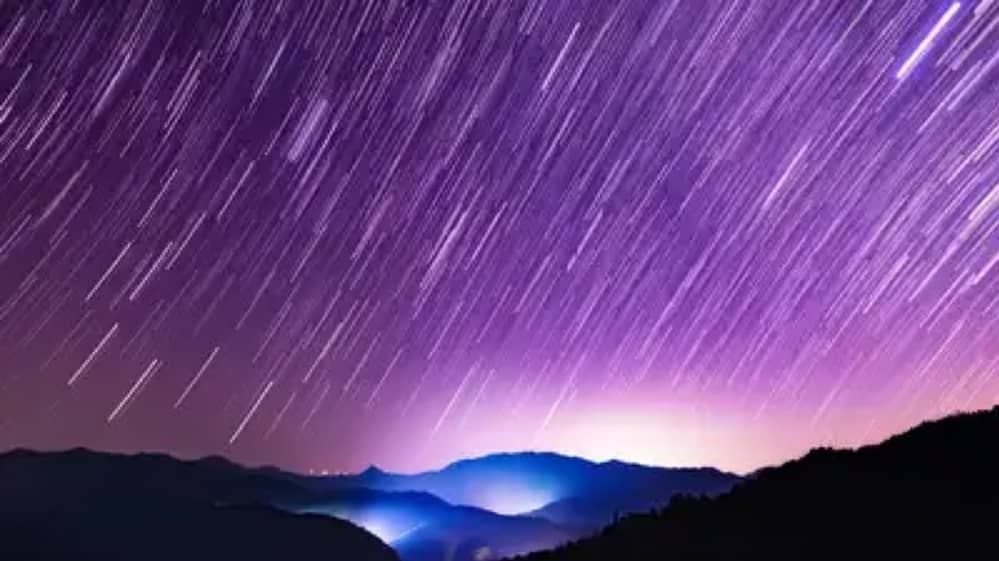
The Ursid meteor shower, considered the final prominent meteor shower of the year, is set to appear in the night sky, offering skywatchers in India an opportunity to witness a quiet but fascinating celestial event. Although the Ursids are not as intense as showers like the Perseids or Geminids, they hold a unique charm, especially for observers who enjoy peaceful stargazing experiences.
The Ursid meteor shower occurs annually in late December and is caused by debris from the comet 8P Tuttle. As Earth passes through this debris stream, small particles enter the atmosphere at high speed, burning up and creating streaks of light commonly referred to as meteors or shooting stars.
For 2025, the Ursid meteor shower is expected to be active for several days, with peak visibility during the late night and early morning hours. Astronomers recommend observing between midnight and dawn, when the radiant point of the meteor shower is higher in the sky. The radiant lies in the constellation Ursa Minor, near the North Star, making it visible throughout the night in the northern hemisphere.
Indian viewers may experience favourable conditions due to longer winter nights, which allow extended observation time. Cities with lower light pollution and clear skies will offer better chances of spotting meteors. While exact meteor counts vary, observers can expect a modest number of meteors per hour under ideal conditions.
No special equipment is required to enjoy the Ursid meteor shower. Astronomers advise finding a dark location away from city lights, lying back comfortably, and allowing eyes to adjust to the darkness for at least 20 to 30 minutes. Avoid using mobile phones or bright lights during observation, as they can affect night vision.
Weather conditions play a crucial role in visibility. Clear skies are essential, and cloud cover can limit viewing opportunities. Observers are encouraged to check local weather forecasts before heading out for stargazing.
The Ursids may occasionally surprise viewers with brief outbursts, although such activity is unpredictable. Even during quieter years, the meteor shower provides a chance to connect with the night sky and observe natural cosmic activity.
Astronomy enthusiasts note that meteor showers like the Ursids offer educational value, especially for beginners interested in learning about space phenomena. The event also serves as a reminder of Earth’s constant interaction with cosmic debris as it orbits the Sun.
As the year comes to an end, the Ursid meteor shower provides a peaceful astronomical highlight. With minimal preparation and patience, Indian skywatchers can enjoy this final celestial display before welcoming the new year.