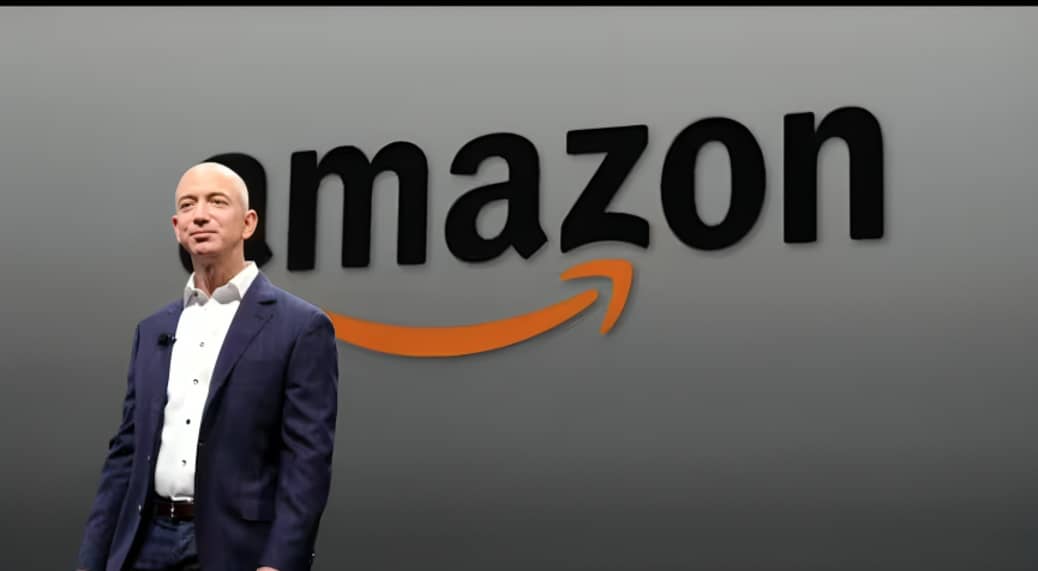
Today, Amazon is one of the world's most recognised technology and e-commerce companies, but its beginnings were far less certain. In the mid-1990s, Jeff Bezos was trying to convince investors that people would eventually buy books through the internet. At that time, online shopping was still a new concept, and many potential investors were unfamiliar with the commercial possibilities of the internet.
During this difficult early stage, Bezos received important financial support from his parents. In 1995, his mother Jacklyn Gise Bezos and stepfather Miguel Mike Bezos invested approximately $245,573 of their savings in the young company. The investment was made before Amazon became a publicly traded company and when its future was still highly uncertain.
According to a 1997 Amazon prospectus, the money represented a large portion of the couple's savings. Bezos reportedly made it clear to his parents that the investment was risky and that there was a possibility they could lose the money.
That warning was important because Amazon was not yet the global business it is today. Bezos was attempting to build an online bookstore at a time when consumers were still becoming familiar with the internet. Even the basic idea of purchasing a product online was unfamiliar to many people.
Bezos later recalled that raising the initial funding for Amazon was extremely difficult. In one account, he said he held around 60 meetings with potential investors while trying to raise approximately $1 million in early capital. About 40 investors turned him down, while others eventually agreed to invest.
The challenge was partly caused by the novelty of the business model. Bezos was asking investors to support an internet-based bookseller without a proven market for online shopping. He had to explain not only his business idea but also the potential of the internet itself.
The investment from his parents therefore came at a crucial stage in Amazon's development. Rather than simply making a conventional investment decision based on an established business model, they were supporting their son while he was attempting to develop an entirely new type of company.
Mike Bezos later recalled that Jeff had warned his parents about the possibility of losing their money. Bezos wanted them to understand that Amazon was a speculative venture and that there was no guarantee that the business would succeed. According to Fortune's recent report, Bezos had estimated the chances of success at around 30 percent at the time.
The decision ultimately became one of the most significant investments in the Bezos family's financial history.
Amazon launched its online store in 1995. The company initially focused on selling books, taking advantage of the internet's ability to provide customers with access to a much larger selection than a traditional physical bookstore could typically offer.
The early response surprised Bezos. He later recalled that orders began arriving from customers across all 50 US states and from 45 countries. At the time, Amazon had only a small team of employees.
The company continued to expand rapidly. By 1997, Amazon had grown significantly and completed its initial public offering. The company went public on May 15, 1997, at $18 per share and raised approximately $54 million through the offering, according to Fortune's account.
The public listing changed the financial picture for Amazon and its early shareholders. Bezos retained a significant ownership stake in the company, while members of his family also held Amazon shares following their early investments.
The value of the family's Amazon holdings increased dramatically as the company expanded beyond books into a much broader e-commerce and technology business. Amazon eventually developed businesses across online retail, cloud computing, advertising, entertainment, logistics and artificial intelligence.
Historical filings have provided details about the Bezos family's early Amazon holdings. Fortune reported that Mike Bezos purchased 582,528 Amazon shares in February 1995, while Jackie Bezos purchased 847,716 shares five months later. The family's holdings were subsequently structured through several trusts.
The family's relationship with Amazon also extended beyond investment. In later years, members of the Bezos family donated Amazon shares to the Bezos Family Foundation. Fortune reported that the couple donated 595,027 Amazon shares to the foundation between 2001 and 2016. The foundation has focused largely on education and child development.
The early investment also illustrates how different Amazon looked in 1995 compared with the company that exists today. At the time, there was no established online retail industry on the scale that exists now. Consumers had limited experience shopping online, and businesses were still experimenting with how the internet could be used commercially.
Bezos' fundraising experience demonstrates the uncertainty surrounding Amazon's early business model. He has previously described the effort to raise the first million dollars as one of the hardest parts of building the company. Many investors declined to participate, while a relatively small group eventually provided the capital needed to continue developing the business.
The role of Bezos' parents is particularly notable because their investment was based largely on confidence in their son at a time when the business itself had very little history. Bezos later described his stepfather as making a bet on his son rather than simply making a bet on the company.
Amazon's subsequent growth transformed the value of those early investments. However, the exact amount the Bezos family ultimately gained from the original investment depends on the shares they retained, sold or donated over the years. Publicly available information does not provide a complete picture of their current holdings.
Amazon's share price has increased dramatically since its 1997 IPO. Fortune reported in September 2026 that Amazon shares had risen by more than 208,000 percent since the company's public listing. The company has since grown into one of the world's largest businesses.
The story of the $245,573 investment has therefore become an important part of Amazon's early history. It highlights the uncertainty surrounding the company before its rapid growth and shows how early financial support helped Bezos continue developing his online retail idea.
The investment should not be viewed as a guaranteed path to success. At the time the money was provided, Amazon remained a young company operating in an emerging market, and Bezos himself warned his parents that they could lose their investment. The eventual outcome was shaped by Amazon's subsequent growth, the expansion of online shopping and the company's transformation into a diversified technology and commerce business.
For today's startup founders, the story also reflects the challenges involved in raising capital for a new technology business. Ideas that appear uncertain in their early stages can sometimes develop into major companies, but there is no guarantee that an early-stage investment will produce similar results.
In Amazon's case, the decision made by Jeff Bezos' parents in 1995 became closely connected with one of the most significant technology and business success stories of the modern era. What began as a risky investment in a small online bookstore eventually became part of the financial history of a global technology company.