Philippe Starck Reveals the Story Behind Steve Jobs’ Secret Superyacht Venus
Steve Jobs, the late co-founder of Apple, was known for his attention to detail, minimalist design philosophy and interest in products that combined functionality with visual simplicity. Those principles extended beyond computers and consumer electronics to one of his final major personal projects: Venus, a luxury superyacht developed in collaboration with French designer Philippe Starck.
The vessel attracted international attention because it brought together two influential figures from the worlds of technology and design. Although the project remained private during Jobs’ lifetime, Starck discussed their collaboration publicly in a 2014 interview, offering insight into the ideas and design process behind the yacht.
How the Venus project began
Jobs commissioned the yacht project in 2007. According to reports about the collaboration, he wanted a vessel that reflected his preference for simplicity, precision and uncluttered design. He approached Starck, a French designer recognised for his work across furniture, interiors, architecture and product design.
Their collaboration continued over several years. In an interview with Euronews in October 2014, Starck explained that Jobs wanted someone who understood his design philosophy. Starck also described the project as a private undertaking, reflecting Jobs’ preference for keeping personal projects confidential.
Starck said he developed the boat’s design quickly at the initial concept stage, but the two men spent years working through details. His account highlighted the importance of refinement and close collaboration rather than treating the yacht as a conventional luxury purchase.
A minimalist design at sea
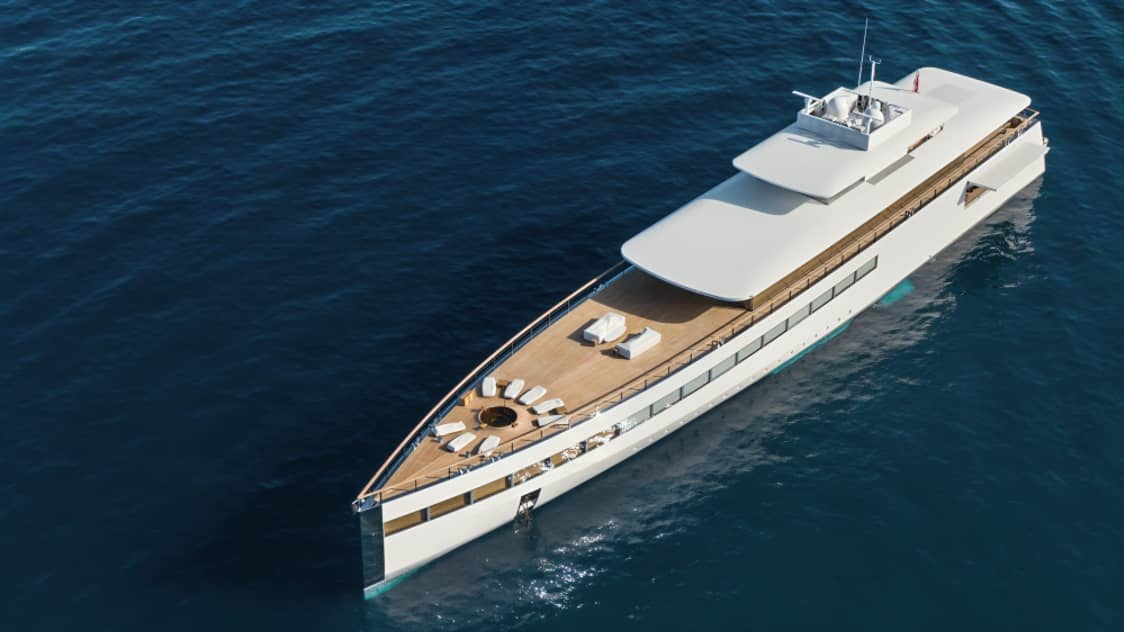
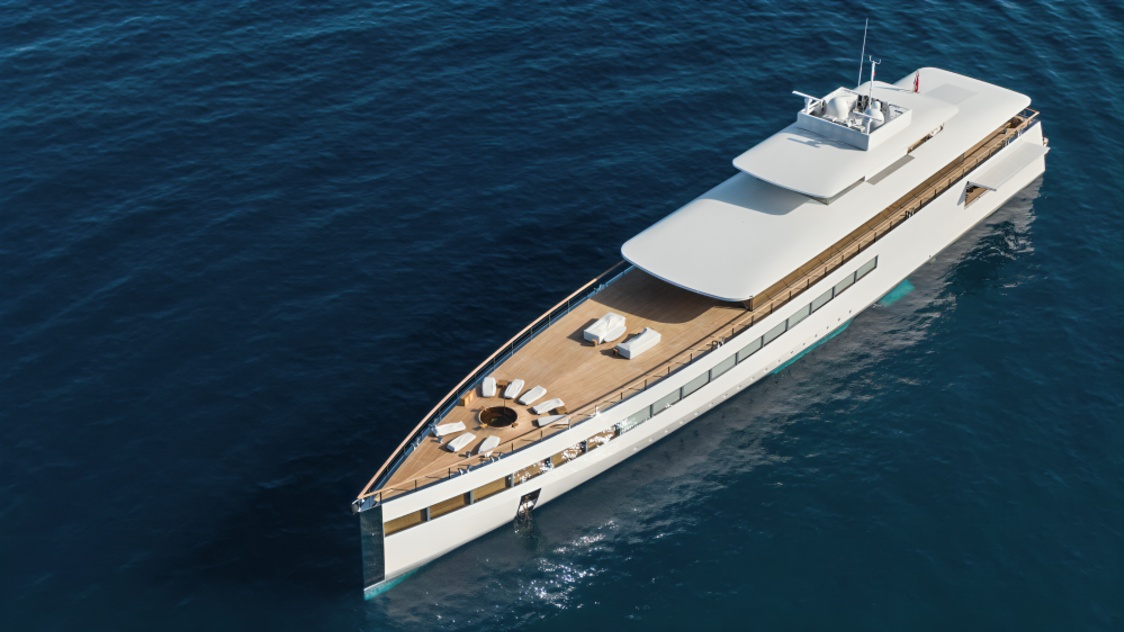
Venus was built by the Dutch yacht builder Feadship and launched in 2012, after Jobs’ death in October 2011. Feadship lists the yacht at 78.2 metres in length and credits Philippe Starck with both its exterior and interior design.
The yacht’s appearance reflects a minimalist approach. Its long, streamlined hull, broad glass surfaces and relatively uncluttered exterior give it a distinctive profile. Feadship describes Venus as a motor yacht with sleek exterior lines and extensive glazing, including large windows along the main-deck accommodation.
The vessel also incorporates technical features designed to keep visible equipment to a minimum. Feadship notes that antennas and domes are concealed within a composite casing that allows signals to pass through. This approach supports the clean exterior appearance while accommodating the equipment required for a modern yacht.
The design is notable because it applies ideas often associated with Jobs’ technology products to a very different environment. Instead of buttons, screens and electronic devices, the focus is on the yacht’s overall form, the use of glass and the relationship between interior spaces and the surrounding sea.
Philippe Starck’s account of the collaboration
Starck’s 2014 interview offered a rare public account of the project. He said he had designed the boat, while also acknowledging that Jobs had presented the yacht as a design created by the Apple co-founder himself. Starck described this as Jobs’ own interpretation of the project.
His comments raised a distinction between the person who established the vision and the designer responsible for developing the vessel’s form. Jobs was closely involved in shaping the project, while Starck said he created the design and worked with him on its details.
The interview also reinforced the private nature of their collaboration. Starck initially expressed reluctance to discuss the yacht because it had been a personal project for Jobs. His remarks therefore provided a limited but valuable account of how the two men approached the design.
The collaboration is often discussed as an example of Jobs applying his interest in design beyond Apple products. However, the yacht was a personal project, rather than an Apple product or an official company design project.
The yacht was completed after Jobs’ death
Jobs died on October 5, 2011, before Venus was finished. The yacht was subsequently launched in 2012. Reports at the time described it as one of the last major projects associated with his personal interest in design.
The vessel’s completion after his death added to public interest in the project. Jobs had been aware that he might not live to see the finished yacht, according to accounts published about the project. Nevertheless, work continued, and Venus was completed in line with the design developed by Jobs and Starck.
The yacht’s launch offered a physical expression of the minimalist aesthetic associated with Jobs. Its large windows, clean surfaces and carefully integrated equipment drew comparisons with the restrained visual language used in Apple’s retail spaces and products. These comparisons are interpretations of the design, rather than evidence that Venus was created for Apple.
Payment dispute following the launch
Venus also became the subject of a financial disagreement after its completion. In December 2012, reports said Starck claimed he was owed approximately nine million euros in fees and had received about six million euros. The disagreement led to the yacht being held in Amsterdam while the parties addressed the claim.
The dispute concerned the amount payable to Starck for his work on the project. Reports indicated that the Jobs family contested the amount claimed, with the disagreement linked to the final construction cost and the terms of the arrangement.
In January 2013, SuperyachtNews reported that a lawyer representing the Jobs family had confirmed the yacht had been released and was operational after an agreement was reached. The exact settlement terms were not publicly confirmed in that report.
The disagreement became a separate part of the yacht’s story, drawing attention to the financial arrangements behind a high-profile private design project. It did not change the fact that Feadship identifies Starck as the designer of both the exterior and interior.
Venus and Steve Jobs’ design legacy
Venus remains an unusual example of Jobs’ interest in design beyond the technology industry. Its streamlined appearance and emphasis on simplicity reflect themes commonly associated with his approach to products, although the yacht served a very different purpose from Apple’s devices.
The project also illustrates how major design work can involve several forms of contribution. Jobs helped establish the vision and participated in decisions, while Starck was responsible for the yacht’s design. Feadship built the vessel, bringing the concept into physical form.
More than a decade after its launch, Venus continues to attract attention because of its connection to Jobs and its distinctive minimalist style. Starck’s public comments helped explain the collaboration, while the yacht itself remains a visible reminder of a personal project that continued after its creator’s death.
The story of Venus is therefore not simply about a luxury boat. It is also about the relationship between an ambitious design vision, a designer’s execution and the detailed work required to turn an idea into a finished vessel.