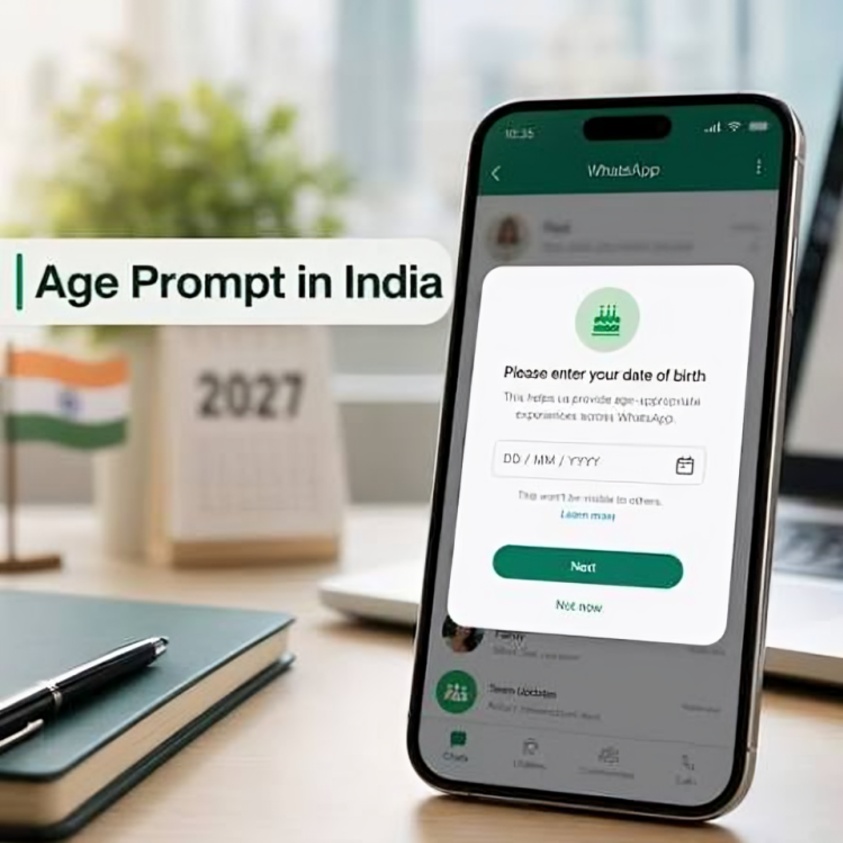
WhatsApp has reportedly started testing a new age verification system for users in India as part of its preparations for compliance with the Digital Personal Data Protection Act. The move comes ahead of the expected implementation of the country's new data protection framework, which is set to introduce stricter requirements for the handling of personal data, including information related to children and young users.
The Digital Personal Data Protection Act is designed to establish a comprehensive legal framework governing the collection, processing, storage, and protection of personal data in India. The legislation introduces several obligations for organizations that process personal information and places greater emphasis on user consent, data security, and responsible handling of children's data.
According to reports, WhatsApp is evaluating age verification measures that could help determine whether users meet the minimum age requirements for accessing the platform. While the company has not publicly disclosed the full technical details of the system, the testing is believed to be part of broader efforts to comply with future regulatory obligations.
Age verification has become an increasingly important issue for digital platforms worldwide. Governments in several countries have introduced or proposed regulations requiring online services to implement additional safeguards for minors, particularly on social media platforms and messaging applications.
The proposed system is expected to support compliance with provisions relating to children's personal data under India's data protection framework. Organizations processing the personal information of minors may be required to implement appropriate safeguards, obtain necessary permissions where applicable, and prevent unauthorized access to sensitive personal information.
WhatsApp, owned by Meta Platforms, is one of the most widely used messaging applications in India, serving hundreds of millions of users. The platform offers instant messaging, voice and video calling, group communication, document sharing, payment services in eligible regions, and business communication tools.
The Digital Personal Data Protection Act seeks to balance user privacy with responsible data processing by establishing rights for individuals and obligations for organizations handling personal information. Companies operating digital platforms are expected to review their privacy policies, consent mechanisms, data processing practices, and user verification systems to comply with the law.
Technology experts note that implementing age verification systems presents several practical challenges. Platforms must ensure that verification methods are effective while also protecting user privacy, minimizing data collection, and providing a smooth user experience. Companies are therefore exploring different technological approaches that balance regulatory compliance with privacy protection.
At present, there has been no official announcement detailing how WhatsApp's age verification system will function or whether it will be introduced for all users. The reported testing phase is expected to help the company evaluate technical performance, user experience, and operational feasibility before any wider rollout.
Industry analysts believe that other digital platforms operating in India may also introduce similar compliance measures as implementation of the Digital Personal Data Protection Act approaches. The law is expected to influence privacy practices across social media, messaging services, online marketplaces, gaming platforms, financial technology companies, and other digital service providers.
Users are advised to rely on official announcements from WhatsApp and Meta regarding any future changes to account verification or privacy features. If age verification mechanisms are formally introduced, the company is expected to publish detailed guidance explaining the process and its implications for users.
The reported testing reflects the broader transformation taking place in India's digital regulatory landscape, where data protection, online safety, and user privacy are becoming increasingly important policy priorities. As implementation of the Digital Personal Data Protection Act moves forward, technology companies are expected to continue updating their systems and policies to comply with evolving legal requirements while maintaining secure and reliable digital services for users.