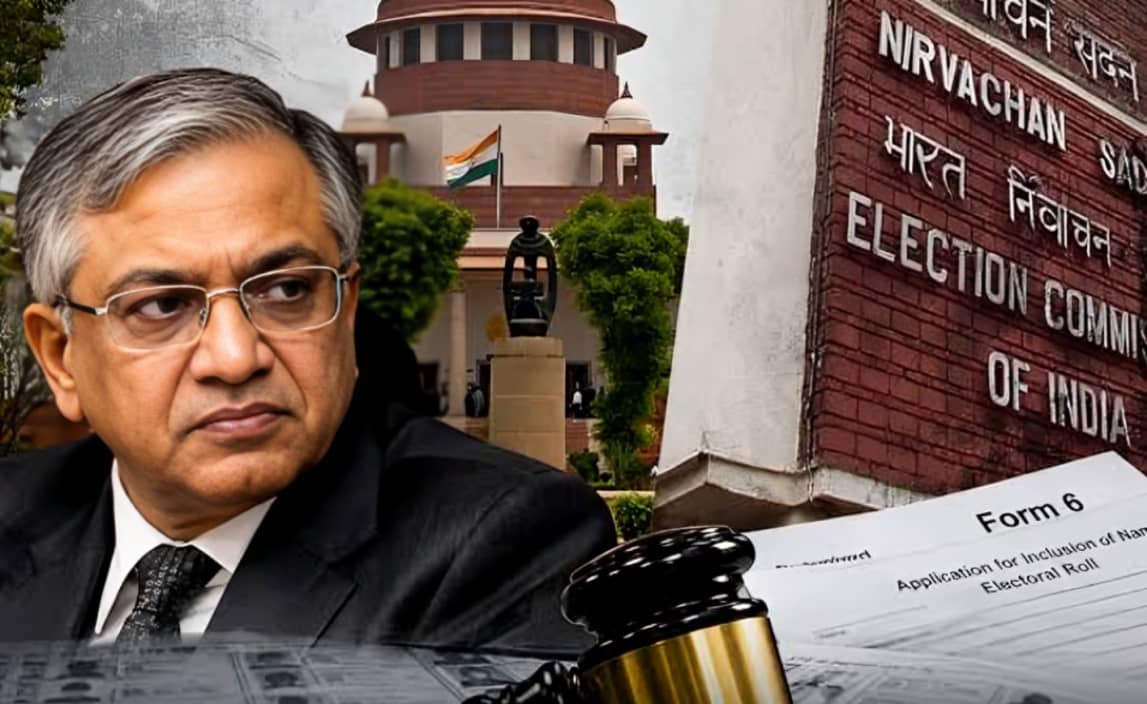
The Supreme Court has agreed to hear next week a petition seeking the suspension of Chief Election Commissioner Gyanesh Kumar amid an ongoing controversy over the functioning of the Election Commission of India and decisions connected with the Special Intensive Revision of electoral rolls.
The matter was mentioned before a Supreme Court bench headed by Chief Justice of India Surya Kant. Senior Advocate Vikas Singh sought an early listing of the petition, following which the Court agreed to take up the matter next week. The petition seeks several directions concerning the functioning of the Election Commission and challenges what the petitioner describes as the unilateral exercise of powers vested in the multi-member constitutional body.
The petition has been filed by Rakesh Kumar Singh under Article 32 of the Constitution. One of its principal requests is for an interim direction preventing Gyanesh Kumar from performing the functions of the Chief Election Commissioner while the legal issues raised in the petition are considered. The plea also seeks a declaration that decisions vested in the Election Commission cannot be taken individually by the CEC when the statutory framework requires collective decision-making.
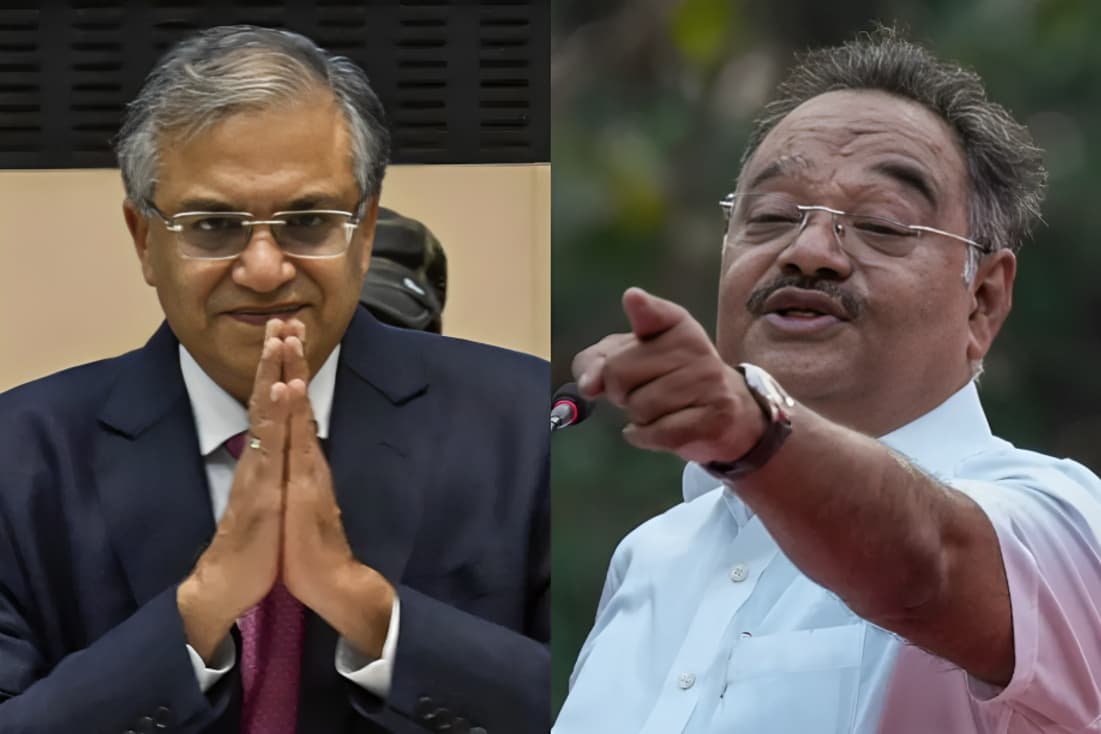
The petitioner has relied on reports concerning objections allegedly recorded by Election Commissioners Sukhbir Singh Sandhu and Vivek Joshi. According to the petition, the two Election Commissioners recorded objections on several occasions between October 2025 and August 2026 regarding decisions relating to electoral-roll procedures, voter registration, digital systems and other matters. The petitioner has asked the Supreme Court to examine the original records of the Election Commission before reaching any conclusion on the disputed actions.
A major issue raised in the petition concerns the interpretation of the Election Commission's collective decision-making process. The plea refers to Article 324 of the Constitution, which vests the superintendence, direction and control of elections in the Election Commission. It also relies on Section 18 of the Chief Election Commissioner and Other Election Commissioners Act, 2023. According to the petition, the law provides for the Commission's business to be conducted unanimously as far as possible and for differences between the commissioners to be decided according to the majority view.
The petitioner has also raised questions about changes allegedly made to Form 6, which is used in the electoral registration process. According to the plea, changes were made to the form in 2026 to seek additional information concerning an applicant's or relatives' presence in an earlier electoral roll. The petition refers to objections allegedly made by Election Commissioners regarding the legal authority for making such changes. These allegations are part of the petition and have not been adjudicated by the Supreme Court.
Another issue raised in the plea relates to the management and access of electoral-roll databases. The petition refers to alleged concerns regarding the centralisation of electoral-roll data and access to digital systems used by election authorities. It seeks preservation and production of relevant records, including server logs, audit trails, access records, file notings, correspondence and other documents that could help establish how the disputed decisions were made.
The Special Intensive Revision, or SIR, of electoral rolls has been at the centre of the wider controversy. Several political parties and groups have questioned aspects of the revision exercise, while the Election Commission has defended the process and its procedures.
The Election Commission recently stated that the SIR order and rollout schedules had received unanimous approval from the Commission. It also announced changes relating to the review of its ECINET software and eased certain hearing requirements under the revision process. The Commission said the steps were intended to improve the functioning of the electoral-roll system and facilitate the participation of voters.
The current Supreme Court petition therefore raises both legal and institutional questions about how decisions of the Election Commission should be authorised and recorded. However, the Court has not yet determined whether the allegations made in the petition are correct. The decision to list the matter for hearing next week only means that the Court has agreed to examine the plea; it does not amount to a finding against the Chief Election Commissioner.
The petitioner has sought several forms of relief, including a declaration that communications, orders, directions or other actions issued in the name of the Election Commission must be supported by a decision of the Commission in accordance with the applicable constitutional and statutory framework. The plea also seeks directions for greater documentation of agendas, minutes and authorisations relating to Commission decisions.
The petition further asks the Court to examine the primary records of the Commission to determine whether the disputed actions were undertaken according to law. This is significant because the petition itself seeks examination of the underlying records rather than asking the Court to accept every allegation as established fact.
The controversy comes amid broader political debate over the Special Intensive Revision of electoral rolls and the functioning of the Election Commission. Opposition parties and other groups have raised questions about the revision process, while the Election Commission has rejected allegations of improper decision-making and has maintained that relevant SIR decisions received the required approval.
The Supreme Court's hearing next week is expected to provide an opportunity for the petitioner to present the legal basis for the requested suspension and other directions. The Election Commission and other respondents will have an opportunity to respond to the allegations and requests made in the petition.
For now, the key development is that the Supreme Court has agreed to an early hearing of the plea. No order suspending Gyanesh Kumar has been passed, and no final finding has been made on the allegations concerning unilateral decision-making or the SIR process. The Court's forthcoming proceedings will determine how the petition and its various requests are dealt with.