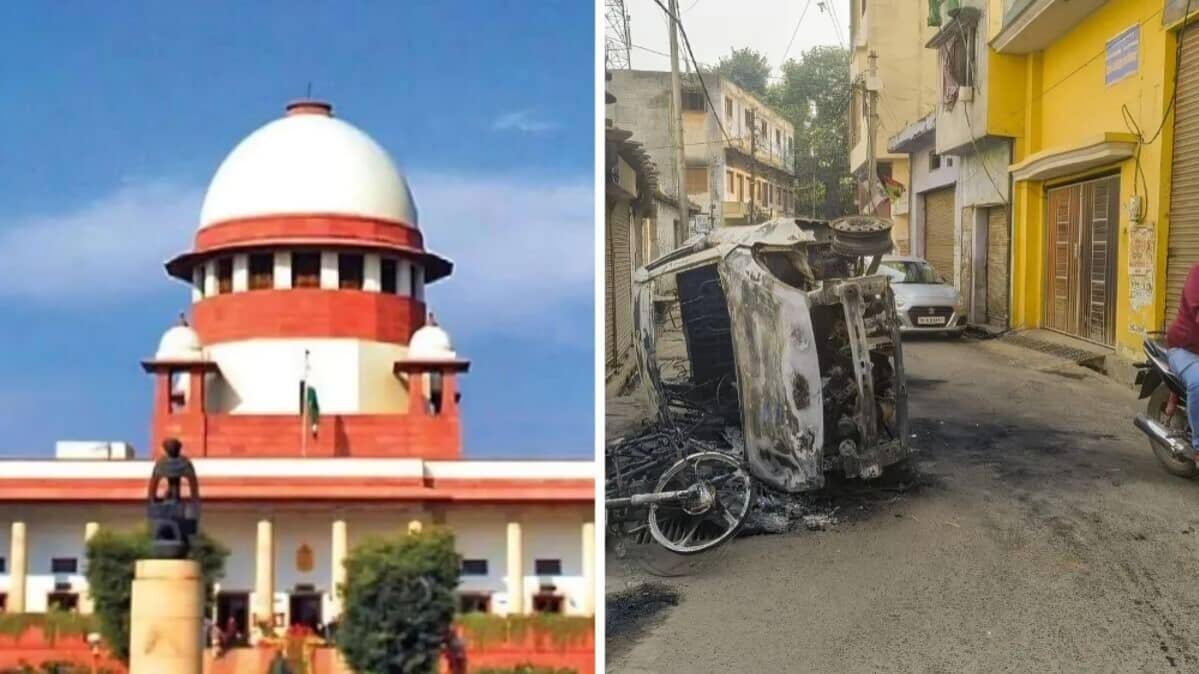
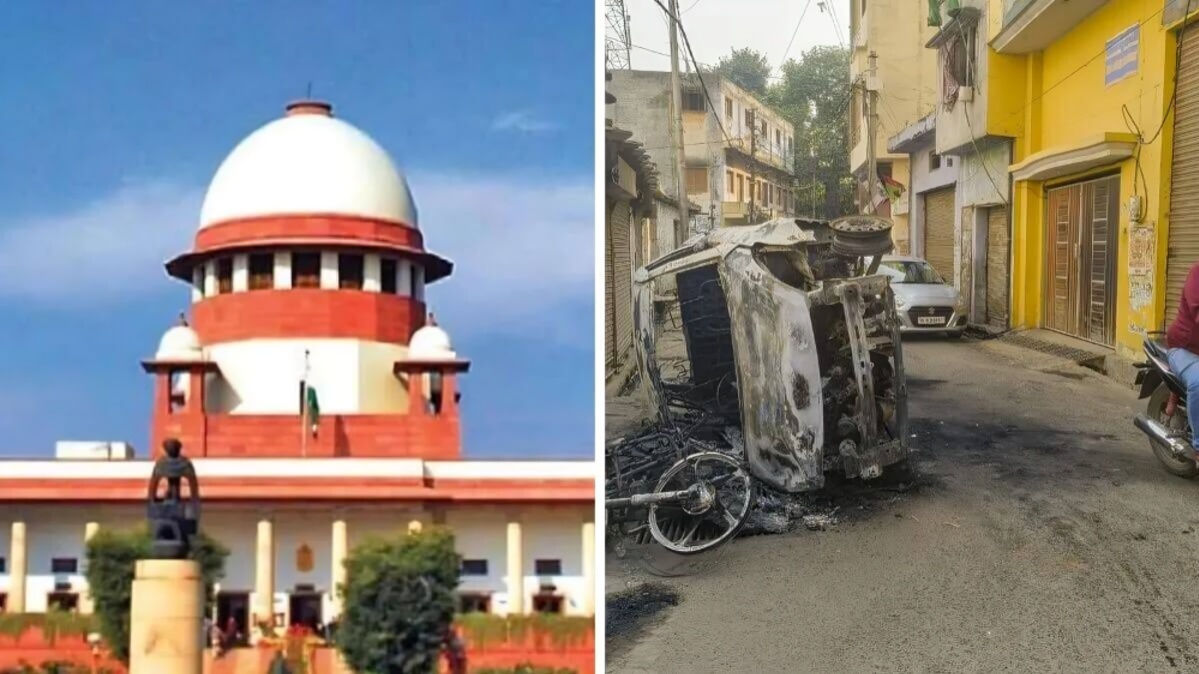
The Supreme Court has quashed the preventive detention of Mulla Afroz, an accused in the 2024 Sambhal violence case, under the National Security Act and imposed costs of Rs 10 lakh on the Uttar Pradesh government.
A bench comprising Justice Dipankar Datta and Justice Sheel Nagu pronounced the judgment on September 29, 2026. The Court also set aside the Allahabad High Court judgment that had upheld the detention order against Afroz.
The Supreme Court's decision relates specifically to the preventive detention order issued against Afroz under the National Security Act, 1980. The ruling does not amount to a final determination of his guilt or innocence in the criminal cases connected with the Sambhal violence.
The case arose from violence in Sambhal in November 2024 following a court ordered survey of the Shahi Jama Masjid. Four people were killed during the violence. Afroz was subsequently arrested in connection with cases arising from the incident and was later granted bail by the Allahabad High Court. The Uttar Pradesh administration subsequently invoked the National Security Act against him.
According to court records and reports on the Supreme Court proceedings, Afroz was arrested in January 2025 in connection with the criminal cases. The district administration later passed an NSA detention order on October 13, 2025. The detention was subsequently confirmed by the state government.
The Supreme Court examined whether the material relied upon by the detaining authority was legally sufficient to justify preventive detention. One of the important issues before the Court was an alleged confession or statement attributed to Afroz while he was in police custody.
The Court held that an alleged confessional statement cannot by itself be treated as the sole basis for preventive detention. The bench said the surrounding circumstances and other relevant material must also be examined before a detention order can be sustained.
The Court found that the detaining authority had failed to properly consider appropriate material while passing the detention order. It therefore concluded that the preventive detention power had been exercised illegally in the circumstances of the case.
The Supreme Court accordingly allowed Afroz's appeal and quashed the detention order. It also set aside the confirmation of the detention order and the Allahabad High Court judgment that had upheld the preventive detention. The Court additionally imposed costs of Rs 10 lakh on the State of Uttar Pradesh.
The National Security Act allows preventive detention in circumstances covered by the legislation, including situations in which authorities consider detention necessary to prevent conduct prejudicial to public order or other specified national-security-related interests. Preventive detention is different from imprisonment following a criminal conviction because it is intended to prevent anticipated conduct rather than punish a person after a finding of guilt.
In Afroz's case, the Uttar Pradesh authorities had argued that his release could create a possibility of renewed disturbances and affect public order. The administration maintained that preventive detention was necessary in view of the circumstances surrounding the Sambhal violence.
The Supreme Court, however, examined whether the statutory requirements for preventive detention had been satisfied in the particular case. The Court's ruling focused on the material relied upon by the detaining authority and the legality of using the alleged custodial confession as the basis for the detention.
Reports on the judgment said the Court specifically questioned whether a statement made while an accused was in police custody could provide the foundation for a preventive detention order. The Court ultimately held that such a confession could not independently justify detention without consideration of the surrounding circumstances and other relevant material.
The case also highlights the distinction between a criminal prosecution and preventive detention. A person facing criminal charges may be required to stand trial based on the evidence collected by investigating agencies. Preventive detention, on the other hand, involves a separate legal framework and requires the detaining authority to satisfy the statutory conditions prescribed under the NSA.
The Supreme Court's ruling therefore concerns the legality of the NSA detention order rather than automatically ending the criminal proceedings relating to the Sambhal violence. The criminal cases and the preventive detention proceedings are legally distinct matters.
Afroz had earlier approached the Allahabad High Court challenging the detention. The High Court had upheld the detention order. He then approached the Supreme Court challenging the High Court decision and the preventive detention imposed by the Uttar Pradesh administration.
The Supreme Court's judgment has now overturned the High Court's decision and cancelled the detention order. The Court also directed that the Uttar Pradesh government bear costs of Rs 10 lakh in connection with the illegal detention order.
The Sambhal violence took place on November 24, 2024, during a period of tension surrounding the court ordered survey of the Shahi Jama Masjid. The incident resulted in four deaths and led to several criminal cases and arrests.
The violence and its aftermath have remained the subject of legal proceedings and political debate. Various allegations have been made concerning the events, the police investigation and the actions of the authorities. Such allegations remain separate from the Supreme Court's determination regarding the validity of Afroz's preventive detention.
The Supreme Court's latest order is significant because it places emphasis on the legal safeguards applicable to preventive detention. The ruling makes clear that an alleged custodial confession, by itself, cannot serve as the sole foundation for an NSA detention order. Authorities must consider the relevant surrounding circumstances and appropriate material before exercising preventive detention powers.
The Court also criticised the manner in which the detention power was exercised in this particular case and imposed financial costs on the Uttar Pradesh government. The order consequently provides judicial scrutiny of the preventive detention process while leaving the separate criminal proceedings to be dealt with under the applicable law.
For Afroz, the judgment removes the NSA detention order that had kept him in preventive custody. However, the Supreme Court's ruling should not be interpreted as an acquittal in the criminal cases connected with the Sambhal violence. The allegations arising from those cases remain subject to the criminal justice process.
The judgment also reinforces the distinction between preventive detention and ordinary criminal prosecution. While preventive detention is based on the statutory power to prevent anticipated threats to public order, criminal prosecution requires the prosecution to establish the accused person's guilt through the judicial process.
The Supreme Court's decision on September 29 is therefore centred on whether the Uttar Pradesh administration legally exercised its preventive detention powers against Afroz. The Court concluded that the detention order could not stand and imposed Rs 10 lakh in costs on the state government.