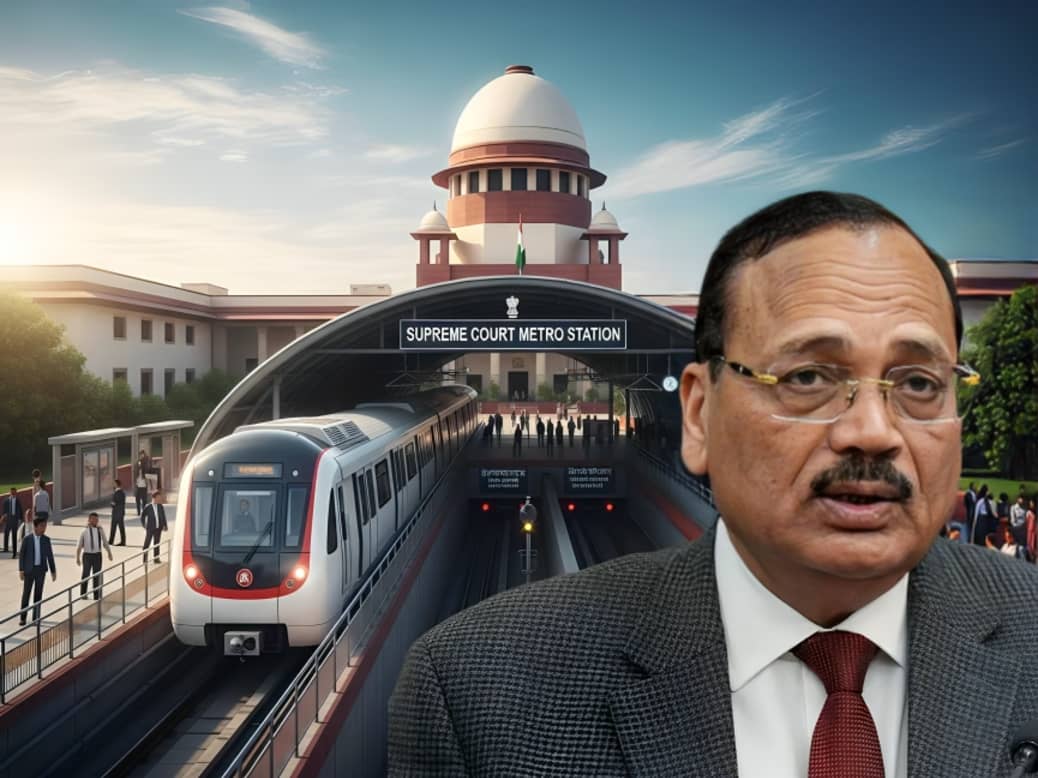

Chief Justice of India Surya Kant has assured that the Supreme Court will intervene if the temporary closure of Delhi Metro stations affecting access to the Supreme Court is not resolved within a reasonable time. The observation came during court proceedings after concerns were raised about the difficulties faced by lawyers, litigants, and members of the public in reaching the court premises.
The issue arose following the temporary closure of certain Delhi Metro stations due to security arrangements and public demonstrations in parts of the national capital. The restrictions affected the daily commute of legal professionals and individuals scheduled to attend hearings before the Supreme Court.
While hearing the matter, Chief Justice Surya Kant stated that if the issue remained unresolved by lunchtime, the court would consider taking appropriate steps to ensure that access to the Supreme Court was restored without unnecessary delay. He emphasized the importance of ensuring that the functioning of the judicial system is not adversely affected by transportation disruptions.
The Chief Justice also addressed concerns regarding lawyers who were unable to appear before the court because of the travel restrictions. He directed that advocates who could not attend proceedings due to circumstances beyond their control should not be subjected to adverse judicial orders or procedural disadvantages.
The court observed that access to justice is a fundamental aspect of the judicial process and that practical challenges preventing legal professionals or litigants from reaching the court deserve careful consideration. Ensuring that parties have a fair opportunity to participate in legal proceedings remains an important principle of the justice system.
The temporary closure of Metro stations was implemented as part of security measures in response to demonstrations and public gatherings in the national capital. Authorities introduced traffic and transport restrictions in several areas to maintain public order and ensure safety. These measures, however, also affected regular commuters, including those travelling to courts and government offices.
Legal practitioners expressed concerns that unexpected transport disruptions could delay scheduled hearings and create inconvenience for litigants whose cases were listed before the Supreme Court. The Chief Justice's observations were aimed at ensuring that individuals were not unfairly affected by circumstances outside their control.
The Delhi Metro serves as one of the primary modes of transportation for thousands of lawyers, court staff, litigants, and visitors travelling to the Supreme Court and other judicial institutions in the capital. Any interruption in Metro services or station access can significantly impact the functioning of the legal system, particularly on days with a large number of listed matters.
The Supreme Court has consistently emphasized the need to ensure uninterrupted access to judicial institutions while balancing security requirements and public safety. Court proceedings continued as scheduled, with the judiciary monitoring developments related to transport access.
Authorities are expected to review the situation and restore normal access as soon as security conditions permit. Meanwhile, the Supreme Court has indicated that it will continue to monitor the issue closely and take appropriate measures if necessary to safeguard access to justice and ensure that court proceedings are conducted without unnecessary disruption.