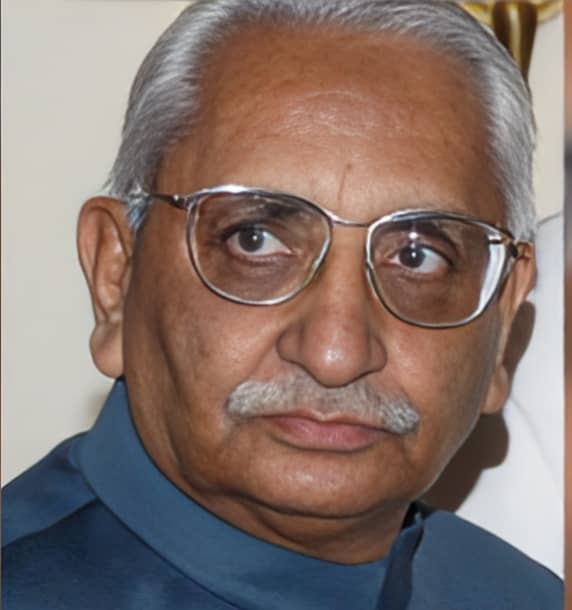

Justice Manmohan Singh Liberhan, a distinguished jurist and former Chief Justice of the Madras and Andhra Pradesh High Courts, passed away in Chandigarh on Sunday at the age of 87. His death was confirmed by Rohit Sud, President of the Punjab and Haryana High Court Bar Association. His last rites are scheduled to be held on Monday.
Justice Liberhan is widely remembered for heading the one member Liberhan Commission, which was constituted to investigate the circumstances leading to the demolition of the Babri Masjid in Ayodhya on December 6, 1992. The commission became one of the longest running judicial inquiries in India's history and submitted its report after an extensive examination of evidence, witness testimonies, and official records.
Born in Punjab, Justice Liberhan began his legal career in 1964 when he started practising at the Punjab and Haryana High Court. During his early years in the legal profession, he built a reputation for his knowledge of constitutional and civil law while actively participating in the legal community.
In August 1970, he was elected to the Punjab and Haryana Bar Council. He remained a member of the council until February 1987 and also served as its Secretary from January 1976 to June 1983. During his tenure, he contributed to the administration of the legal profession and worked on matters related to the welfare of advocates and improvements in the justice delivery system.
Justice Liberhan was elevated as a Judge of the Punjab and Haryana High Court on February 11, 1987. Over the following years, he handled a wide range of civil, constitutional, administrative, and public interest matters. His judgments reflected a strong commitment to the rule of law and judicial independence.
In July 1997, he was appointed Chief Justice of the Madras High Court. His tenure in Chennai was followed by his appointment as Chief Justice of the Andhra Pradesh High Court in February 1998. In both roles, he was associated with judicial reforms, court administration, and efforts to improve the efficiency of the judicial system.
Justice Liberhan gained nationwide recognition in December 1992 when the Government of India appointed him to head the inquiry commission into the demolition of the Babri Masjid. The commission was tasked with examining the events leading to the demolition and identifying the circumstances and individuals connected with the incident.
The Liberhan Commission conducted its investigation over several years, examining hundreds of witnesses and reviewing a large volume of documentary evidence. The commission eventually submitted its report to the Government of India in 2009. Its findings generated significant public and political discussion because of the historical importance of the Babri Masjid demolition and its impact on Indian politics and society.
Throughout his judicial career, Justice Liberhan was regarded as a disciplined and experienced judge who handled several important constitutional and administrative responsibilities. Members of the legal fraternity have described him as a respected jurist who made significant contributions to India's judicial system.
Following the news of his passing, members of the legal community, former judges, lawyers, and public figures expressed condolences and paid tribute to his decades of service to the judiciary. The Punjab and Haryana High Court Bar Association also remembered his contributions to the legal profession and acknowledged his role in strengthening judicial institutions.
Justice Manmohan Singh Liberhan leaves behind a lasting legacy through his work as a lawyer, judge, Chief Justice, and head of one of the country's most prominent judicial inquiry commissions. His contributions to the Indian legal system continue to be recognised by the judiciary and the legal community.