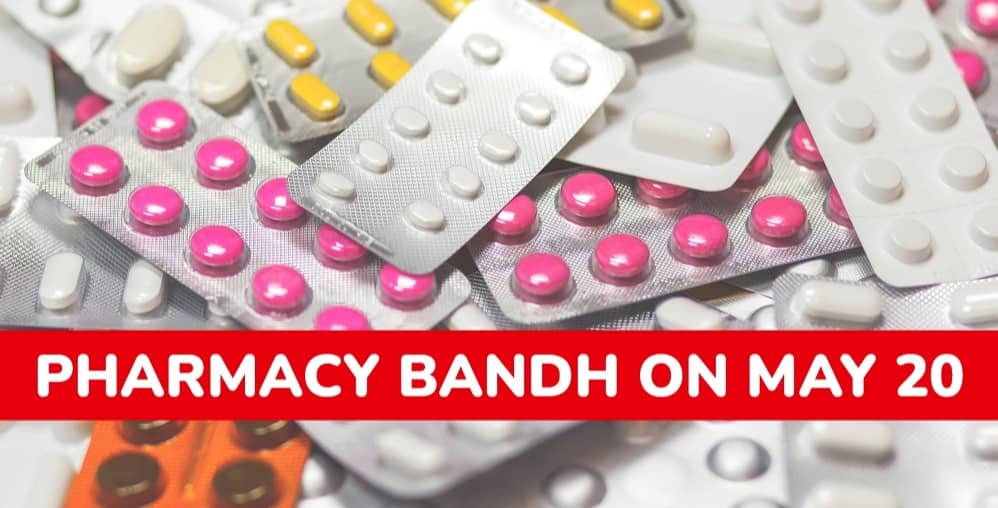

Patients in different parts of India may face temporary disruption in purchasing medicines on May 20 as more than 12.4 lakh chemists are expected to participate in a nationwide shutdown called by the All India Organisation of Chemists and Druggists. The protest has been organised against online medicine sales and deep discount practices followed by several e pharmacy platforms.
According to the association, the shutdown aims to highlight concerns related to patient safety, medicine regulation, and the impact of online pharmacy businesses on traditional medical stores. The organisation stated that many online platforms are allegedly supplying medicines without proper verification of prescriptions, which may create risks for public health.
The All India Organisation of Chemists and Druggists has raised concerns regarding repeated use of prescriptions, uncontrolled sale of antibiotics, and easy access to habit forming medicines through online channels. The association also warned that the misuse of artificial intelligence tools to create fake prescriptions could increase the risk of unsafe medicine distribution.
Healthcare experts have repeatedly emphasised the importance of prescription verification while dispensing medicines, especially antibiotics and controlled drugs. Improper use of antibiotics can contribute to antimicrobial resistance, commonly known as AMR, which is considered a growing global public health challenge.
Antimicrobial resistance occurs when bacteria and other microorganisms become resistant to medicines that are commonly used to treat infections. Medical experts say misuse and overuse of antibiotics are among the major reasons behind increasing resistance levels worldwide.
The association stated that the protest is not only related to business competition but also concerns about patient safety and healthcare regulation. Traditional chemists argue that licensed physical pharmacies follow stricter verification processes while dispensing medicines to patients.
Industry representatives claim that unregulated online medicine sales may encourage self medication and repeated purchase of prescription drugs without medical supervision. Such practices can increase health risks and lead to misuse of medicines.
The nationwide shutdown may affect routine medicine purchases in many cities and towns, especially for patients who rely on local medical stores for daily medicines and healthcare products. However, emergency medical services and hospital pharmacies may continue operations in several areas depending on local arrangements.
The issue of regulating online pharmacy businesses has remained under discussion in India for several years. Authorities have been examining rules related to digital healthcare services, online medicine sales, and prescription validation systems to ensure patient safety and fair business practices.
Supporters of e pharmacy platforms argue that online medicine delivery services improve accessibility, convenience, and price transparency for consumers, particularly in remote regions. They also state that technology based healthcare services are becoming increasingly important in modern medical systems.
At the same time, traditional pharmacy associations believe stronger regulatory mechanisms are required to prevent misuse of medicines and ensure responsible distribution practices. They have demanded stricter monitoring of online medicine platforms and enforcement of existing healthcare regulations.
Healthcare policy experts note that balancing technological innovation with patient safety remains an important challenge for regulators worldwide. As digital healthcare services continue to expand, governments and healthcare authorities are expected to focus more on monitoring systems, prescription validation, and responsible medicine distribution.
Overall, the planned nationwide chemists shutdown reflects growing concerns regarding online medicine sales, healthcare regulation, and patient safety. The protest is expected to bring further attention to the ongoing debate surrounding e pharmacy operations and medicine distribution policies in India.