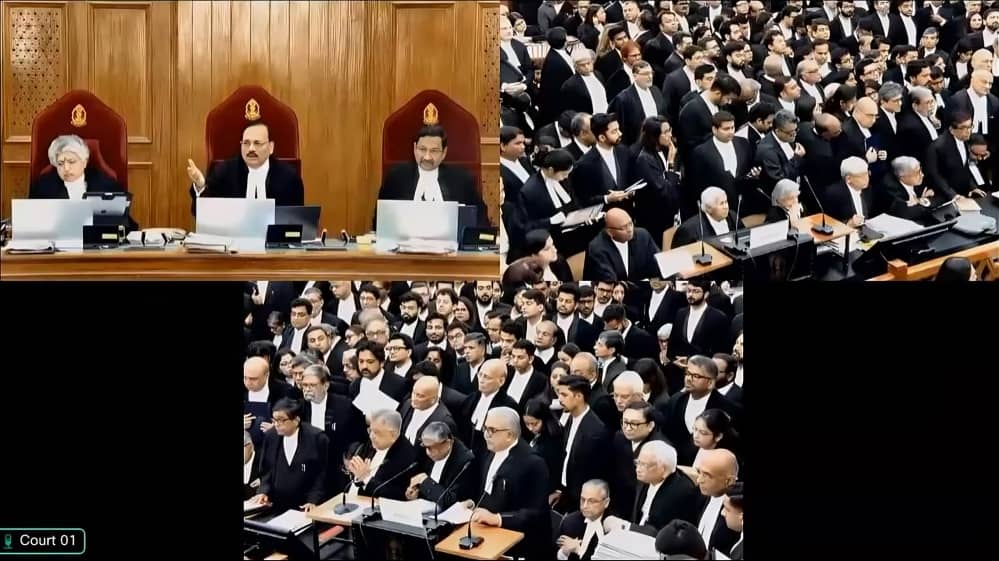
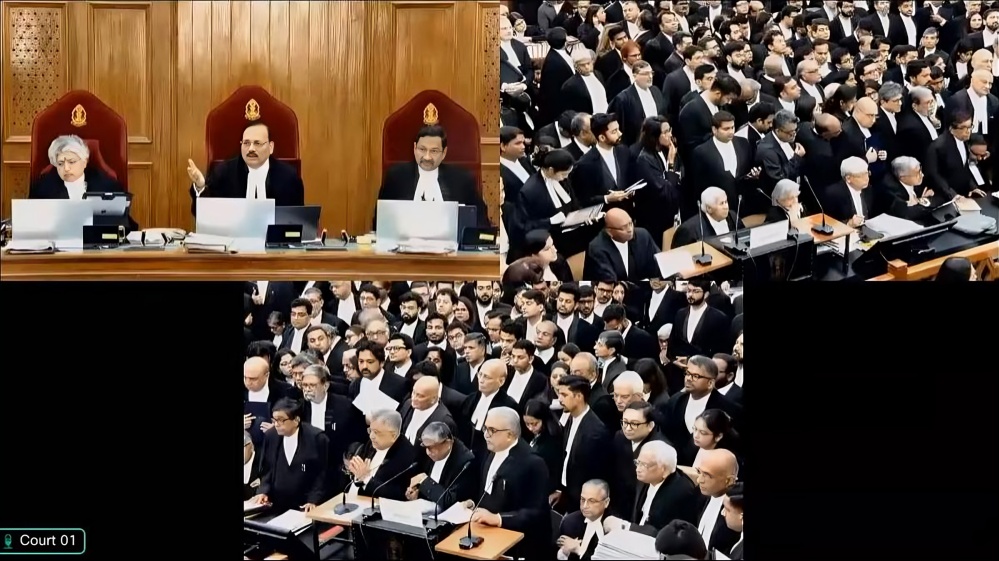
The Supreme Court on Thursday expressed serious concerns regarding the growing trend of individuals directly challenging religious practices and customs before constitutional courts. The observations were made by a Constitution Bench during a hearing involving the relationship between individual fundamental rights and religious traditions protected under the Constitution.
The bench, headed by Chief Justice Surya Kant and comprising Justices B V Nagarathna, M M Sundresh, A Amanullah, Aravind Kumar, A G Masih, P B Varale, R Mahadevan, and Joymalya Bagchi, discussed the broader implications of allowing unrestricted legal challenges to religious customs.
During the proceedings, senior advocate Raju Ramachandran argued that constitutional courts have a responsibility to intervene if any religious practice or custom violates the fundamental rights of an individual. He emphasized that the Constitution places significant importance on protecting individual freedoms and equality.
Responding to the argument, members of the bench raised concerns about the possible consequences of permitting every individual to approach constitutional courts seeking the removal or invalidation of religious customs based on personal interpretation. The judges observed that such a situation could result in a large number of public interest litigations challenging various long-standing practices across religions.
Justice B V Nagarathna remarked that religion has historically played an important role in shaping Indian civilization and society. The court noted that unrestricted challenges to religious customs could create complex constitutional and social issues affecting the balance between individual rights and collective religious traditions.
The bench observed that constitutional courts must exercise caution while dealing with matters involving religion, customs, and social traditions. According to the judges, courts are often required to strike a balance between safeguarding constitutional rights and respecting religious freedoms guaranteed under the Constitution.
Legal experts say the discussion reflects the continuing debate within Indian constitutional law regarding the extent to which courts should examine and intervene in religious practices. Over the years, several important cases involving temple entry, gender equality, religious rituals, and personal laws have come before the judiciary.
The Constitution of India guarantees both fundamental rights and freedom of religion. Courts have frequently been required to interpret these provisions in situations where individual rights and religious customs appear to conflict. Legal scholars note that such cases often involve sensitive constitutional questions related to social reform, equality, and religious autonomy.
The Supreme Court’s remarks during the hearing have generated discussion among legal experts, constitutional scholars, and religious organizations. Some legal analysts believe the court is attempting to define clear limits regarding judicial intervention in matters of faith, while others say constitutional courts must continue protecting individuals from discriminatory practices if rights violations are established.
The matter remains under consideration before the Constitution Bench, and no final ruling has been delivered yet. The observations made during the hearing do not amount to a final judgment but indicate the court’s concerns regarding the wider constitutional impact of such cases.
Observers say the outcome of the proceedings could influence future legal challenges involving religion and constitutional rights in India. The case is expected to continue with further arguments from different parties before the Supreme Court delivers its decision.