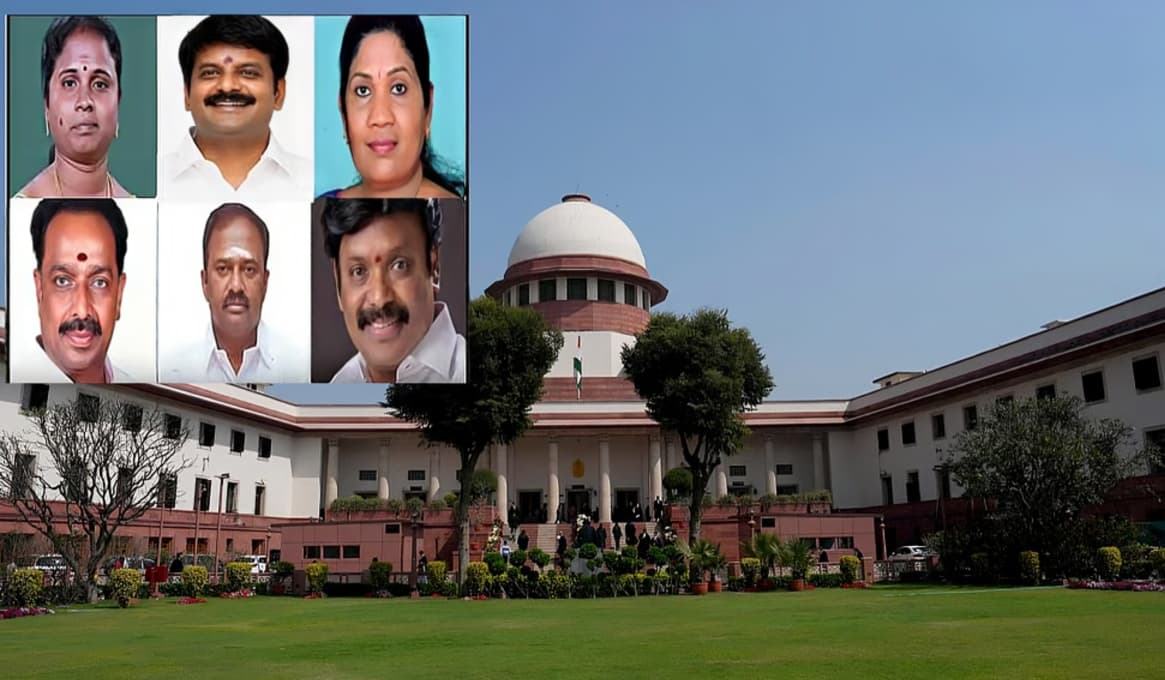
Supreme Court Rejects Plea Against Six Former AIADMK MLAs Who Joined TVK
The Supreme Court of India on Monday dismissed a petition challenging the resignations of six former All India Anna Dravida Munnetra Kazhagam legislators who later joined the ruling Tamilaga Vettri Kazhagam in Tamil Nadu. The court declined to interfere with the Madras High Court's decision, observing that the movement of elected representatives between political positions forms part of the political process.
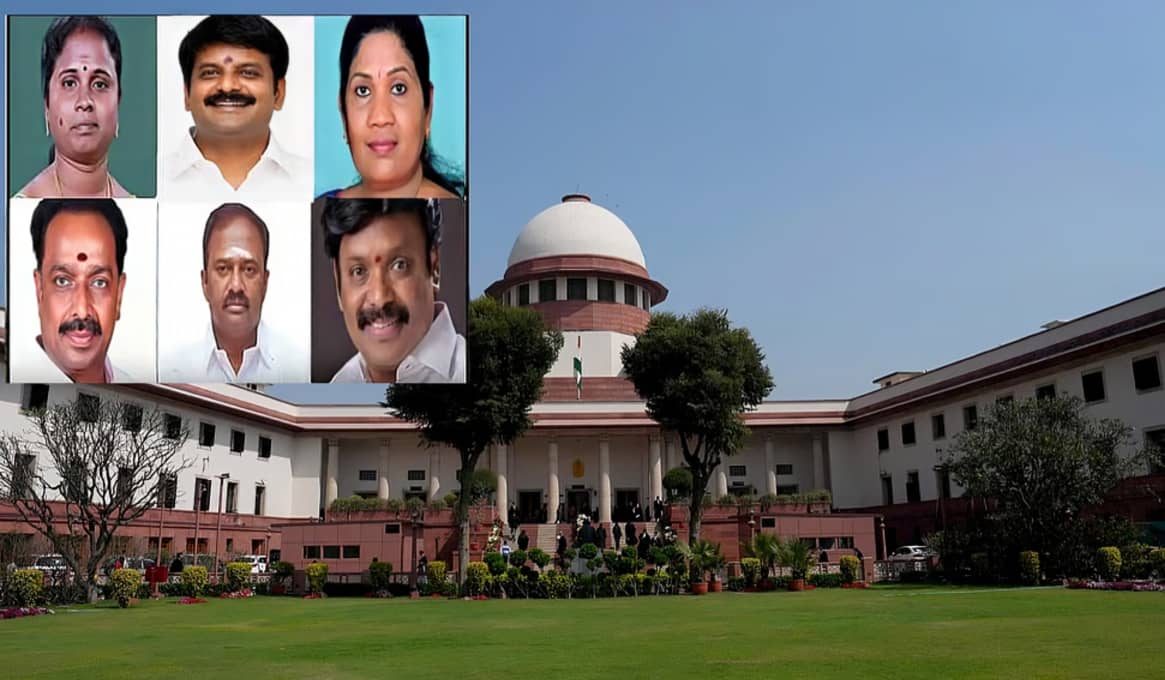
The case relates to six legislators who were elected to the Tamil Nadu Assembly on AIADMK tickets and subsequently resigned from their seats before joining TVK, led by Tamil Nadu Chief Minister C Joseph Vijay. Their resignations followed a vote in which they went against the AIADMK party whip.
A three judge bench comprising Chief Justice Surya Kant and Justices Joymalya Bagchi and V Mohana heard the matter. The petition challenged an earlier Madras High Court order and sought judicial intervention over the circumstances surrounding the legislators' resignations and political realignment.
During the hearing, the bench declined to grant the relief sought by the petitioner. The judges observed that a legislator resigning from an elected position and subsequently taking up a political role was part of the political process. The Supreme Court therefore refused to interfere with the High Court's decision.
Petition Raised Questions About Resignations and Disqualification
The petition raised concerns about elected representatives resigning after voting against their party's instructions and then joining another political party. The petitioner argued that such actions could undermine the purpose of the anti defection framework and sought measures to address the consequences of voluntary resignations.
The legal dispute also involved a request for an election expenditure security mechanism. Under the proposal, legislators who voluntarily resigned and later contested by elections would have been required to deposit an amount equivalent to the public expenditure incurred in conducting those elections. The petition also sought disqualification related relief against the former legislators.
The Madras High Court had earlier rejected the public interest litigation seeking such measures. It observed that a legislator's right to resign from an Assembly seat forms part of the constitutional framework and that additional conditions cannot be imposed without a legal basis.
The Supreme Court's latest decision leaves the High Court's rejection of the petition undisturbed. It should not, however, be interpreted as a blanket ruling that all questions relating to resignation or disqualification are automatically settled.
FIR to Be Investigated by Appropriate Authorities
During the Supreme Court hearing, the issue of a First Information Report connected with allegations surrounding the legislators' political crossover was also mentioned. Justice Joymalya Bagchi indicated that the FIR should be investigated and that the law should take its course.
The observation means that the allegations should be dealt with through the appropriate investigative and legal process. It does not amount to a finding that the allegations are proven. Any criminal allegations must be assessed by the competent authorities on the available evidence and in accordance with the law.
The Supreme Court's refusal to interfere with the petition and its observation regarding the FIR concern distinct matters. Dismissing the plea does not itself establish the truth or otherwise of allegations mentioned in the FIR.
Political Developments in Tamil Nadu
The case comes amid political realignments in Tamil Nadu following the 2026 Assembly elections. The six former AIADMK legislators resigned from their Assembly seats at different times and subsequently joined TVK. Their decisions triggered legal questions about party discipline, the anti defection framework, and the constitutional position of legislators who voluntarily resign.
The Madras High Court had previously upheld the Assembly Speaker's acceptance of the resignations. In a related matter, the High Court also directed the Speaker to conclude pending disqualification proceedings involving four of the legislators within two months. Resignation and disqualification are separate constitutional processes, and the status of any pending proceedings must be understood in light of the relevant court orders.
The Supreme Court's decision on Monday represents a setback for the petition challenging the earlier High Court order. The court declined to provide the requested intervention, while leaving the investigation of the FIR to the appropriate authorities.
The development is likely to remain significant in Tamil Nadu's political and legal discussions, particularly in debates over party whips, voluntary resignations, disqualification proceedings and the public cost of by elections. The final outcome of any separate investigation or pending disqualification proceedings will depend on the decisions of the competent authorities and the applicable legal process.