Supreme Court Reserves Order on ED Plea in I PAC Search Case
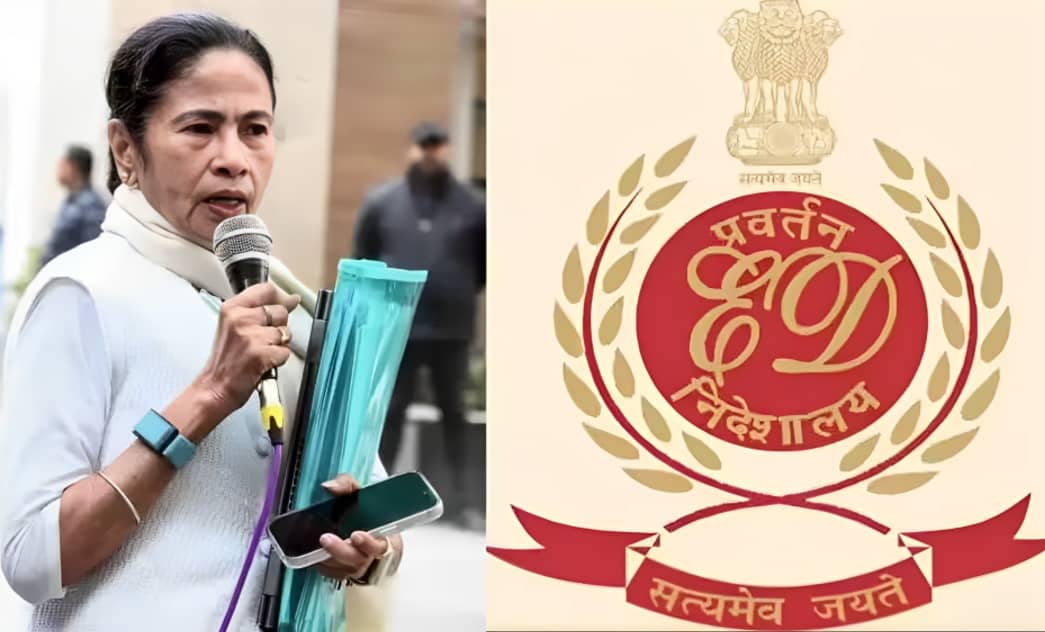
The Supreme Court of India has reserved its order on a petition filed by the Enforcement Directorate seeking a Central Bureau of Investigation probe into the alleged obstruction of searches conducted at the Kolkata office of political consultancy firm Indian Political Action Committee, widely known as I PAC.
The petition seeks the registration of a First Information Report and an investigation into the alleged role of former West Bengal Chief Minister Mamata Banerjee and certain police officials during the search operation. The dispute concerns events that took place on January 8, 2026, when ED officials were conducting searches connected to a money laundering investigation linked to an alleged coal smuggling case.
A bench comprising Justice Prashant Kumar Mishra and Justice N V Anjaria reserved its order on October 29, 2026. The central question before the court is whether the investigation should be referred to the CBI through a judicial direction or whether the newly elected West Bengal government should decide how the matter proceeds.
The court has not yet announced its final decision on this issue.
Background of the I PAC Search Dispute
The dispute began when the Enforcement Directorate conducted searches at premises associated with I PAC in Kolkata as part of its investigation into alleged money laundering connected to a coal smuggling case.
I PAC is a political consultancy organisation that has worked with the All India Trinamool Congress on political and election-related activities.
According to the ED, its officials faced obstruction while carrying out the search operation. The agency alleged that Mamata Banerjee and certain state police officials interfered with the proceedings and that documents and electronic materials were removed from the premises.
The ED has argued that the alleged interference affected its ability to carry out its investigation and that the matter requires an independent inquiry.
Banerjee and the West Bengal authorities have disputed the allegations. Her side has maintained that the visit was connected to the retrieval of confidential party-related material and has challenged the ED's account of the events.
The allegations remain part of the legal dispute and should not be treated as established findings of guilt.
Why the ED Wants a CBI Investigation
The Enforcement Directorate has asked the Supreme Court to direct the registration of an FIR and transfer the investigation to the CBI. The agency has argued that an independent central investigation would help ensure fairness and address concerns about possible influence over the inquiry.
The petition includes allegations against Banerjee and certain police officials who were in office at the time of the incident. The ED has also raised concerns about whether a state-level investigation would be sufficiently independent when officials from the state police are among those facing allegations.
During the proceedings, the agency's representatives argued that the matter should be decided by the Supreme Court to avoid further disputes over the impartiality of any investigation.
The court's decision will determine whether it issues directions concerning the CBI or leaves the matter to the state government to handle through the available legal process.
Mamata Banerjee's Side Points to the Change in Government
During the latest hearing, senior advocate Kapil Sibal, representing Mamata Banerjee, argued that the political situation in West Bengal had changed since the original petition was filed.
Banerjee is no longer the chief minister, and the state now has a government led by a different political party. Her counsel argued that the state government could decide whether to refer the matter to the CBI without requiring a separate direction from the Supreme Court.
According to this argument, the circumstances that prompted the ED to approach the Supreme Court have changed. The state government could consider the matter under the applicable legal framework, making it unnecessary for the court to issue a separate order at this stage.
The argument focused on whether the change in government had removed the concern that originally prompted the request for judicial intervention.
However, the ED maintained that the involvement of senior police officials and the allegations concerning the search operation made an independent investigation important.
Concerns About an Independent and Fair Investigation
The ED has argued that leaving the matter entirely to the state government could lead to further questions about the independence of the investigation. Its representatives also raised concerns about the position of police officials who are named in the proceedings.
The legal dispute therefore involves broader questions about the relationship between central investigative agencies and state authorities.
Central agencies such as the ED operate under laws that give them powers to investigate specific offences, including money laundering. State police forces have separate responsibilities for investigating offences under applicable laws. Disputes can arise when the actions of one agency are challenged by another authority.
The Supreme Court is considering the appropriate legal course in this particular case. Its decision could clarify how the investigation should proceed, but the court's order on the present petition should not be confused with a final finding on the underlying allegations.
Earlier Supreme Court Proceedings
The case has been before the Supreme Court since January 2026. During earlier proceedings, the court issued notices to the concerned parties and directed the preservation of CCTV footage and other electronic records connected with the search operation.
The court also stayed further proceedings in FIRs registered by the West Bengal Police against ED officials in connection with the incident.
These interim measures were intended to preserve the relevant records and maintain the position while the legal issues were being examined. They do not, by themselves, establish whether any individual committed an offence.
The proceedings have involved arguments from the ED, Banerjee's counsel and representatives of the state authorities. Each side has presented its position regarding the search operation and the appropriate method of investigation.
What Happens Next
With the order reserved, the Supreme Court will issue its decision at a later date. Until then, the question of whether the matter should be referred to the CBI or left to the state government remains unresolved.
If the court directs a CBI investigation, the agency's role and the scope of the inquiry will depend on the terms of the order. If the court leaves the issue to the state government, the matter will proceed according to the applicable legal procedures and any relevant directions.
The case has attracted attention because it involves allegations concerning a former chief minister, senior police officials and the conduct of a central investigative agency.
The next significant development will be the Supreme Court's order. Until the decision is delivered and the allegations are examined through the appropriate process, the claims made by the parties must be treated as allegations rather than proven facts.