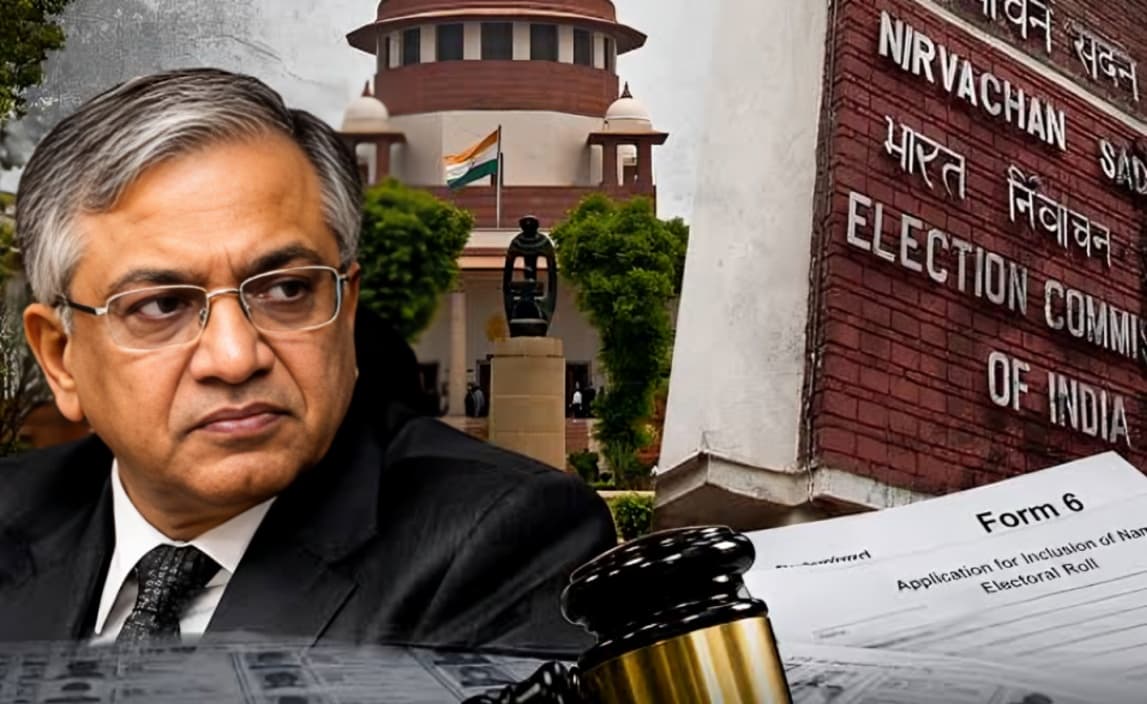
The Supreme Court of India has ruled that questions relating to citizenship and foreigner status must be decided through a fair, lawful and reasonable process. In a significant judgment delivered on Monday, the apex court set aside the Gauhati High Court's earlier decisions that had upheld the declaration of 27 individuals as foreigners.
The judgment was delivered by a Bench comprising Justice Vikram Nath and Justice Sandeep Mehta. The court allowed the appeals filed by the 27 appellants and directed that their cases be reconsidered by the respective Foreigners Tribunals through a fresh adjudication process.
The Supreme Court observed that matters concerning citizenship involve fundamental constitutional rights and therefore require strict adherence to the principles of natural justice and procedural fairness. The Bench emphasized that decisions affecting an individual's citizenship status cannot be made without ensuring that the legal process is transparent, fair and in accordance with the law.
According to the court, citizenship and foreigner status occupy an area of high constitutional and legal importance because such determinations directly affect an individual's legal identity, civil rights and access to constitutional protections. Therefore, authorities handling such cases must carefully examine all relevant evidence before arriving at a conclusion.
While setting aside the Gauhati High Court's judgments, the Supreme Court clarified that it had not expressed any opinion on the merits of the claims made by the appellants. Instead, the court focused on ensuring that the cases receive proper consideration through a legally valid procedure before the competent Foreigners Tribunals.
The Bench directed the concerned tribunals to conduct fresh hearings by providing adequate opportunities to all parties to present their evidence and arguments. The tribunals have been instructed to decide the cases independently and strictly in accordance with applicable laws and judicial principles.
Foreigners Tribunals are quasi-judicial bodies that examine cases relating to citizenship and determine whether a person is an Indian citizen or a foreign national under the relevant legal framework. Their decisions can be challenged before constitutional courts through the judicial review process.
Legal experts have noted that the Supreme Court's ruling reinforces the importance of due process in citizenship-related cases. The judgment highlights that procedural safeguards remain essential whenever decisions may have serious consequences for an individual's legal status and constitutional rights.
The ruling is expected to influence similar cases pending before Foreigners Tribunals and constitutional courts, particularly in matters where questions are raised regarding compliance with procedural fairness during earlier proceedings.
The Supreme Court's decision does not automatically determine the citizenship status of the 27 appellants. Instead, it provides them with an opportunity to have their cases reconsidered through a fresh legal process before the appropriate tribunal, which will examine the evidence and pass new orders in accordance with the law.