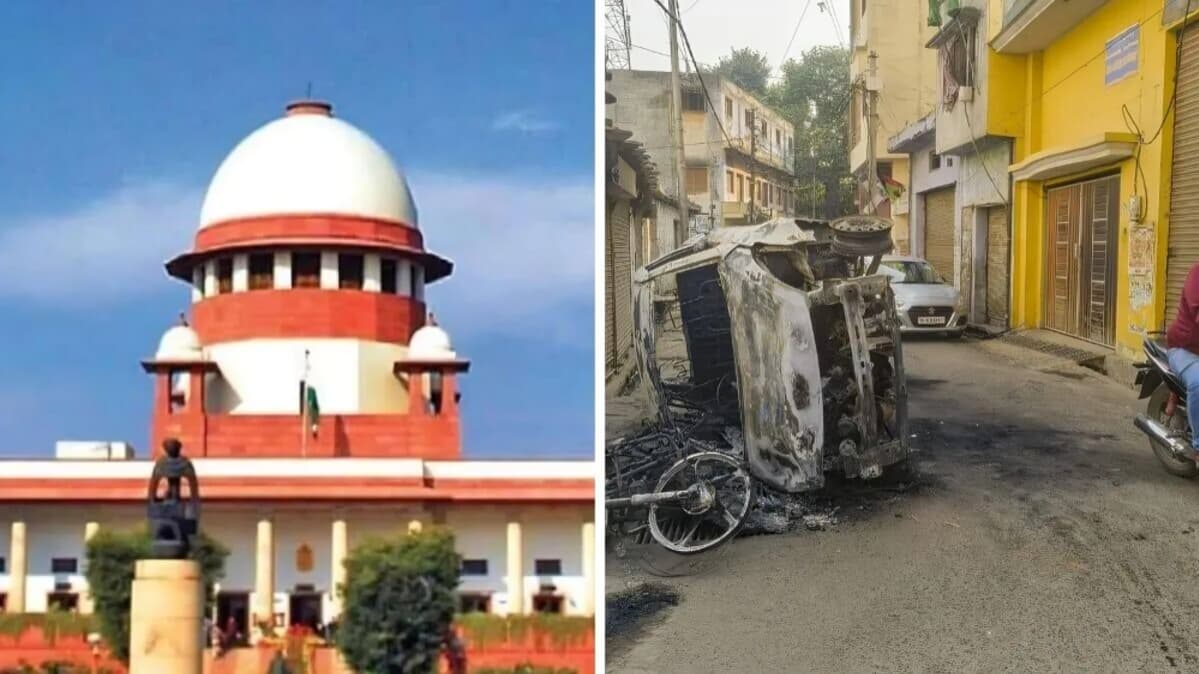
The Supreme Court has upheld the bail granted to Abdul Malik, one of the accused in the Haldwani violence case, while making important observations on the application of the Unlawful Activities Prevention Act. The Court stated that the alleged burning of a police station, by itself, does not automatically fall within the scope of the anti-terror law and should primarily be viewed as an issue concerning public order unless the statutory requirements of the Act are satisfied.
The decision came during the hearing of appeals challenging the grant of bail. After considering the submissions made by the parties, the Supreme Court declined to interfere with the earlier order granting bail to the accused. The Court clarified that its observations were limited to the question of bail and should not be treated as findings on the merits of the criminal case, which will continue before the competent court.
During the proceedings, the Bench examined whether the allegations disclosed offences that would justify invoking the provisions of the Unlawful Activities Prevention Act. The Court observed that offences affecting public order do not automatically qualify as terrorist acts under the Act. The prosecution must establish that the specific legal ingredients required under the statute are present before the stringent provisions of the law can be applied.
The Court emphasised that there is an important legal distinction between offences involving public disorder and offences that amount to terrorism under the Unlawful Activities Prevention Act. It noted that each case must be assessed on its individual facts and evidence rather than on the seriousness of the incident alone.
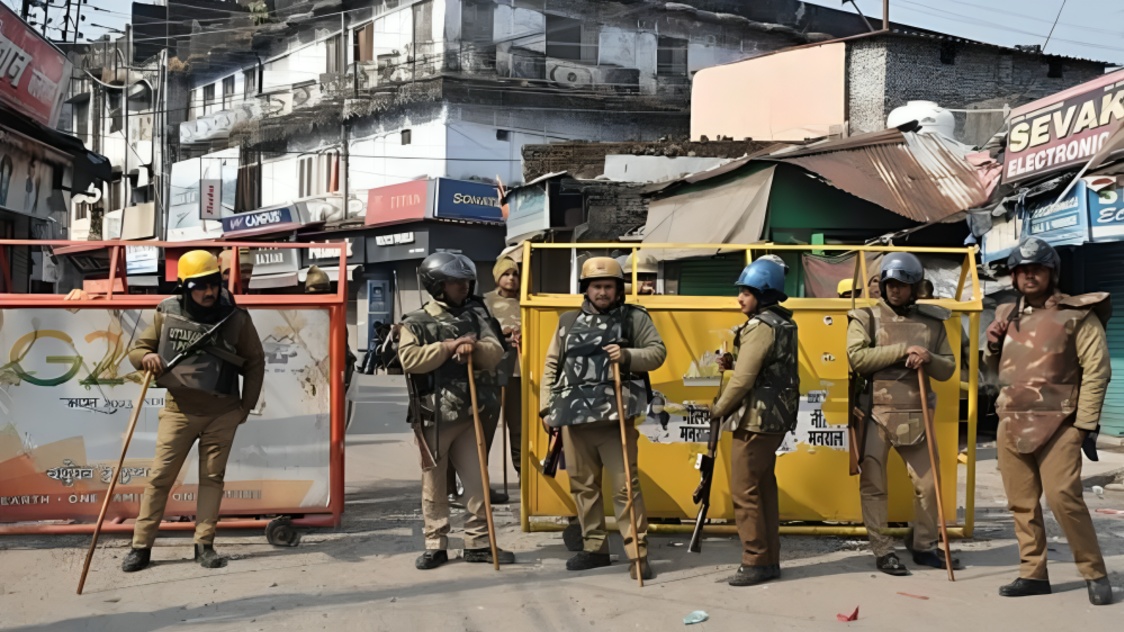
The Haldwani violence case arose after clashes that resulted in damage to public property, including a police station, government vehicles, and other infrastructure. Multiple criminal cases were registered following the incident, and several individuals were arrested during the course of the investigation.
Investigating agencies have alleged that the violence involved organised unlawful activities and led to extensive destruction of public property. The prosecution has maintained that the accused persons played significant roles in the events leading to the unrest. The defence has consistently denied the allegations and argued that the charges do not justify the application of the Unlawful Activities Prevention Act.
The Supreme Court reiterated that bail proceedings are distinct from the trial itself. While deciding a bail application, courts consider factors such as the nature of the allegations, available evidence, the stage of the investigation, the possibility of influencing witnesses, and the likelihood of the accused absconding. These proceedings do not determine the guilt or innocence of the accused.
Legal experts have observed that the judgment reinforces the principle that special criminal laws containing stringent bail provisions should be invoked only when the statutory requirements are clearly established. Courts have consistently held that anti-terror legislation must be applied strictly in accordance with the law because of its significant legal consequences.
The ruling is also expected to contribute to future legal discussions regarding the distinction between offences affecting law and order, public order, and national security. Indian courts have, in several previous judgments, recognised these as separate legal concepts that require independent evaluation based on the facts of each case.
The criminal proceedings arising out of the Haldwani violence will continue before the trial court, where evidence presented by both the prosecution and the defence will be examined. The grant of bail does not affect the ongoing investigation or the prosecution's right to pursue the charges in accordance with law.
The Supreme Court's decision highlights the importance of carefully applying special statutes such as the Unlawful Activities Prevention Act while ensuring that criminal proceedings remain consistent with constitutional safeguards and established legal principles. The final determination of the allegations against the accused will be made during the trial after the evidence is fully examined.