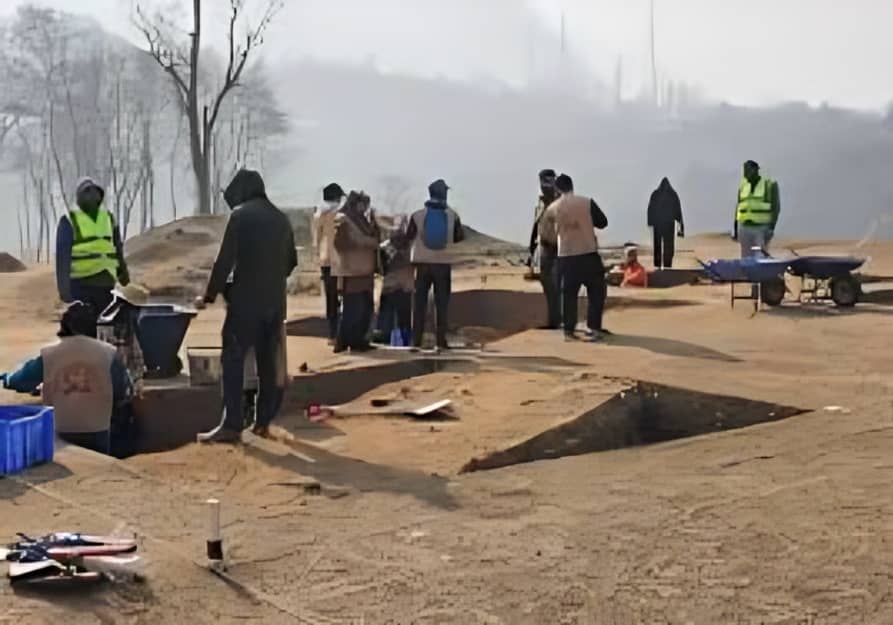
In a significant archaeological development, excavations in Baramulla, Jammu & Kashmir, have brought to light artefacts that are believed to date back nearly 2,000 years, corresponding to the Kushan period. Conducted under the supervision of the Archaeological Survey of India (ASI), the excavation has revealed a variety of historical objects including pottery, coins, tools, and decorative items. These artefacts offer a rare glimpse into the cultural, economic, and social life of the region during a time when Baramulla served as a key trade and cultural hub.
Experts state that the discovery is particularly valuable in understanding the Kushan influence in northern India and the connections between the subcontinent and Central Asia. The coins unearthed bear inscriptions and motifs that suggest active trade routes and commercial exchanges, while pottery and tools provide evidence of daily life and artisanal practices of the period. Decorative items, including beads and ornaments, indicate the artistic skills and aesthetic sensibilities prevalent during that era.
The excavation has also revealed structural remnants, which may have been part of residential or commercial establishments. Archaeologists believe that Baramulla, situated along ancient trade routes, played a vital role in facilitating commerce and cultural exchange between different regions. These findings highlight the city’s importance not only as a strategic location but also as a center for cultural amalgamation during the Kushan period.
The ASI has emphasized the need for careful preservation of the unearthed artefacts. Conservation measures are being implemented to ensure that delicate items such as coins and pottery remain intact for future study. Detailed documentation, cataloguing, and photographic records are being created to support scholarly research and public education. Experts also plan to conduct further excavations in the surrounding areas to gain a broader understanding of Baramulla’s historical landscape.
Local authorities have been engaged to protect the site from unauthorized access and potential damage. Steps are being taken to raise awareness among residents and visitors about the historical significance of the findings. By combining conservation efforts with public outreach, officials aim to foster a sense of pride in local heritage while promoting archaeological research.
Historians and archaeologists have welcomed the discovery as a major contribution to understanding the Kushan period’s impact on northern India. The artefacts are expected to provide valuable information on trade, culture, religious practices, and everyday life in Baramulla during ancient times. The findings also underscore the rich historical and cultural tapestry of Jammu & Kashmir, emphasizing the need to preserve and study its archaeological heritage.
Overall, the Baramulla excavation represents a landmark achievement in Indian archaeology, offering fresh insights into a historically significant era while opening avenues for further research and heritage preservation in the region.