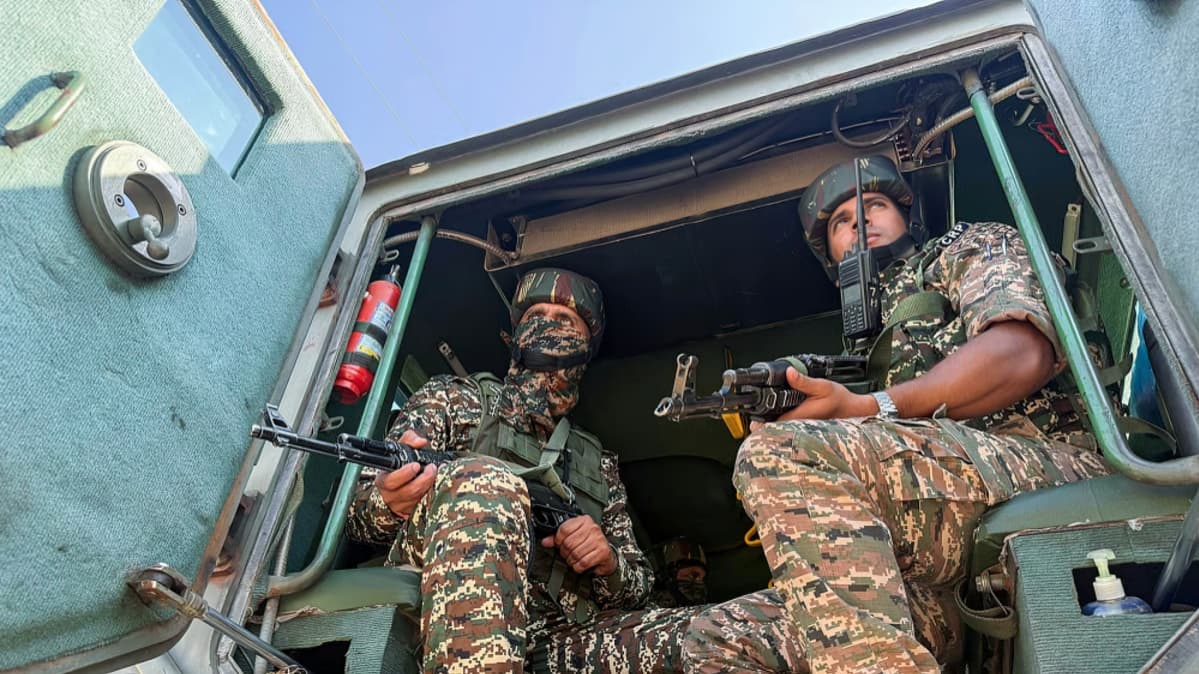
Union Home Minister Amit Shah convened a crucial security meeting in New Delhi, bringing together Chief Ministers and Lieutenant Governors from India’s border states. The high-level session was organized to review the overall security landscape in sensitive regions and to reinforce coordinated efforts between the Centre and state administrations. The meeting comes amid heightened geopolitical tensions and rising concerns over infiltration, smuggling, and terrorism across India’s international borders.
Attendees and Focus Areas
Chief Ministers and Lieutenant Governors from states and Union Territories sharing borders with Pakistan, China, Bangladesh, Nepal, Bhutan, and Myanmar were in attendance. Top officials from the Ministry of Home Affairs, paramilitary forces, intelligence agencies, and the Border Security Force (BSF) were also present to provide insights and updates.
A key agenda of the meeting was to discuss the evolving challenges in border management, including illegal infiltration, narcotics trafficking, and the increasing use of drones for cross-border smuggling and surveillance. The leaders discussed recent incidents along the western and eastern borders and evaluated the response strategies employed by local and central security agencies.
Infrastructure and Technology in Border Areas
Union Home Minister Amit Shah emphasized the need for rapid infrastructure development in remote and strategic border locations. He highlighted projects such as the construction of new roads, fencing, and surveillance towers to ensure round-the-clock monitoring. Shah also called for the integration of advanced surveillance technologies, including drones, thermal imaging, and AI-powered systems to detect and neutralize threats in real-time.
In his address, Shah reiterated the importance of building strong cooperation between state police forces and central agencies. He stressed that internal security and border protection are interdependent and that effective intelligence-sharing and joint operations are crucial in securing the nation’s boundaries.
State-Level Cooperation and Local Issues
Several Chief Ministers raised state-specific concerns related to border disputes, migration, and the impact of security threats on local communities. The Centre assured them of full support and committed to reviewing pending demands related to border area development programs (BADP). Discussions also included steps to enhance the welfare and morale of security personnel deployed in harsh terrains.
Amit Shah directed officials to ensure that border residents are made stakeholders in the security process. The Home Minister asked for better coordination with village defence committees and promotion of local intelligence networks. The initiative aims to create a stronger grassroots-level security mechanism, especially in regions like Jammu & Kashmir, Arunachal Pradesh, and border districts in Punjab and Assam.
Conclusion and Way Forward
The meeting concluded with a joint resolution to enhance security preparedness, modernize surveillance infrastructure, and continue periodic reviews to address emerging threats. Amit Shah assured all the participants that the Union Government remains fully committed to protecting India’s territorial integrity, and that decisive steps will be taken to maintain peace and order along the borders.
This meeting is expected to be followed by a series of regional-level consultations and assessments to implement the proposed strategies efficiently. The Centre’s proactive approach reflects its priority on national security and the collective responsibility of both central and state administrations in defending the country's borders.