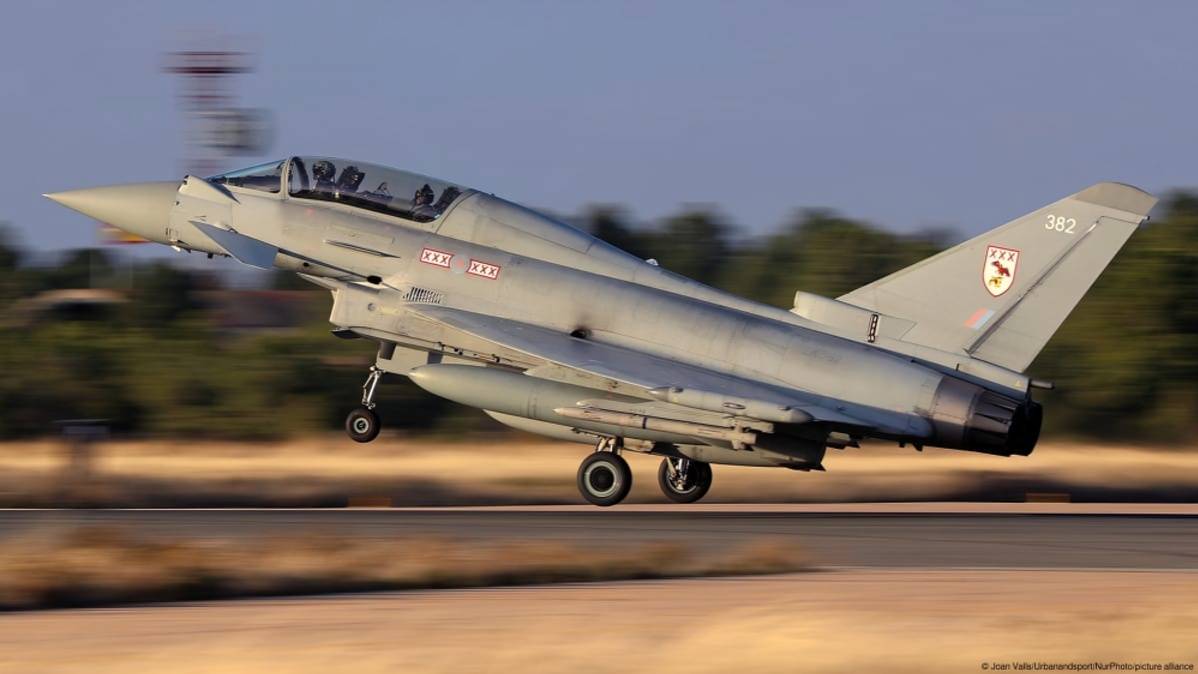
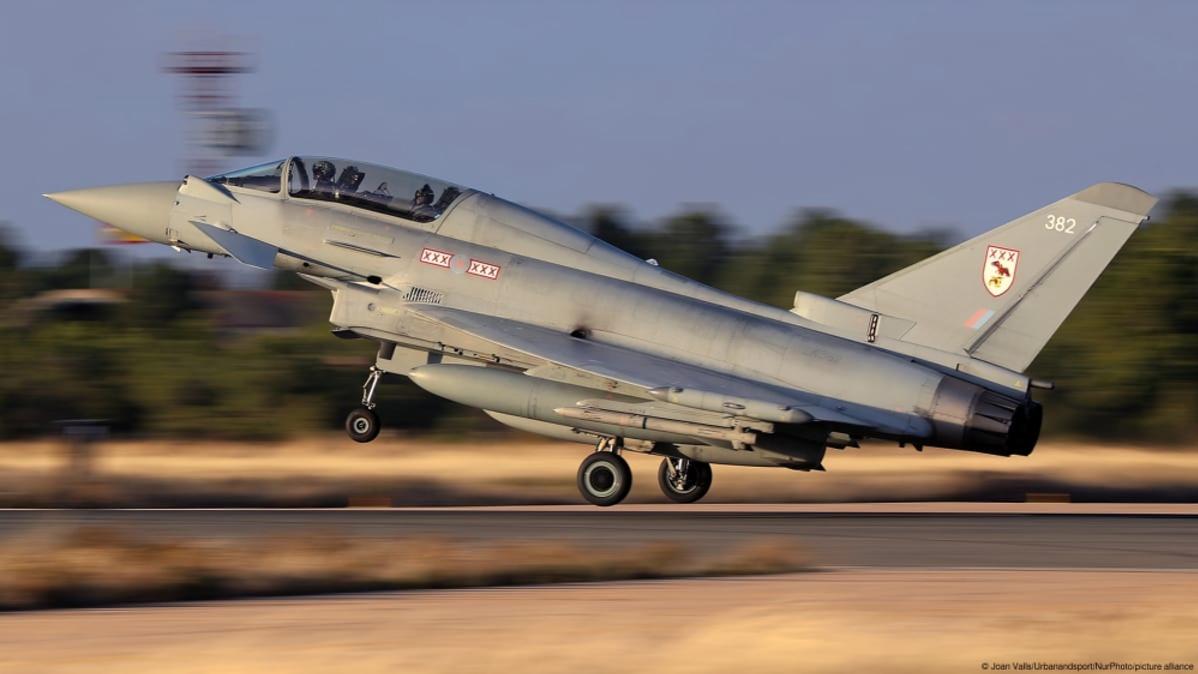
The United Kingdom has strengthened its military support for Saudi Arabia by authorising Royal Air Force Typhoon fighter jets to carry out defensive air missions amid escalating attacks by Yemen's Houthi movement. The decision follows requests from Riyadh for additional assistance as the Kingdom faces renewed missile and drone threats.
The British government has described the deployment as a defensive operation intended to protect Saudi cities, civilian populations and critical infrastructure. It has specifically clarified that the RAF Typhoon aircraft will not conduct offensive strikes against Houthi targets in Yemen.
The announcement, made by the UK Ministry of Defence on October 20, 2026, is part of a wider military assistance package. It includes extending air-to-air refuelling support, providing an RAF A400M transport aircraft and sending British military advisers to assist Saudi military personnel.
UK Parliament+2
Why Has Britain Deployed RAF Typhoon Fighter Jets?
The main reason behind Britain's decision is the increase in Houthi missile and drone attacks targeting Saudi Arabia. These attacks have raised concerns about the security of civilian areas, airports and important infrastructure.
The British government specifically referred to attacks on civilian airports in Riyadh and described the threat to Saudi cities and critical infrastructure as a serious regional security concern.
Saudi Arabia has sought additional support from its international partners to strengthen its ability to respond to aerial threats. Following the Kingdom's request, the UK approved the deployment of RAF Typhoon fighter jets for defensive counter-air operations.
The aircraft are expected to help protect Saudi airspace by responding to incoming aerial threats, including missiles and drones. Their presence is intended to strengthen the Kingdom's defensive capabilities and reduce the pressure on Saudi forces.
The British government has also linked the decision to wider regional stability and the security of international trade and energy supplies.
UK Parliament+2
RAF Typhoons Will Not Conduct Offensive Strikes
One of the most important aspects of the British announcement is the distinction between defensive air missions and offensive military operations.
The UK Ministry of Defence has stated that RAF Typhoon aircraft will conduct defensive counter-air operations to protect Saudi cities, civilian populations and critical infrastructure. The government has also made clear that the aircraft will not carry out offensive strikes against the Houthis.
This means the stated role of the British fighter jets is to help defend Saudi airspace against incoming aerial threats rather than directly attack Houthi positions in Yemen.
The distinction is important because the conflict involving the Houthis, Saudi Arabia and Yemen's internationally recognised government remains politically and militarily sensitive.
However, the wider British support package includes assistance for Saudi defensive air operations, including operations aimed at degrading Houthi military targets in Yemen that threaten Saudi and Yemeni populations. The UK has extended air-to-air refuelling support for these Saudi operations. This is separate from the specific role assigned to RAF Typhoon aircraft.
The British government has therefore presented the fighter deployment as a limited defensive commitment rather than direct participation in offensive strikes against the Houthi movement.
What Other Military Support Is Britain Providing?
The deployment of RAF Typhoon fighter jets is only one part of the UK's expanded assistance to Saudi Arabia. The British government has also announced several additional measures to strengthen the Kingdom's defensive capabilities.
Air-to-air refuelling support
Britain has agreed to extend its air-to-air refuelling assistance for another 90 days. This support involves an RAF Voyager aircraft, which can refuel compatible military aircraft while they are in flight.
Air-to-air refuelling allows fighter jets to remain airborne for longer periods and carry out extended missions without returning to an airbase solely to refuel. It can therefore improve the operational flexibility of Saudi defensive air operations.
RAF A400M transport aircraft
The UK will also make an RAF A400M Atlas transport aircraft available to support the movement of defence equipment and other military supplies within Saudi Arabia.
The A400M is designed to transport personnel, equipment and military cargo. Its availability is intended to help Saudi Arabia move essential defence materials where they are required.
British military advisers
Another part of the assistance package involves deploying UK military advisers to support Saudi staff officers. Their role is to provide assistance and support to Saudi military personnel as the country responds to the growing aerial threat.
Together, these measures are intended to strengthen Saudi Arabia's ability to manage and respond to missile and drone attacks.
Why Are Houthi Attacks a Concern for Saudi Arabia?
The Houthi movement, also known as Ansar Allah, is an armed political and military group based in Yemen. It took control of Yemen's capital, Sanaa, in 2014, triggering a major escalation in the country's political and military conflict.
Saudi Arabia subsequently led a military coalition supporting Yemen's internationally recognised government. The conflict has continued for years, creating a severe humanitarian crisis and contributing to instability across the region.
The Houthis have used missiles and drones in attacks against targets in Saudi Arabia. Such attacks have raised concerns about the safety of civilian areas, energy facilities, airports and other important infrastructure.
The latest escalation has increased pressure on Saudi Arabia to strengthen its air defence capabilities. Britain's decision to provide additional military assistance reflects its concern about the growing threat to the Kingdom and the wider Middle East.
The UK has also condemned attacks against civilian targets, including Riyadh's King Khalid International Airport.
Why Is the Red Sea Important to Britain?
Britain's decision is not based only on its defence partnership with Saudi Arabia. The security situation in the Middle East also has important economic implications for the United Kingdom and other countries.
The Red Sea and the Bab al-Mandab Strait are among the world's important maritime trade routes. Ships using these routes connect markets in Asia, Europe and other regions.
Any major disruption to shipping can increase transportation costs, delay deliveries and affect international supply chains. Instability in the region can also influence energy supplies and prices.
The British government has warned that continued violence could affect businesses, households and the wider economy. Protecting regional stability and maintaining the security of international shipping routes are therefore important parts of its stated policy.
The UK considers the security of Saudi Arabia and the surrounding region relevant to its own national security and economic interests.
Britain's Military Partnership With Saudi Arabia
The latest deployment builds on an existing defence relationship between Britain and Saudi Arabia. The two countries have maintained military and security cooperation for several years.
Before the announcement of the Typhoon missions, Britain had already been providing air defence equipment and personnel to help Saudi Arabia protect itself against missile and drone attacks.
In September 2026, the UK announced additional support following a request from the Saudi government. This included an RAF Voyager aircraft for air-to-air refuelling in support of Saudi defensive operations.
The October announcement expanded that assistance by adding RAF Typhoon defensive missions, extending the refuelling commitment by 90 days and making an A400M transport aircraft available.
The British government has also said that its military assistance must comply with international law, including obligations relating to civilian protection.
Britain Says There Is No Military Solution to the Yemen Conflict
Although Britain has approved additional military assistance, the government has stated that a lasting solution to the Yemen conflict cannot be achieved through military action alone.
The UK has expressed concern about the humanitarian situation in Yemen and the suffering experienced by civilians. It has also said that diplomatic efforts, humanitarian assistance and negotiations remain necessary to achieve lasting peace.
Britain continues to support a United Nations-led political process as the preferred route towards resolving the conflict. The government has said it will monitor the situation and review its military contribution as developments unfold.
This approach reflects the UK's stated intention to support Saudi Arabia's defensive requirements while continuing to encourage political negotiations and regional de-escalation.
What Happens Next?
The deployment of RAF Typhoon fighter jets marks a significant expansion of Britain's defensive military support for Saudi Arabia. The aircraft will help protect the Kingdom against aerial threats, while the additional refuelling, transport and advisory assistance will strengthen its wider defence arrangements.
However, the UK has drawn a clear distinction between protecting Saudi airspace and conducting offensive military operations in Yemen. The British government has said that its Typhoon aircraft will not carry out offensive strikes against Houthi positions.
The effectiveness of the expanded support will depend on developments in the region and the scale of further missile and drone attacks. The situation also raises wider questions about regional security, international shipping and the humanitarian consequences of the prolonged Yemen conflict.
For now, Britain's stated objective is to help Saudi Arabia defend its population and critical infrastructure while supporting diplomatic efforts to reduce tensions in the Middle East.